Cuba has received the first 15,000 tonnes of a promised 60,000-tonne rice donation from China, providing short-term relief amid a deepening humanitarian crisis. President Miguel Díaz-Canel publicly thanked China and European Parliament members who criticized international pressure on Havana, and he accused the U.S. of collective punishment. Energy shortages—exacerbated by restricted oil deliveries—have caused island-wide blackouts and disrupted services. Washington has offered conditional humanitarian aid, and recent legal and diplomatic actions have further strained ties.
Cuba Thanks China After First 15,000-Tonne Rice Shipment as Humanitarian Crisis Deepens
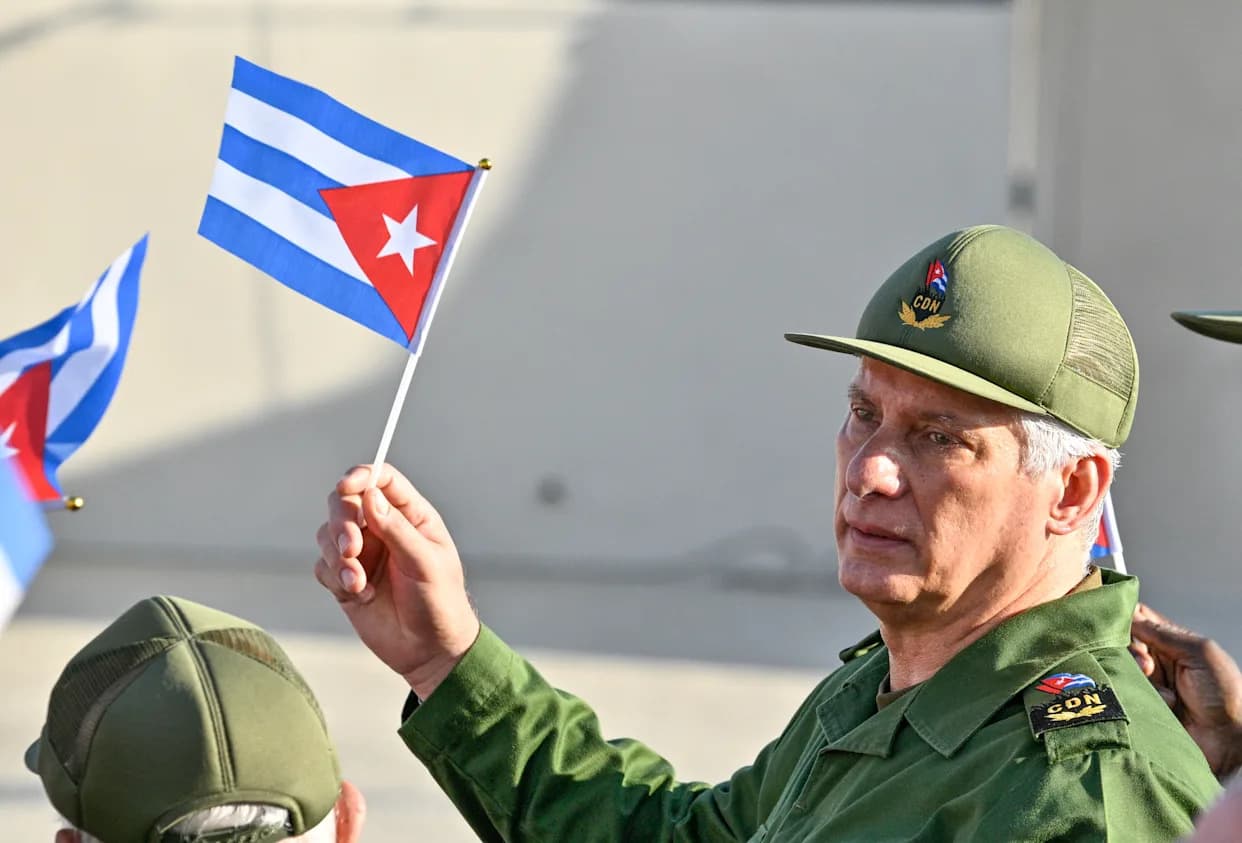
President Miguel Diaz-Canel holds a Cuban flag during a rally in support of Raul Castro, on May 22 [Adalberto Roque/AFP]
Cuba has confirmed the arrival of the first 15,000-tonne tranche of a pledged 60,000 tonnes of rice from China as the island grapples with a worsening humanitarian situation.
In a series of social media posts on Sunday, President Miguel Díaz-Canel said the initial shipment landed at the Port of Havana a day earlier and expressed "deep gratitude" to Beijing. He also thanked members of the European Parliament who have spoken out against what Havana describes as external pressure on the government.
Humanitarian And Energy Strains
Authorities say the rice donation comes amid growing shortages and power outages across the island. Cuba has long dealt with rolling blackouts, but recent fuel shortfalls have intensified disruptions to transportation, public services and medical care in many areas.
Havana and some international observers point to tightened U.S. sanctions and restrictions on oil transfers as factors that have worsened the supply crunch. Cuban officials have said that deliveries of oil from allies have been constrained this year; reports indicate only one Russian tanker has reached the island recently. Cuban Energy Minister Vicente de la O Levy has said fuel reserves were largely depleted.
Diplomacy, Aid Offers And Political Tension
The U.S. has maintained a long-standing trade embargo on Cuba since the 1960s, and relations have been tense in recent years. The Cuban government accuses the U.S. of using a "maximum pressure" campaign aimed at forcing political change; President Díaz-Canel has likened some aspects of the pressure to "collective punishment" and used the term "genocide" to denounce the humanitarian impact.
"The cherished bonds of friendship and cooperation that unite us grow stronger in these crucial times," Díaz-Canel wrote, pledging to deepen ties with China.
U.S. officials have countered that Cuba's economic problems stem in large part from state economic mismanagement and repression of political dissent. The administration has publicly offered conditional humanitarian assistance — reportedly up to $100 million — tied to what it called "meaningful reforms."
The article also notes reports that the U.S. government announced a criminal indictment related to a decades-old plane attack; such allegations and their legal status have been contested and are likely to complicate diplomatic negotiations.
Why The China Link Matters
Beyond rice, China has been supplying Cuba with other forms of support, including solar panels intended to help modernize the island's aging power grid and reduce dependence on fossil fuels. Analysts say closer ties with Beijing reflect Havana's effort to diversify partners as energy and import challenges grow.
For now, the arrival of the rice shipment provides short-term relief for food supplies while underscoring Cuba's growing reliance on international donations and diplomatic backing as it confronts deeper humanitarian and economic strains.
Help us improve.