President Trump's remark that US arms sales to Taiwan could be used as leverage with China has stirred global concern, but many Taipei residents say they feel powerless to influence the outcome. A week after the comments, speculation mounted about a potential shift in US policy, yet locals largely remained calm and doubtful that additional weapons would ensure victory against China. Taipei continues to point to the Taiwan Relations Act of 1979, and US officials maintain that official policy has not changed.
Taipei Calm but Concerned as Uncertainty Over US Arms Sales Sparks Debate
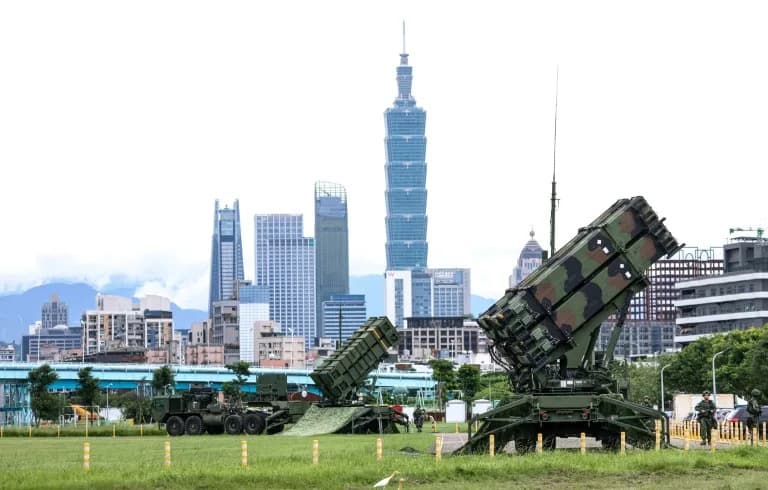
Uncertainty over Taiwan arms sales have left people in Taipei feeling like the next steps are out of their hands (I-Hwa Cheng)(I-Hwa Cheng/AFP/AFP)
President Donald Trump's suggestion that US arms sales to Taiwan could be used as a bargaining chip with China has prompted alarm around the world. In Taipei, however, many residents told AFP they felt the outcome was largely beyond their control — and skeptical that more weapons would guarantee victory in a conflict with China.
Background
One week after Trump made the comments during a Fox News interview and remarks aboard Air Force One, intense speculation swirled over whether long-standing US practice toward the democratic island had been upended. Although the United States formally switched diplomatic recognition from Taipei to Beijing nearly 50 years ago, Washington remains Taiwan's most important security partner.
Street-Level Reactions
Government officials in Taipei have been awaiting a decision on the latest US arms package, but many people interviewed on the streets appeared unruffled. Nicole Lee, a 46-year-old nurse, said she had little confidence that military hardware alone would make a decisive difference if China sought to seize the island.
"Even if they give us weapons, if we really had to use force against China, I don't think there would be much we could do," she said.
Delivery driver Ben Wu, 41, described US arms sales as akin to a "protection fee," adding that "even with top-tier weaponry, it would still be very hard to win" against China. Taiwan has spent many billions of dollars purchasing fighter jets, advanced missiles and drones from the United States to bolster its defences.
Official Messaging and Political Context
Taipei has sought to remind Washington of the Taiwan Relations Act, passed by the US Congress in 1979, which commits the United States to provide Taiwan with defensive arms. US officials and some lawmakers have publicly insisted that longstanding US policy toward Taiwan has not changed, despite the president's remarks.
Some residents voiced distrust of Trump personally. Cynthia Kuo, a 29-year-old elementary school teacher, said she saw him as someone who "just says whatever pops into his head" and makes decisions primarily on what he perceives as being in the United States' interest. A 78-year-old retiree who asked to remain anonymous called Trump "totally untrustworthy" and described him as "a hooligan in international politics."
Outlook
Ultimately, many Taipei residents said, decisions about US arms sales and how Beijing might respond will be determined far from the island. "I'm not that worried," 22-year-old university student Matt told AFP. "Whether we worry or not doesn't really change anything."
What remains clear: the issue has reignited debate about US-Taiwan relations, the limits of military deterrence, and the role of presidential rhetoric in shaping regional security perceptions.
Help us improve.