The seaside town of Punta Marina is split over how to handle a booming peacock population now estimated at around 100–150 birds. Residents complain of property damage, hazardous droppings and loud mating calls, while others see tourism opportunities. Ravenna officials plan a formal census to determine numbers before agreeing on humane management measures with community and animal‑welfare groups.
Horde of Peacocks Splits Italian Seaside Town: Nuisance, Conservation Issue And Tourist Draw
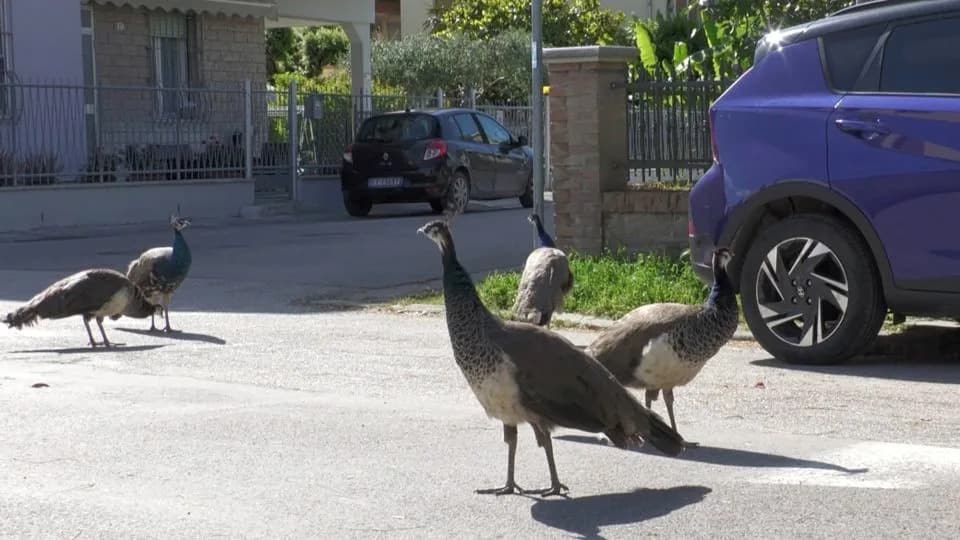
Wild peacocks roam in a street of Punta Marina, in the municipality of Ravenna, northeastern Italy. - Francesco Gilioli/AFP/Getty Images
More than 100 peacocks — with some local estimates nearing 150 — are roaming free in the small Adriatic town of Punta Marina, sparking a heated local debate over whether the colourful birds are a charming attraction or an urban nuisance.
Residents report growing problems: aggressive behaviour toward people, damage to cars, slippery and unpleasant droppings on sidewalks, and loud mating calls at dawn that disturb sleep. The onset of spring and mating season has intensified both the birds' activity and local tensions.
Rosanna Golfarelli, co‑owner of the Cacao pastry shop in Punta Marina, told CNN that the birds 'destroy cars by attacking their reflections, leave sticky guano on sidewalks making it dangerous to walk, and sometimes block traffic.'
Golfarelli and her husband, Claudio Ianiero, say six peacocks nest near their bakery — one they have nicknamed Pirilampo — and even inspired a cookie design. The couple are ambivalent about possible solutions: they are amused by the debate but acknowledge that many neighbours are frustrated, especially those who live nearby and endure nightly noise.
How the Colony Grew
Local lore traces the colony back to a single escaped bird that settled in the pine woods at Punta Marina's edge; a hen was later introduced and the population slowly expanded. The peacocks have moved between a derelict military barracks, pine forest and town parks, seeking safe roosts away from predators such as foxes and wolves.
The population grew further when residents began feeding the birds more frequently during the 2020 Covid‑19 lockdowns. That human provisioning, combined with an absence of natural predators in the urban area, is believed to have driven a sharp rise in numbers.
Local Response And Next Steps
Punta Marina, a town of about 3,000 people within the Ravenna municipality, is roughly divided: about half want the peacocks culled or moved to a zoo, while the other half seek protections and even see tourism potential. Influencers and visiting musicians have filmed the birds, and streaming services host 'relaxing' playlists inspired by their calls — evidence that some locals hope to turn the situation into an asset.
Ravenna's councilor for animal rights, Francesca Impellizzeri, recently told Sky TG24 that the 2023 estimate of 30 known peacocks is now outdated and that officials plan a methodical census to determine accurate numbers and the sex ratio before deciding on measures. The municipality has been soliciting management proposals since 2022.
The CLAMA Association signed an agreement with the municipality two years ago to help manage the colony and has posted signs advising residents not to feed the birds. A previous offer by a zoo to take 20 peacocks prompted protests from animal‑welfare groups.
How Other Places Have Responded
Punta Marina is not alone in wrestling with urban peacocks. Parts of Los Angeles County have long hosted free‑roaming peafowl; in 2021 officials moved to ban feeding after complaints of nocturnal shrieking and property damage. In Florida, some communities have explored vasectomies or other surgical fertility controls to limit reproduction. Elsewhere, towns have relocated problem birds or used public‑education and feeding bans to reduce human dependency.
What’s next: A local census is expected to begin in coming months to establish accurate population and sex counts. Officials say they will consult with the community and animal‑welfare organizations to design humane, legally compliant management options.
Help us improve.