Thirty specialists published three formal letters in Science rejecting a March paper that argued Monte Verde II is a mid-Holocene site (about 4,200–8,200 years old). The rebuttals maintain the Lepué Tephra was misidentified, contend the new samples were taken from a separate geological unit rather than MV-II, and say the redeposition hypothesis lacks direct evidence. Longstanding radiocarbon, stratigraphic, archaeological and genetic lines of evidence continue to support a ~14,500-year-old human presence at Monte Verde. The dispute underscores the need for careful, multidisciplinary fieldwork and open scientific debate.
“Speculation” and an “Egregious Failure”: 30 Experts Rebuke Study That Re-Dated Monte Verde
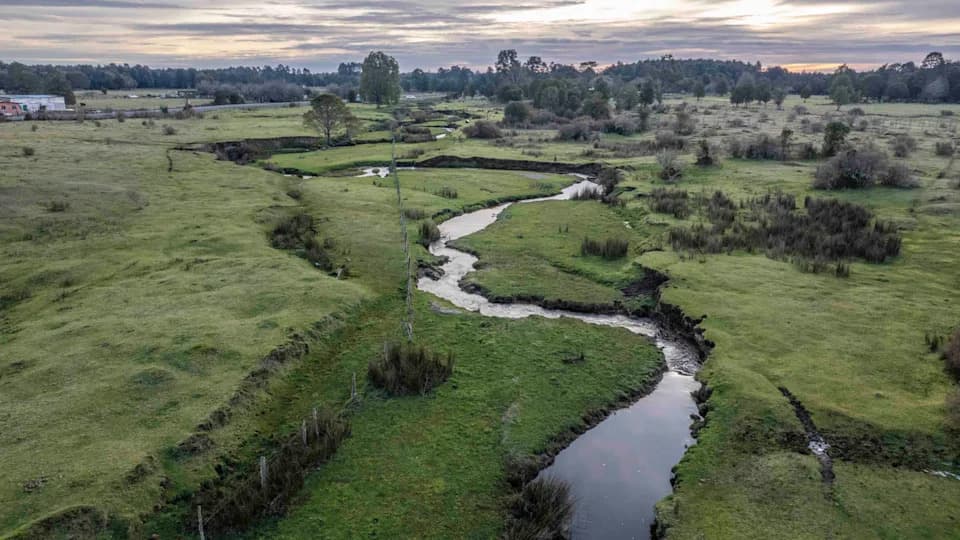
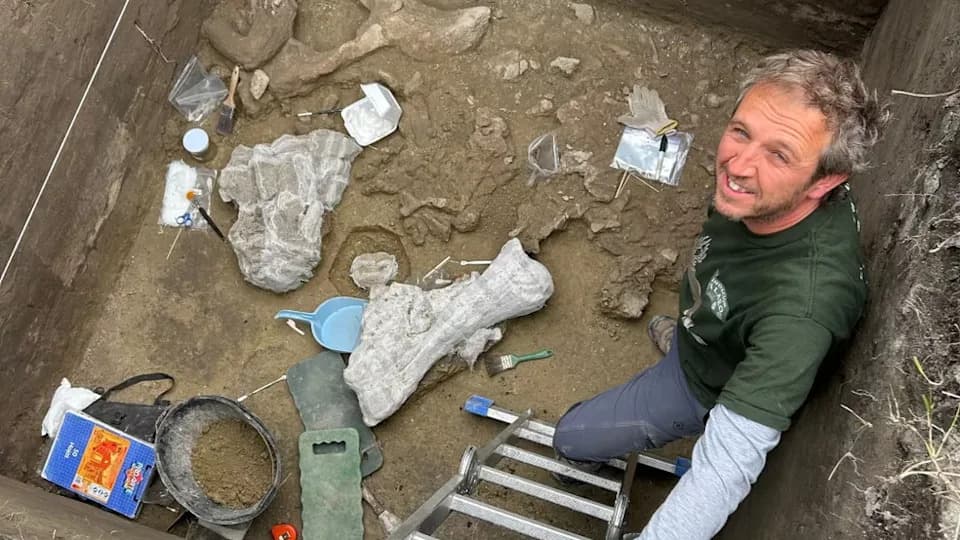
A view of the Monte Verde II site in Chile. | Credit: Monte Verde Foundation
A high-profile reassessment of Monte Verde, one of the Americas' most important early archaeological sites, has prompted a forceful rebuttal from the field. In March, a team led by Todd Surovell published a paper in Science arguing that the Monte Verde II (MV-II) component in southern Chile represents a Middle Holocene occupation (roughly 4,200–8,200 years ago). Last week, thirty specialists published three detailed letters in Science asserting that the new paper contains substantive errors, misinterpretations, and unsupported conclusions, and defending the long-established ~14,500-year age for MV-II.
Background: Why Monte Verde Matters
Discovered in 1976 and excavated for nearly five decades under Tom Dillehay, Monte Verde II has produced stone tools, preserved plant remains, hearths, a human footprint, and organic artifacts. Decades of multidisciplinary work — archaeological context, radiocarbon dating, geoarchaeology, and paleoenvironmental studies — have placed MV-II in the late Pleistocene at about 14,500 years ago, establishing it as a cornerstone case for pre-Clovis human presence in South America.
What Surovell et al. Reported
Surovell's team revisited creek exposures near Monte Verde and reported finding a distinctive volcanic-ash horizon known as the Lepué Tephra, dated to about 11,000 years ago. They interpreted the presence of that tephra across several stream sections as evidence that erosion cut into older deposits and that the MV-II archaeological component actually overlies the tephra, implying a younger, mid-Holocene age. Although their new radiocarbon dates on charcoal and wood ranged from ~13,400 to ~16,500 years, the authors proposed those samples could have been redeposited from upstream and therefore might not reflect in situ human activity.
Major Criticisms From the Rebuttal Letters
The three eLetters, led respectively by Tom Dillehay, Michael Waters, and David Meltzer, challenge the Surovell paper on several fronts:
- Tephra Identification: Rebuttal authors argue there is no Lepué Tephra beneath the MV-II archaeological deposits. They say the ash Surovell's team identified comes from different, non-archaeological stream-bank deposits marked by fungal layers and iron-oxide–rich pyroclastic beads.
- Sample Provenience and Stratigraphy: The critics contend Surovell's sampled profiles are not from the MV-II horizons and therefore do not overturn the stratigraphic context established by decades of excavations.
- Redeoposition Hypothesis Lacks Direct Evidence: Waters and co-authors call the suggestion that dated wood and charcoal were flushed into the site 'speculation' and label the stratigraphic mismatch described in the paper as its 'most egregious failure.'
- Multidisciplinary Corroboration: Meltzer's group highlights that genetic, archaeological, and chronological data independently align with a pre-Clovis human presence—consistent with the established ~14,500-year date.
Broader Implications
Critics warn that if accepted without rigorous scrutiny, the Surovell paper could be used to revive a 'Clovis First' perspective, which posits that the initial peopling of the Americas occurred only around 13,000 years ago via an ice-free corridor. That model has been largely overturned by numerous findings, Monte Verde among them, showing earlier migrations and occupations south of the ice sheets.
As Dillehay and co-authors put it: 'After a few hours of fieldwork with no excavation, Surovell's team proposed that the MV-II site dates to the mid-Holocene and was contaminated by wood and other materials redeposited from older contexts upstream. We uphold the original interpretation of MV-II as a late Pleistocene human occupation.'
Next Steps
Surovell has indicated his team will respond formally to the eLetters but maintains the new findings have important implications. The exchange sets up a methodical scientific debate over field methods, sample provenience, tephra correlation, and chronological control. Ultimately, resolving the dispute will require careful, multidisciplinary fieldwork and transparent data-sharing so specialists can evaluate which interpretations best fit the full body of evidence.
Key takeaway: The long-standing interpretation of Monte Verde II as a ~14,500-year-old site remains strongly defended by a broad group of specialists, who argue that the recent reassessment does not, as yet, provide convincing evidence to overturn decades of multidisciplinary research.
Help us improve.