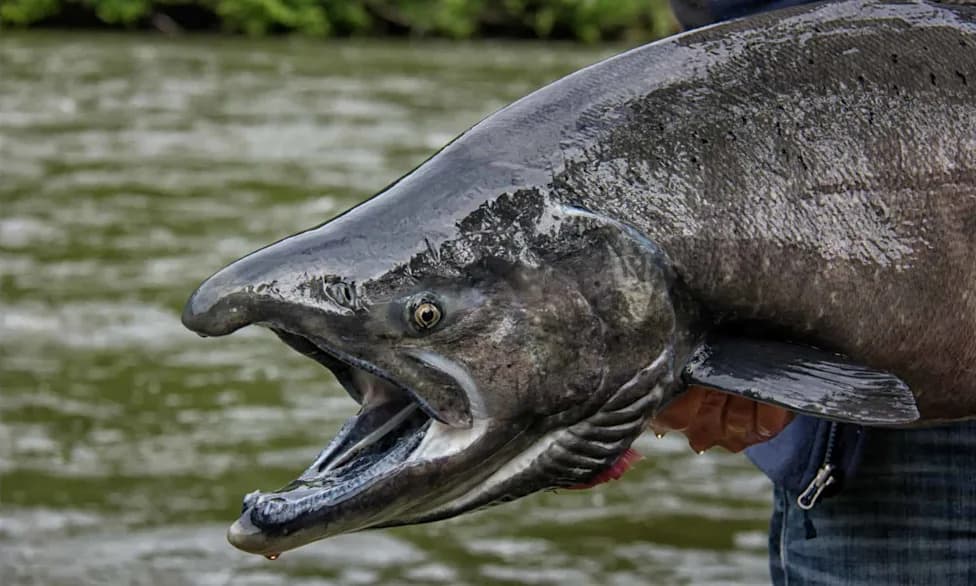
Researchers have found an increasing number of emaciated siscowet lake trout in Lake Superior's deepest waters, with some individuals weighing about half as much as healthy counterparts and containing roughly a third of the normal fat. The phenomenon—most commonly observed off Michigan's Upper Peninsula—has prompted investigations into food-web changes, disease, mercury and other toxins, and pollution such as microplastics. A fish health assessment is scheduled for June as scientists work to determine the cause and whether conservation or management actions are needed.
Researchers Find Emaciated 'Zombie' Lake Trout Deep in Lake Superior — Scientists Race to Identify Cause

Photo Credit: Shawn Sitar, Michigan Department of Natural Resources
Scientists working in the cold, high-pressure depths of Lake Superior are finding an unusual number of extremely thin lake trout that look nearly starved. The affected fish are a deep-water, high-fat subspecies called siscowets, normally adapted to life more than 1,000 feet below the surface, yet many now show dramatic losses of body fat and mass.
What Researchers Are Seeing
In the deepest zones—roughly a quarter mile (about 1,300 feet) under the surface—researchers report catching trout that weigh only about half as much as healthy fish of the same length. Some individuals contain roughly one-third of the fat found in healthy trout of comparable age and size. In one deep-water net last year, roughly 50% of the catch appeared emaciated; shallower survey trawls have recorded 12%–37% affected. So far, observations are concentrated in very deep waters off Michigan's Upper Peninsula.
Why This Matters
Lake Superior's abyssal zones are dark and nutrient-poor, with a fragile food web. A sudden decline in the body condition of a top predator could signal broader ecological change—whether from prey declines, disease, pollution, or another stressor. Lake trout are central to the lake's ecological balance and are the focus of a long-standing conservation effort after populations were nearly wiped out by invasive sea lampreys decades ago.
Possible Causes Under Investigation
- Food-Web Changes: One leading theory is that something has altered the deep-water food web, reducing the calories available to siscowets in an already sparse environment.
- Disease: Scientists have scheduled a fish health assessment for June to test whether illness could be responsible or contributing.
- Parasites: Sea lampreys were considered, but biologists note the thin trout do not show substantially more lamprey scarring than healthy fish, making that explanation less likely.
- Toxins: Emaciated trout have shown slightly higher mercury concentrations than healthier counterparts, though researchers do not yet know whether mercury is a cause or an associated clue.
- Pollutants and Microplastics: Ongoing Great Lakes research has documented worrying microplastic levels that can affect fish health and food availability.
“Something was wrong in deep water areas.” — Shawn Sitar, Michigan Department of Natural Resources
“We want to make sure that we’re not looking down the barrel of something much worse than we might imagine.” — Greg McClinchey, Great Lakes Fishery Commission
Next Steps
Researchers are conducting targeted health assessments and collecting tissue and diet samples to test for pathogens, toxins, and food-web changes. They also plan to compare findings with reports of thin trout in other regions, such as recent angler observations in Montana, to determine whether this is a localized issue or part of a broader pattern.
Bottom line: The sudden appearance of emaciated siscowet lake trout in Lake Superior's deep waters has raised concern among scientists. Multiple hypotheses are being tested, and the coming months of analysis will be critical for understanding the cause and determining whether management action is needed.
Help us improve.