Florida Governor Ron DeSantis signed a new congressional map that could flip up to four U.S. House seats to Republicans, potentially increasing the GOP delegation from 20 to about 24 seats. The GOP-led Legislature approved the plan after DeSantis submitted it; Republicans cite population growth and legal concerns as justification. Democrats and voting-rights groups plan immediate legal challenges, arguing the new lines split Hispanic communities in Central Florida and may violate the state's Fair Districts amendment.
DeSantis Signs New Florida Congressional Map That Could Flip Up To Four House Seats
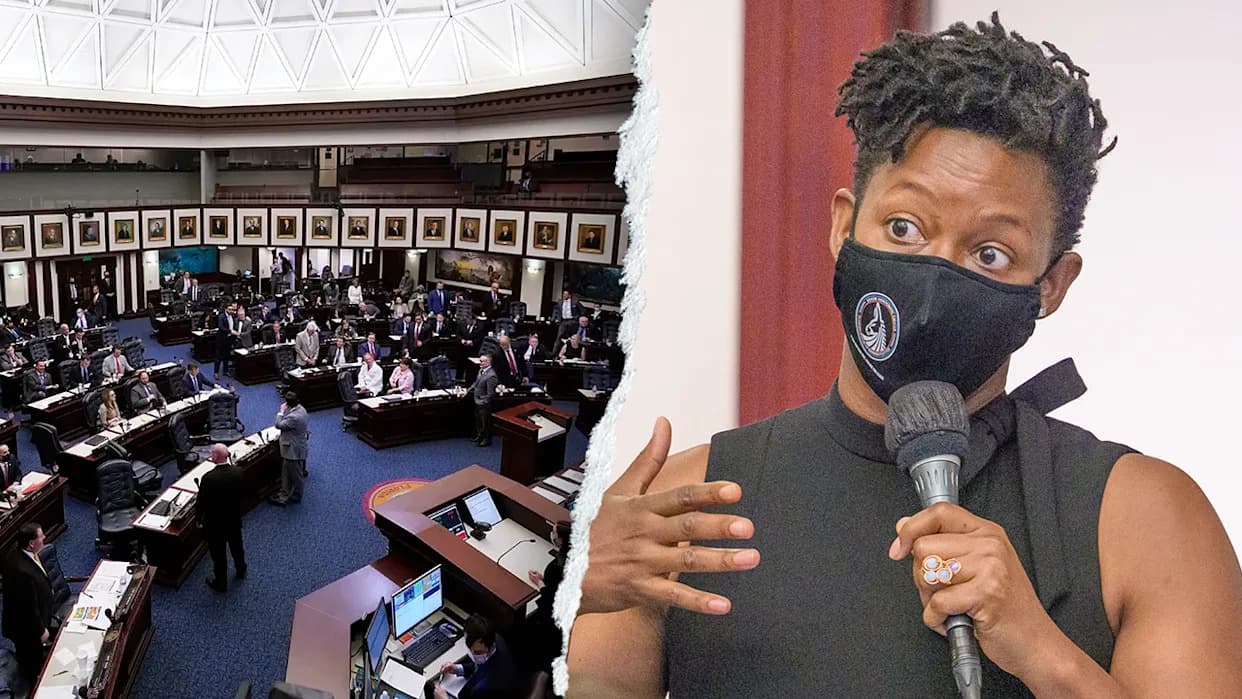
DeSantis signs Florida redistricting map to potentially flip 4 House seats red
Florida Governor Ron DeSantis on Monday signed a new congressional redistricting plan that could give Republicans as many as four additional U.S. House seats in the state. The move intensifies an ongoing battle over how Florida’s districts are drawn and sets up likely court challenges from Democrats and voting-rights groups.
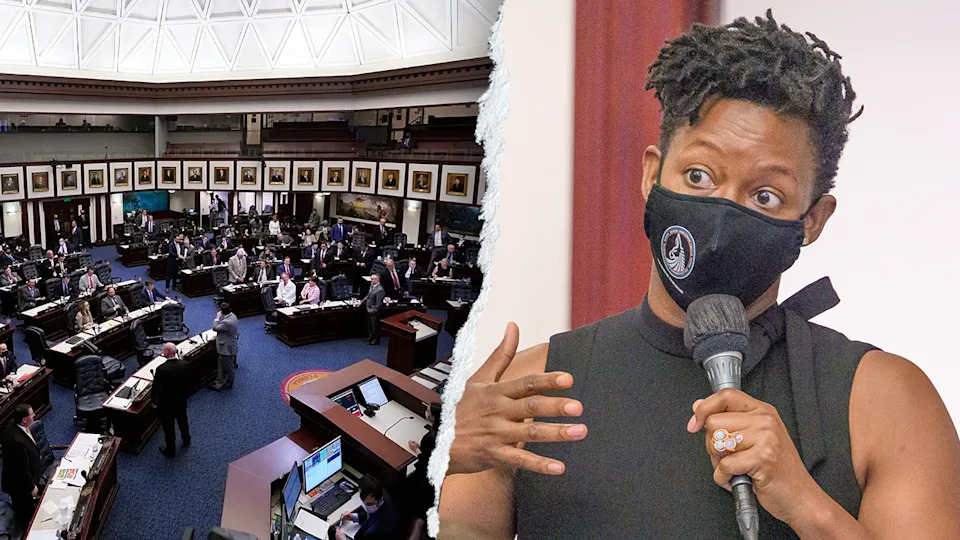
Florida state Rep. Angie Nixon, a Democrat, attempted to disrupt final approval of a Gov. Ron DeSantis-backed redistricting bill by shouting on the House floor with a bullhorn.(AP Images)
"Signed, sealed and delivered," DeSantis wrote in a post on X, sharing an image of the state’s newly redrawn districts.
The GOP-controlled Florida Legislature approved the proposal shortly after DeSantis submitted the plan. Under the current map that DeSantis signed four years ago, Republicans hold a 20-8 advantage in Florida’s congressional delegation; the new lines could increase that edge to roughly 24-8 by reshaping districts now held by Reps. Kathy Castor, Jared Moskowitz, Darren Soto and Debbie Wasserman Schultz.

Florida GOP Gov. Ron DeSantis is term limited and leaving the governor's mansion after this year, but he is putting in some extra work in his last moves to further expand the Republican hold on the state.
DeSantis and Republican allies cite Florida’s population growth and legal concerns—such as potential future Supreme Court limits on the consideration of race in redistricting—as central reasons for revising the map. The governor’s office says the new plan was drawn in a "race-neutral" manner.
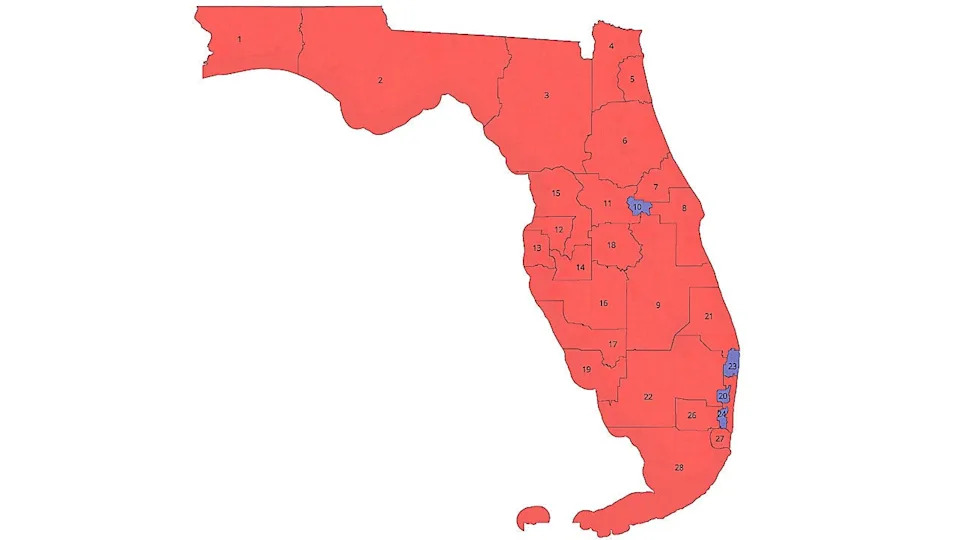
The proposed map redraws Florida’s congressional districts to reflect population shifts, consolidating GOP-leaning areas and creating four additional Republican-favored seats.
Democrats and voting-rights advocates dispute that characterization and are preparing immediate legal challenges. Opponents point to changes in Central Florida that split Hispanic communities—many of them Puerto Rican—across multiple districts, a configuration they say could dilute those voters’ influence. Florida’s Fair Districts constitutional amendment prohibits drawing districts with the intent to favor or disfavor a political party or an incumbent, and that provision is likely to be central in upcoming litigation.
Some of the Democratic incumbents affected have said they plan to seek re-election, though a few are weighing runs in newly configured districts. Representative Jared Moskowitz has told reporters he has not made a final decision but would consider running in the 25th District—a coastal South Florida seat that contains a sizable Jewish population and roughly half of his current constituents. That district backed President Donald Trump in 2024 but is still seen by some consultants as potentially competitive.
What Comes Next
Legal challenges are expected quickly. Courts will have to weigh whether the new map complies with state and federal law, including Florida’s Fair Districts rules. The outcome could shape not only Florida’s congressional delegation but also the balance of power in the U.S. House heading into future election cycles.
Help us improve.