Quick summary: After a Supreme Court decision that reduced protections under the Voting Rights Act, Gov. Jeff Landry suspended Louisiana’s congressional primaries and asked the legislature to redraw districts for 2026, creating confusion as early voting began. The legislature also passed a law to fold the Orleans Parish criminal clerk’s duties into the civil clerk’s office after Calvin Duncan — an exonerated man — won the criminal clerk election. A federal judge temporarily blocked that law, and legal battles are ongoing.
Back-to-Back Democratic Setbacks in Louisiana: Primaries Suspended, Exonerated Candidate’s Office Targeted
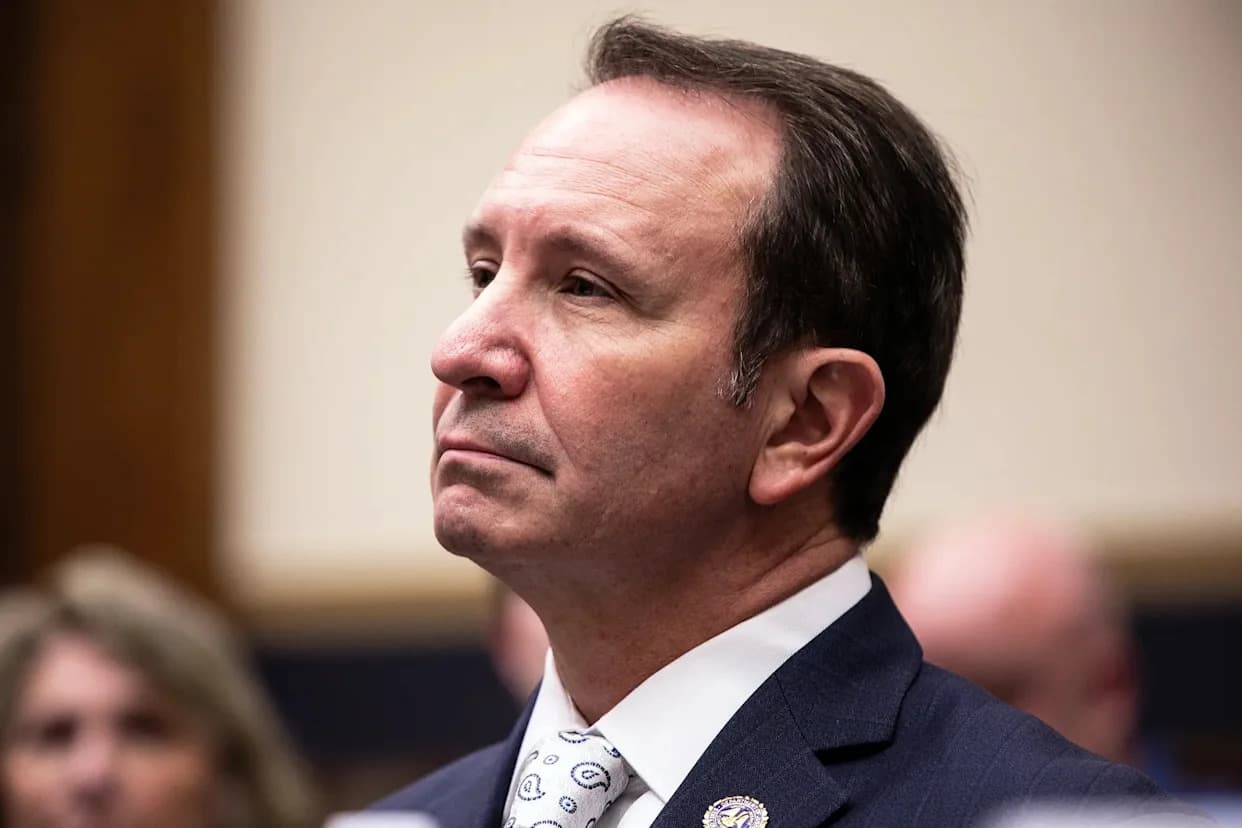
Jeff Landry during a Weaponization of the Federal Government Subcommittee hearing in Washington on March 30, 2023.(Valerie Plesch / Bloomberg via Getty Images)
Last week brought two consequential blows to democratic norms in Louisiana after a U.S. Supreme Court ruling weakened protections under the Voting Rights Act. Within days, Gov. Jeff Landry suspended congressional primaries and moved to redraw the state’s district map — and the Republican-controlled legislature advanced a measure that would abolish a separately elected criminal clerk position won by an exonerated candidate.
Timeline and What Happened
Redistricting Push and Primary Suspension
One day after the Louisiana v. Callais ruling, Gov. Jeff Landry ordered the suspension of scheduled congressional primary elections and directed the state legislature to pursue a new congressional map aimed at the 2026 cycle. Because Louisiana’s election calendar already included May ballots and early voting, the timing produced immediate logistical and legal confusion.
“ATTENTION! NOTICE OF CANCELLATION.”
Voters arriving at early voting sites encountered notices that House primaries had been canceled and that votes cast in those races would not be counted. Some other contests scheduled for May 16 were allowed to proceed, but congressional primaries were paused by the governor’s directive, leaving many Louisianans uncertain about whether their ballots would be counted.
Targeting an Elected Exoneree
On the same day the governor suspended congressional primaries, the legislature passed — and Landry signed — Senate Bill 256, which would fold the Orleans Parish criminal clerk of court functions into the city’s civil clerk’s office, effectively abolishing the separately elected criminal clerk position. The move came after Calvin Duncan, who was wrongfully convicted in 1981, exonerated and had his sentence vacated in 2021, won election to that criminal clerk position.
Duncan, who rebuilt his life after exoneration, graduated from law school in his 60s and campaigned on justice-reform goals, filed a federal lawsuit challenging the law. A U.S. district judge, John deGravelles, temporarily blocked enforcement of SB256, declaring the law unconstitutional and enjoining Gov. Jeff Landry and Secretary of State Nancy Landry from enforcing it — at least for now.
Why This Matters
These back-to-back moves — suspending congressional primaries amid a last-minute redistricting push and rushing to eliminate an elected office won by an exonerated candidate — have prompted legal battles and concern among voting-rights advocates, election officials, and many voters. The events highlight broader tensions over redistricting, the timing of election administration, and the balance between legislative power and voters’ choices.
The legal disputes continue, and their outcomes will shape not only Louisiana’s immediate elections but also broader discussions about election timing, voting rights protections, and the safeguarding of elected offices from rapid statutory changes after competitive races.
Help us improve.