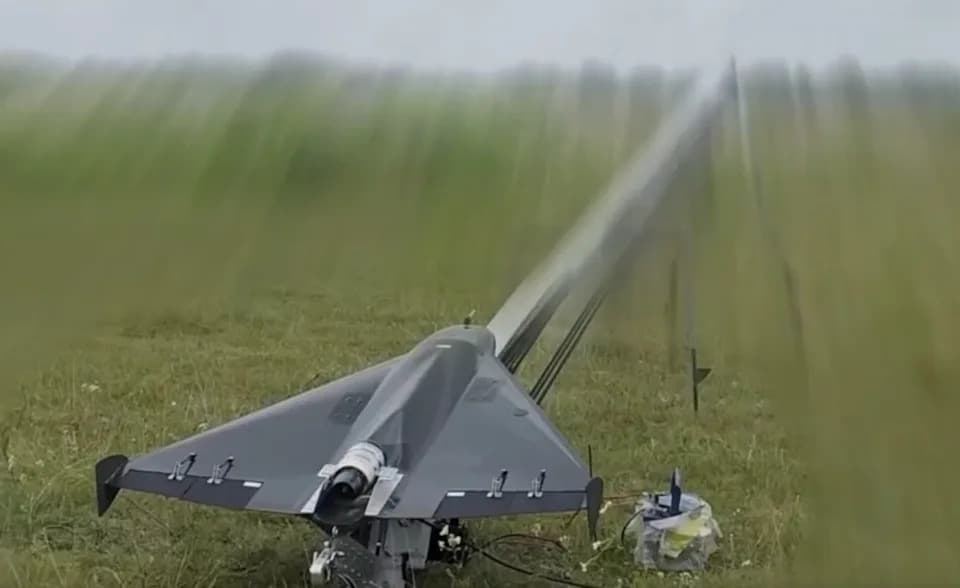
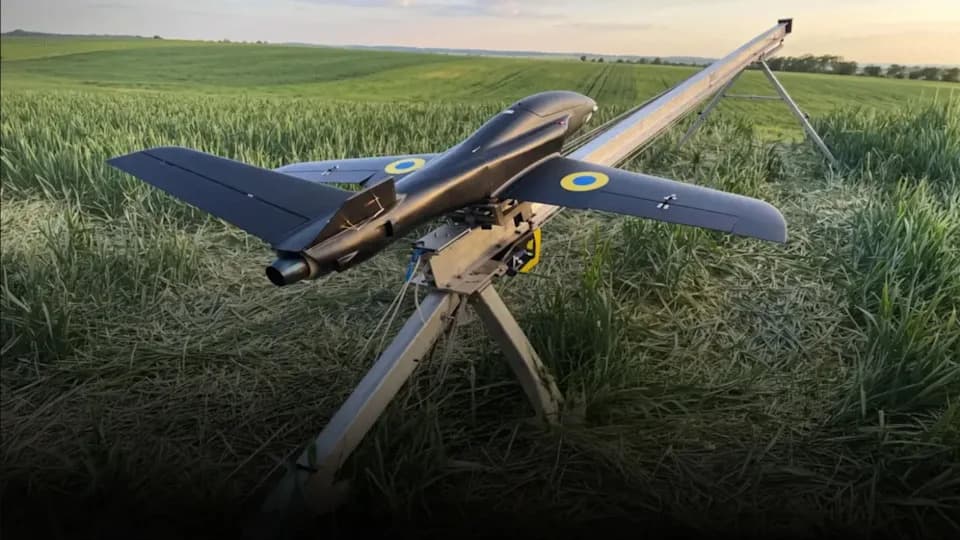
Sky Map, a Ukrainian command‑and‑control platform, is being used in the Gulf to detect and help defeat Iranian Shahed attack drones by fusing acoustic sensors, radar and AI. Low‑cost Ukrainian interceptor drones (about $1,000–$3,000 each) are being paired with the system to shoot down Shahed‑type loitering munitions that cost roughly $20,000–$50,000. The US has deployed Sky Map at Prince Sultan Air Base and Ukrainian teams have trained US forces; the Pentagon has pledged $350 million to expand counter‑drone capabilities. While effective and far cheaper per kill than Western interceptors, these interceptors cannot replace high‑end defences against ballistic missiles.
How Ukraine's Sky Map and Low‑Cost Interceptors Are Fighting Iranian Shahed Drones In The Gulf
INTERACTIVE - Irans drone arsenal Shahed Kaman Mohajer-1777887892
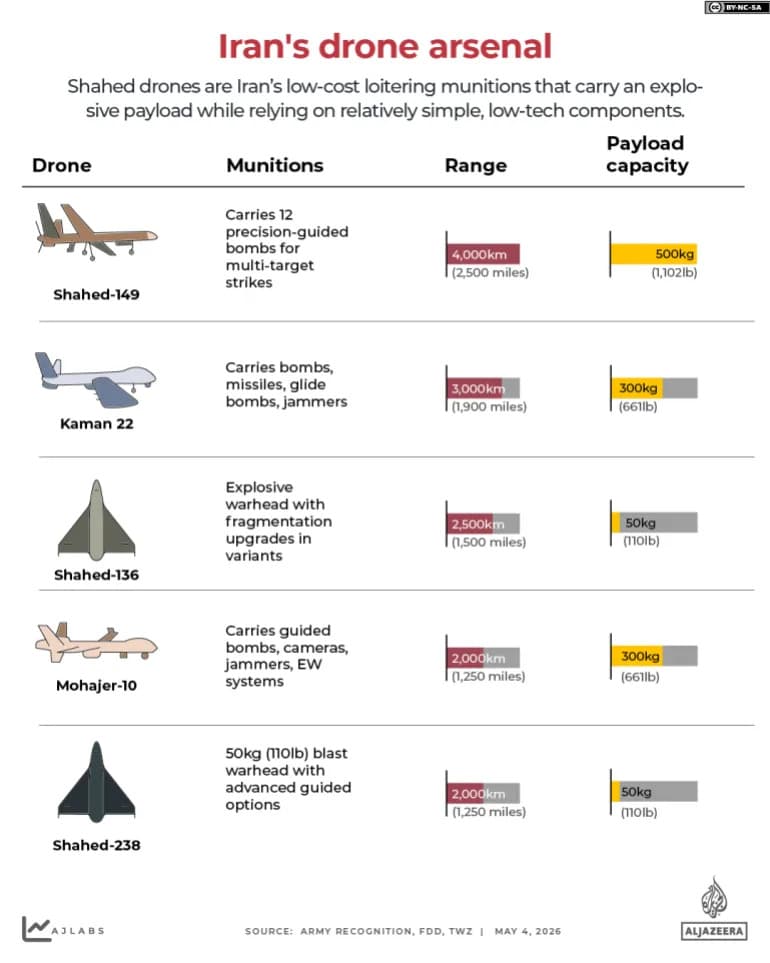
Cheap, mass‑produced one‑way attack drones have reshaped the latest escalation involving the United States, Israel and Iran. As Tehran fields Shahed‑type loitering munitions against energy infrastructure, airbases and other strategic targets across the Gulf and in Israel, US and allied forces have relied on costly missile interceptors. Gulf states and their US partners are increasingly turning to Ukrainian counter‑drone technology that has been battle‑tested in the war with Russia.
What Is Being Deployed
According to Reuters, the US military has deployed Sky Map — a Ukrainian command‑and‑control (C2) platform — at Prince Sultan Air Base in Saudi Arabia. Ukrainian officers reportedly traveled to the base to train US personnel on the software. President Volodymyr Zelenskyy also visited Saudi Arabia, the UAE and Qatar in late March and signed decade‑long defence agreements, and Ukrainian teams have said they participated in operations using domestically produced interceptor drones in the Gulf.
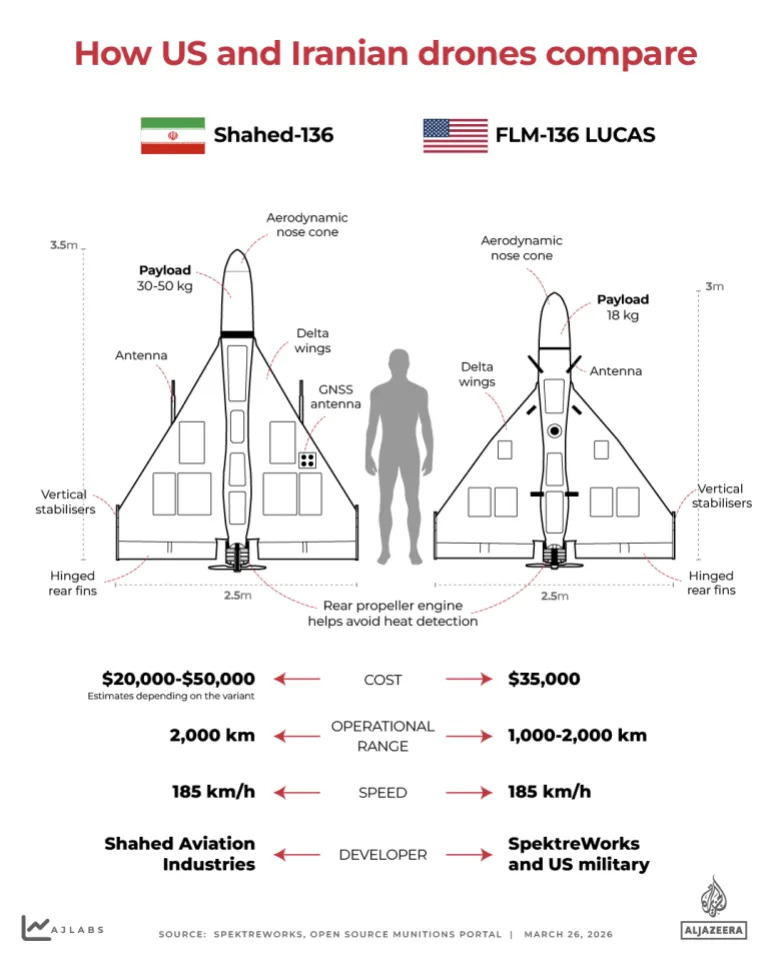
(Al Jazeera)
How The Shahed Threat Works
The Shahed‑136 is a low‑cost Iranian one‑way attack drone that became prominent after Russian use in Ukraine in 2022. The aircraft has a simple triangular planform, is roughly 3.5 m long with a 2.5 m wingspan, and uses a piston engine that makes it loud but gives it a small radar signature at low altitude. Each Shahed‑type drone is estimated to cost roughly $20,000–$50,000, far lower than the roughly $4 million a Patriot interceptor missile can cost.
Shahed drones are typically GPS‑guided to preprogrammed coordinates; newer variants include anti‑jamming measures. Their low cost and volume make them effective when launched in swarms or waves.
INTERACTIVE - Sting-interceptor-drone-correction-1777887894
Ukrainian Interceptors And Costs
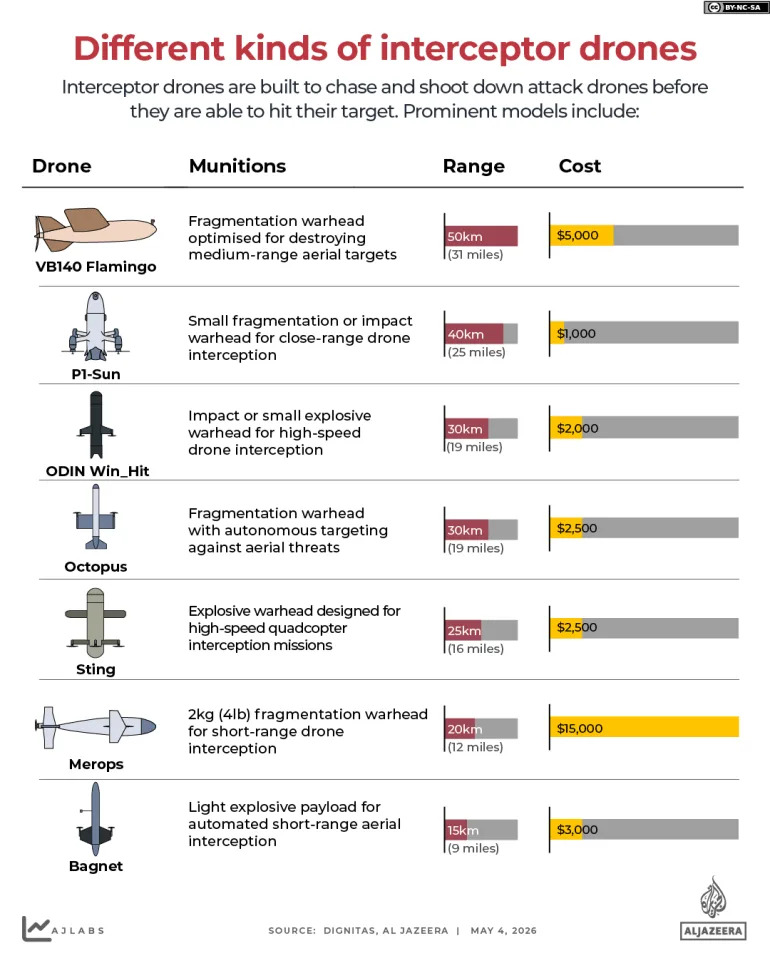
Interceptor drones are reusable platforms designed to chase and destroy one‑way attack drones before impact. Ukrainian interceptor models are inexpensive compared with Western missiles, generally costing about $1,000–$3,000 each. Notable systems include:
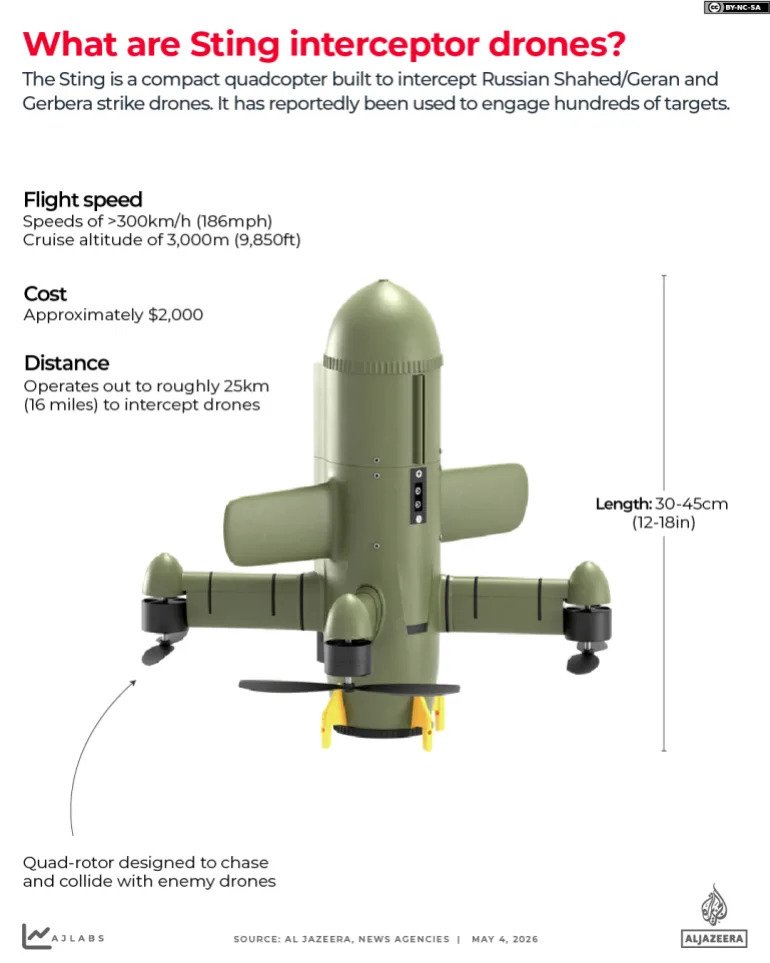
- Sting — A compact Ukrainian quadcopter (about 30–45 cm) that can reach speeds up to ~342 km/h, use thermal imaging to acquire targets, carry a small explosive payload, and return if no target is found.
- P1‑Sun — A Sting‑like, partly 3D‑printed interceptor from Skyfall with speeds near 300 km/h.
- ODIN Win_Hit — A bullet‑shaped interceptor from ODIN built for short, high‑intensity missions; top speeds around 300 km/h with ranges of several kilometres per sortie.
- Octopus 100 — A fast Ukrainian design capable of 300+ km/h and higher operating altitudes; produced at scale in the UK.
- Bagnet — A fast‑response interceptor introduced in 2024, optimized for engaging loitering munitions and reconnaissance UAVs.
- Merops — A US‑developed, AI‑guided, GPS‑jam‑resistant interceptor with higher unit cost (reported near $15,000).
- VB140 Flamingo — A longer‑range interceptor capable of operating at higher altitudes with ranges reported up to ~50 km.
Sky Map: Sensors, Fusion And Operations
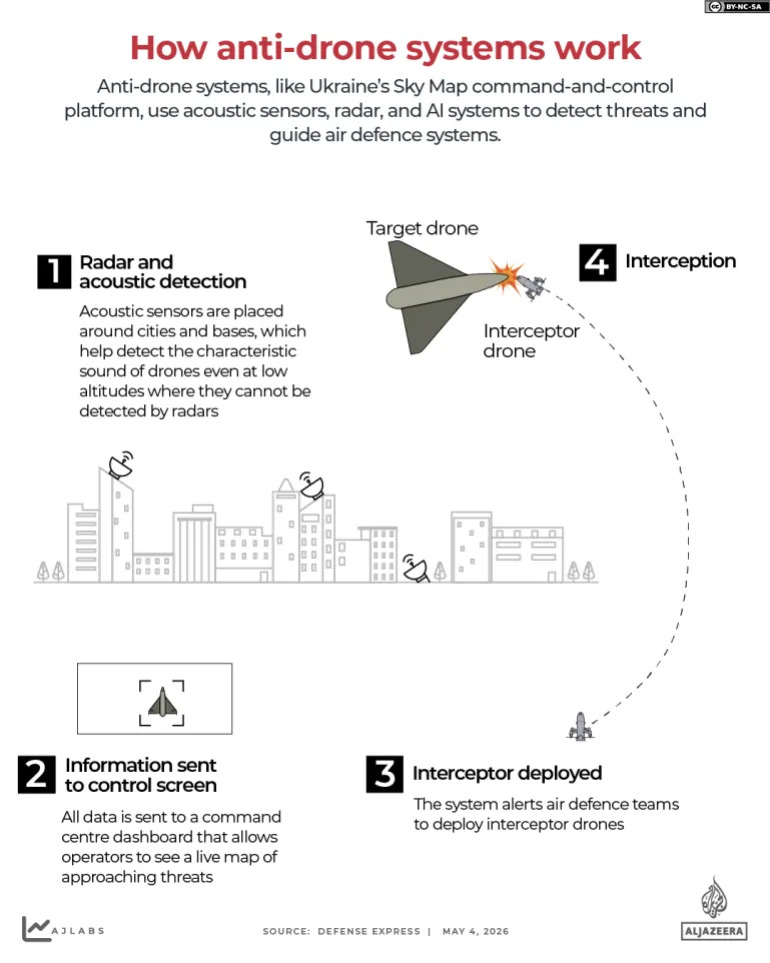
Sky Map, created by the Ukrainian company Sky Fortress (founded in 2022), is a C2 platform that fuses inputs from acoustic sensors, radar and AI to detect incoming drones and vector interceptors. Reuters reports Sky Fortress deployed more than 10,000 acoustic sensors across Ukraine — high‑sensitivity microphones tuned to distinctive engine signatures — to improve early detection. Sky Map integrates those acoustic cues with radar tracks and AI classification to build a clearer, faster picture of incoming threats.
INTERACTIVE - Different kinds of interceptor drones sting merops bagnet_edited-1777894060
Interceptors are typically flown by trained operators who monitor live camera feeds on screens or via first‑person‑view goggles near the engagement area. The systems are increasingly autonomous: onboard sensors, inertial navigation and AI assistance enable rapid midair course corrections, target tracking, and continued navigation when GPS is jammed.
Deployment, Effectiveness And Limits
Ukraine's Defense Council has said using an interceptor drone to down a Shahed is more than 25 times cheaper than using a Western surface‑to‑air missile. That cost advantage, plus the ability to mass‑produce interceptors, makes the approach attractive when defending against waves of low‑cost attack drones. The Pentagon has also announced a $350 million commitment to bolster counter‑drone capabilities with cameras, sensors and interceptors.
INTERACTIVE - How anti-drone systems work sky map-1777887890
Analysts note important limits: interceptor drones are not a replacement for layered air defence against high‑end threats and cannot substitute for systems designed to intercept ballistic missiles. Saturation attacks, stealthy low‑observable platforms, or sophisticated electronic warfare can still pose challenges.
What This Means
The adoption of Sky Map and low‑cost interceptors in the Gulf illustrates a shift toward integrated, affordable counter‑drone layered defence that emphasizes sensor fusion, AI, and massed, inexpensive interceptors to blunt waves of one‑way drones. The approach is not a panacea, but it provides a cost‑effective layer that complements existing air‑defence architectures.
Help us improve.