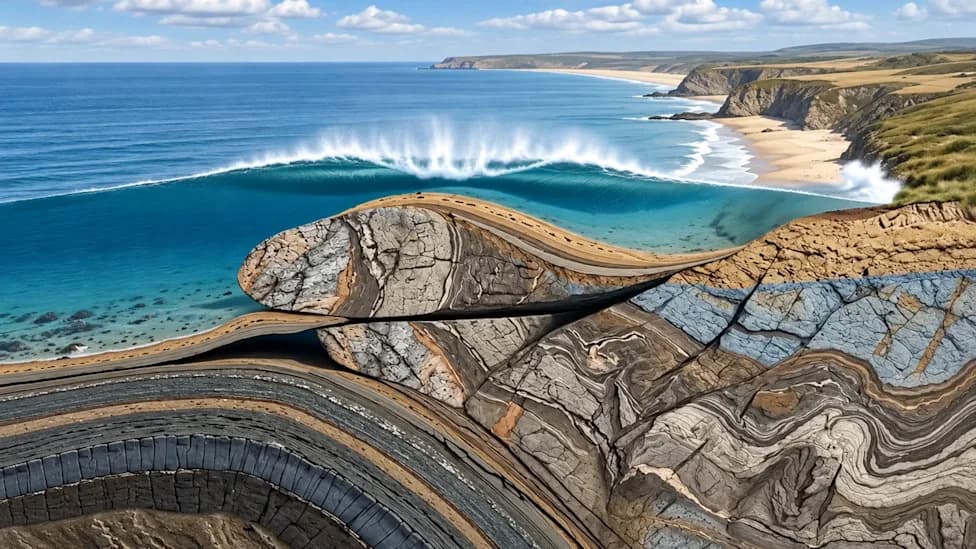
The Shumagin Gap — a creeping segment of the Alaska–Aleutian subduction zone — was imaged using marine electromagnetic methods across a 75‑mile (120‑km) transect. Contrary to expectations, the shallow fault shows little open pore space and fluids at roughly normal pressure, not the high pressures thought to lubricate creeping faults. The fault’s rugged surface and a heterogeneous upper plate suggest stability arises from fault roughness and variable rock strength rather than pervasive high‑pressure fluids. These findings challenge assumptions used in subduction‑zone hazard models and underline the need for more offshore data.
Quiet Alaska Fault Lacks Expected Fluids — Forcing Scientists To Rethink Creeping Subduction Zones
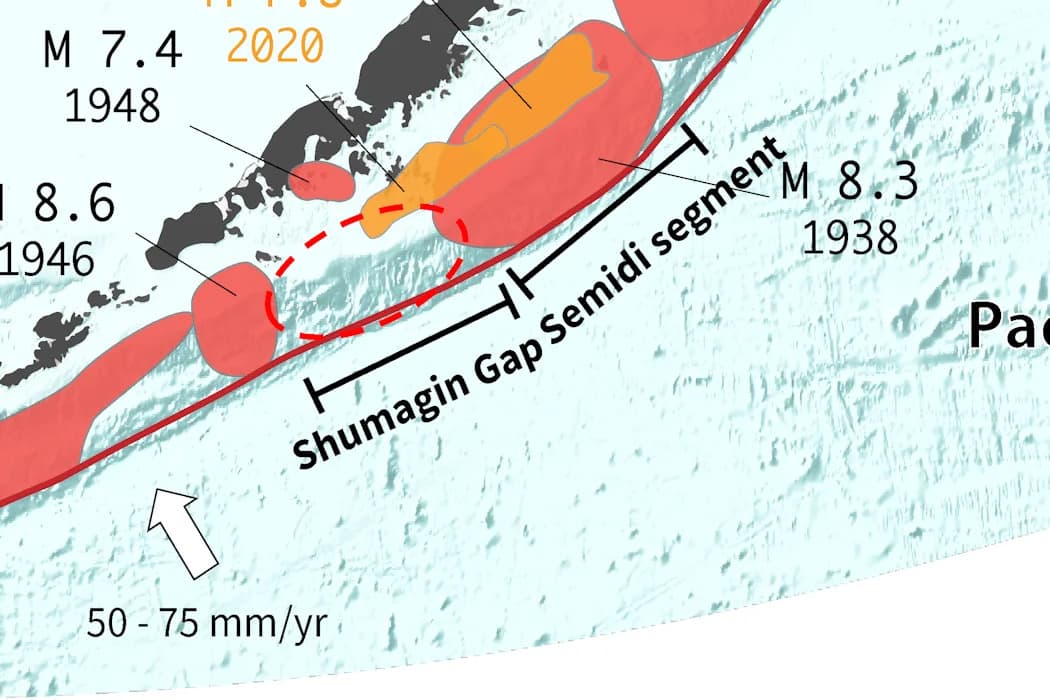
Large earthquakes have been common along the Alaska-Aleutian subduction zone, except at the Shumagin Gap. Yinchu Li
Not all earthquake faults behave the same way. Some rupture suddenly and violently; others slip slowly and steadily over time. For decades, the prevailing explanation for slowly slipping (creeping) faults has been abundant, high‑pressure fluid along the fault that effectively lubricates it. But a new study of the Shumagin Gap — a relatively quiet portion of the Alaska–Aleutian subduction zone — challenges that idea.
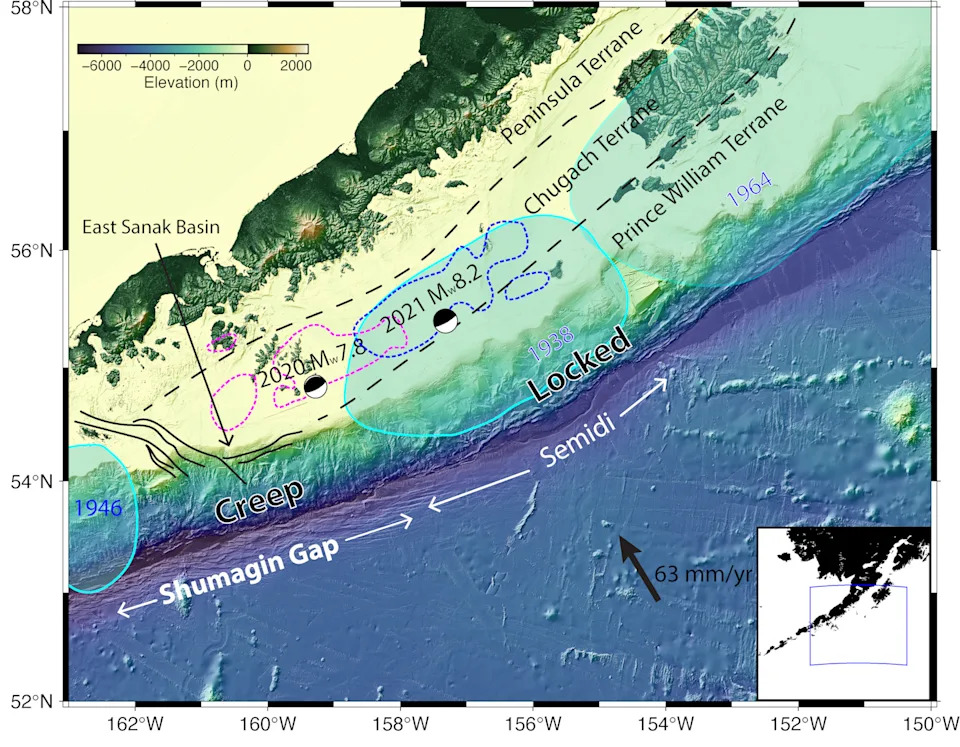
A topographic map of the Alaska-Aleutian subduction zone highlights the Shumagin Gap. The magnitude 7.8 earthquake in 2020 occurred at its inland edge, and a magnitude 8.2 earthquakes in 2021 struck nearby. Other large earthquakes are shown from 1938, 1946 and 1964.Yinchu Li, et al., 2026
What We Did
My colleagues and I used marine electromagnetic imaging to survey a 75‑mile (120‑kilometer) stretch of seafloor across the Shumagin Gap. This technique maps how easily underground materials conduct electricity. Because salty water conducts electricity much better than most rocks, the method is particularly sensitive to locating fluids and potential fluid pathways beneath the seafloor: a ship tows an electromagnetic source while seabed receivers record the response.
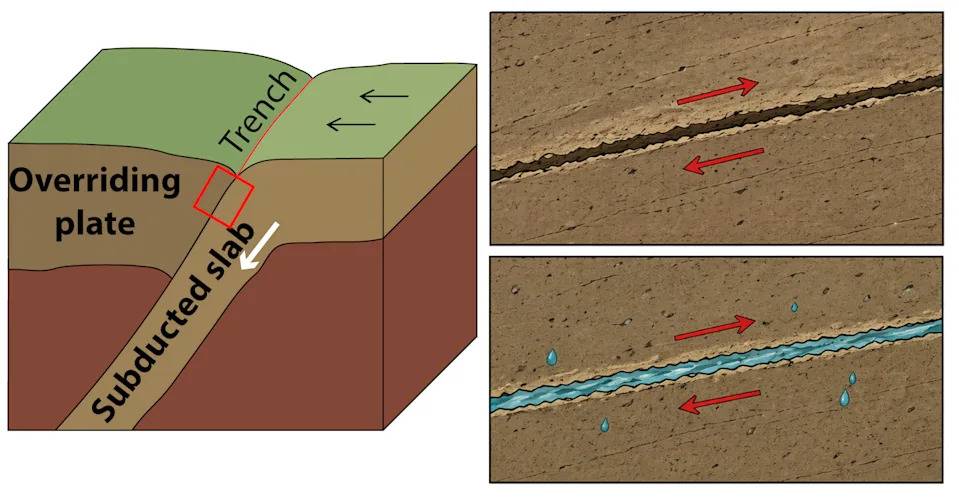
Scientists often describe subduction faults as either locked or creeping. Locked patches, top right, stick as stress builds, then rupture suddenly in earthquakes. Creeping patches slide more gradually. One common explanation has been that high-pressure fluids help keep them weak and slippery, lower right. But new research questions that fluid-based explanation. At the Shumagin Gap, we found too little fluid pressure for fluid alone to explain the slow, consistent slide.Yinchu Li, et al., 2026
What We Found
Contrary to expectations, the shallow portion of the Shumagin fault — the part closest to the ocean — shows little open pore space where fluid could accumulate, and the fluids that are present appear to be at roughly normal pressure rather than the elevated pressures predicted by the high‑pressure lubrication model. In addition, the fault surface appears rugged and irregular, and the overlying (upper) plate is a patchwork of stronger and weaker rocks. We also identified likely routes where fluids can drain upward into the rock above the fault rather than building pressure along the slip surface.
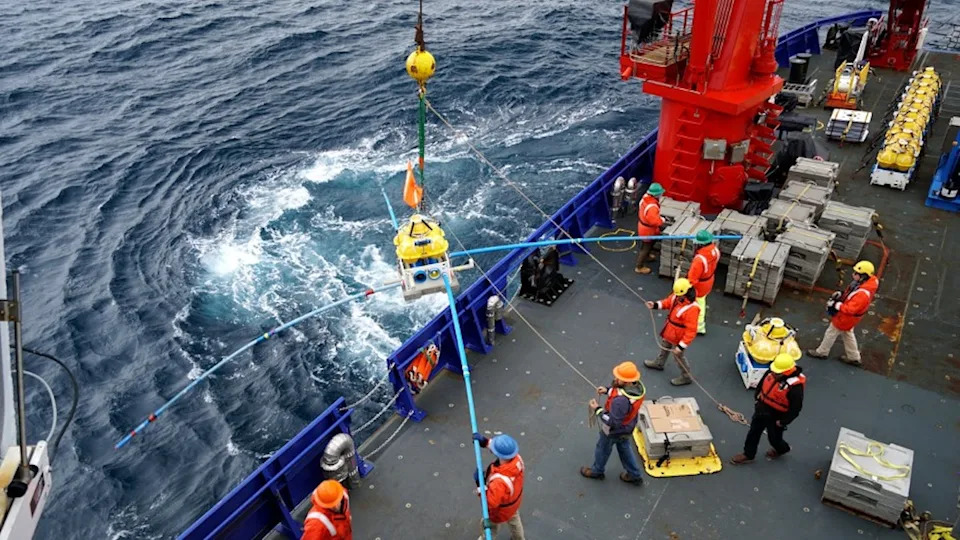
Researchers deploy marine electromagnetic instruments off Alaska to image fluids and rock structure beneath the seafloor.EMAGE team/Kerry Key
Why This Matters
These observations indicate the Shumagin Gap is not quiet because it is heavily lubricated. Its long-term stability probably arises from a combination of factors: fault roughness, heterogeneity in rock strength, and locally variable fluid presence. That matters because many models assume fluid pressure is a key control on whether a subduction fault will creep or lock and then rupture suddenly.
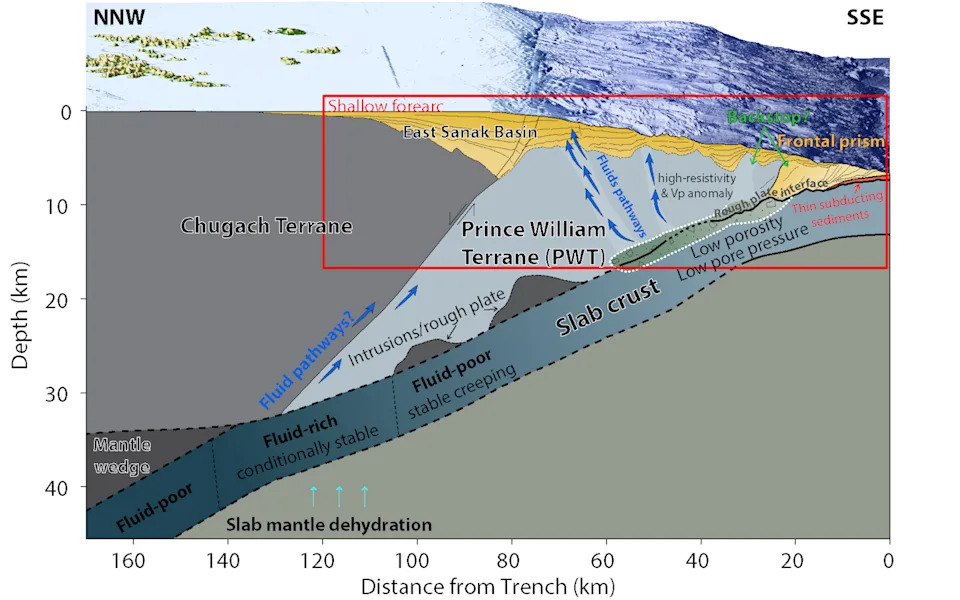
A cross-sectional illustration of the Shumagin Gap shows a rough plate interface and limited fluid.Yinchu Li, et al., 2026
If other creeping segments similarly lack high fluid pressure, some apparently stable patches could be governed by different mechanical controls than previously thought. That would change how scientists assess earthquake and tsunami hazards for coastlines from Alaska to Japan and the U.S. Pacific Northwest. Shallow slip near a trench is what drives the most destructive tsunamis; historic Alaska–Aleutian events in 1946, 1957 and 1964 produced tsunamis that reached and damaged distant shores such as Hawaii and California.
Next Steps
There is no single, simple explanation for why some faults creep. More and better offshore observations — combining geodesy, seismology, and electromagnetic imaging — will help refine models of fault behavior and improve long‑term assessments of earthquake and tsunami risk.
Study and Funding
This research was led by Yinchu Li at the Georgia Institute of Technology and was funded by the National Science Foundation (grants OCE‑1654652 and OCE‑1654619).
This article is republished from The Conversation, a nonprofit, independent news organization.
Help us improve.