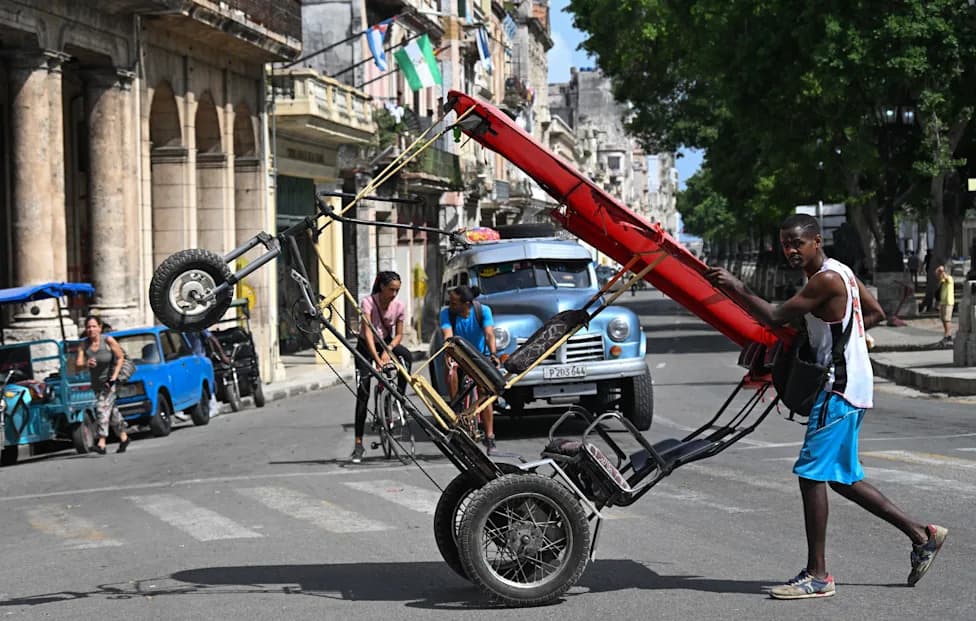
Cuba condemned a new U.S. executive order as "collective punishment" and staged large May 1 demonstrations outside the U.S. embassy in Havana led by President Miguel Díaz-Canel and Raúl Castro. The sanctions target individuals tied to major sectors of Cuba's state-led economy and officials accused of rights abuses or corruption. Cuban officials say a January fuel blockade has worsened shortages and power cuts; authorities also claim to have gathered over six million pro-government signatures, a process critics have questioned.
Cuba Calls New US Sanctions 'Collective Punishment' as Massive May 1 Rally Targets U.S. Embassy
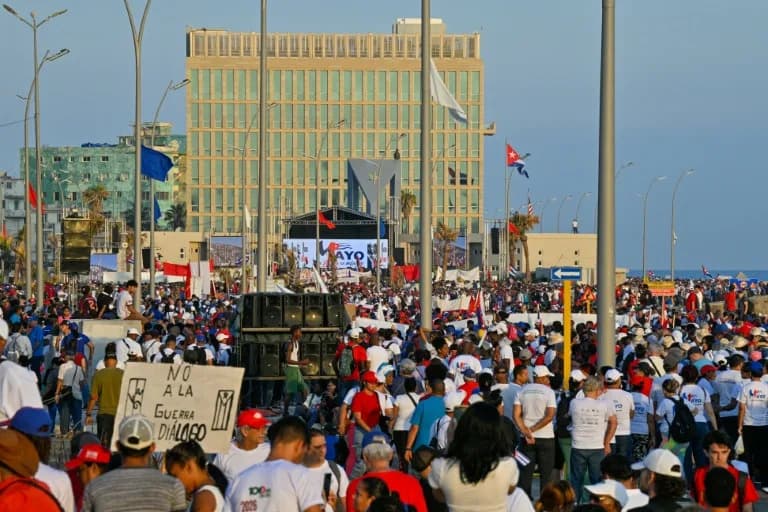
Thousands attended marches in Havana and other Cuban cities, vowing to 'defend the homeland' (ADALBERTO ROQUE)(ADALBERTO ROQUE/AFP/AFP)
Cuban authorities denounced new sanctions announced by U.S. President Donald Trump as a form of "collective punishment" on Friday, as tens of thousands marched in Havana during May 1 celebrations to protest outside the American embassy.
The executive order announced that sanctions would be applied to individuals linked to broad swaths of Cuba's state-directed economy — including energy, defense and related materiel, metals and mining, financial services, and security — as well as to officials accused of serious human rights abuses or corruption.
Cuban reaction
Cuban Foreign Minister Bruno Rodríguez posted on X in English: "We firmly reject the recent unilateral coercive measures adopted by the #UnitedStates government. These actions demonstrate an intention to impose, once again, collective punishment on the Cuban people." In a separate Spanish-language statement he described the measures as "illegal" and "abusive."
Economic and humanitarian context
Cuba, already facing prolonged economic stagnation, says conditions have worsened since Washington imposed a fuel blockade in January. Cuban officials report that only one Russian oil tanker has reached the island since that measure, and shortages of basic supplies and frequent power outages have become more common. Tourism, previously a key source of revenue, has also declined sharply.
May 1 demonstrations
Large crowds gathered in Havana under the slogan "Defend the Homeland," with President Miguel Díaz-Canel and former revolutionary leader Raúl Castro leading the march to the U.S. embassy. Authorities at the rally said they had collected more than six million signatures "for the homeland and for peace" over the previous six weeks, a claim critics have questioned, raising concerns about how the signatures were gathered.
Diplomatic backdrop
The new measures arrived even as both countries had shown some signs of engagement: senior U.S. officials visited Cuba for talks in April. The sanctions, however, underscore the continuing tensions between Havana and Washington and the complexity of U.S. policy toward the island.
Reporting note: Statements and figures cited in this article reflect official Cuban and U.S. announcements and claims made by local authorities and opponents.
Help us improve.