AB 1803 would add an "anti–hate speech" module to California's mandatory workplace sexual harassment training but does not define the term. Critics — including the state Assembly committee, FIRE, and prior academic and government reports — warn the mandate could waste employer time, be of uncertain effectiveness, and risk chilling protected speech. The bill is part of a package that also targets elected officials and police with additional training requirements.
California Bill Would Add 'Anti–Hate Speech' To Mandatory Workplace Training — Without Defining It
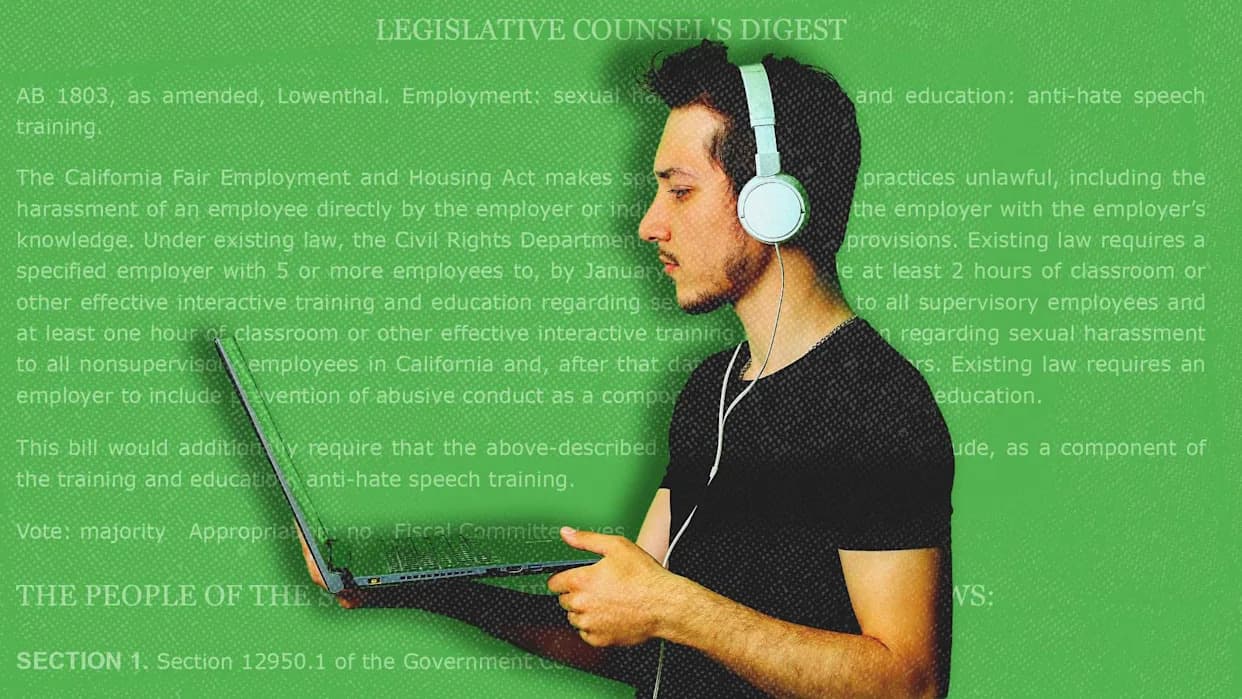
California Can't Define 'Hate Speech' But May Mandate Workplace Training Anyway
California lawmakers are proposing to expand mandatory workplace prevention training by adding an "anti–hate speech" component to existing sexual harassment programs — even though neither state law nor the bill itself offers a clear definition of "hate speech." Assembly Bill 1803, authored by Assemblymembers Josh Lowenthal and Rick Chavez Zbur and co‑authored by Corey Jackson, would require employers with five or more employees to include anti–hate speech instruction as part of their biennial sexual harassment training.
What AB 1803 Would Require
Under current California rules, supervisors must receive at least two hours of sexual harassment training and other employees at least one hour, every two years. AB 1803 would add an anti–hate speech component to those existing trainings, tasking employers — and the state Civil Rights Department if involved — with implementing the new curriculum.
Supporters' Rationale
"AB 1803 is about making our workplaces safer, more respectful, and more inclusive for everyone," Assemblymember Josh Lowenthal said in a press release. "Hate speech has no place on the job, just as sexual harassment has no place on the job."
Critics' Concerns
Critics warn the bill creates mandatory training obligations without clarifying what conduct qualifies as "hate speech." The California Assembly Committee on Labor and Employment noted that "as drafted, AB 1803 does not define hate speech" and suggested the author consider adding a definition to guide employers and the Civil Rights Department. Free‑speech advocates at the Foundation for Individual Rights and Expression (FIRE) argue that vague terms like "vilifies," "humiliates," and "incites hatred" lack precise legal meaning and risk chilling constitutionally protected expression.
Evidence On Training Effectiveness
Observers also question whether adding more mandatory training will improve workplace outcomes. Reporting by PBS and a 2016 U.S. Equal Employment Opportunity Commission report found limited evidence that common sexual harassment trainings prevent misconduct, and some academic research suggests such programs can inadvertently reinforce stereotypes while consuming employer time and resources.
Free Speech Context And International Examples
In the U.S., the First Amendment generally protects offensive or hateful expression unless it falls into narrow exceptions — such as direct incitement of imminent lawless action or true threats — a position echoed by organizations like the American Library Association. By contrast, some European countries have stricter criminal laws against certain forms of speech; the article cites recent high‑profile prosecutions in Germany as an example of how hate‑speech laws can be enforced more broadly.
Legislative Context And Outlook
AB 1803 is part of a legislative package that includes AB 1578 (hate‑speech training for state and local elected officials) and AB 2347 (hate‑crime training for police officers). If passed as written, the measure could prompt private employers to tip toward over‑compliance to avoid regulatory scrutiny — and potentially invite legal challenges over First Amendment concerns and vagueness.
Originally appeared on Reason.com.
Help us improve.