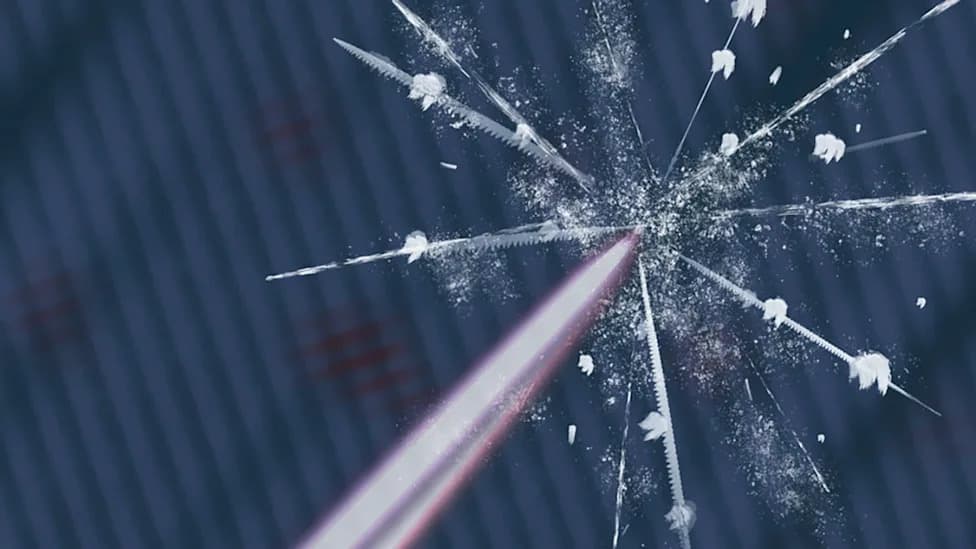
Researchers at the University of East Anglia and collaborators in South Africa demonstrate that structured light can develop handedness (chirality) while propagating through empty space. The effect is governed by the Pancharatnam topological index ℓp encoded in the beam’s initial topology; nonzero ℓp produces radial separation of left- and right-circular polarization components and the emergence of local spin. Experiments used Laguerre–Gaussian modes and a q-plate for state preparation, and the finding points to material-free approaches for chiral sensing, optical manipulation and high-dimensional encoding.
Topology Makes Light 'Handed': Chirality Emerges During Free‑Space Propagation
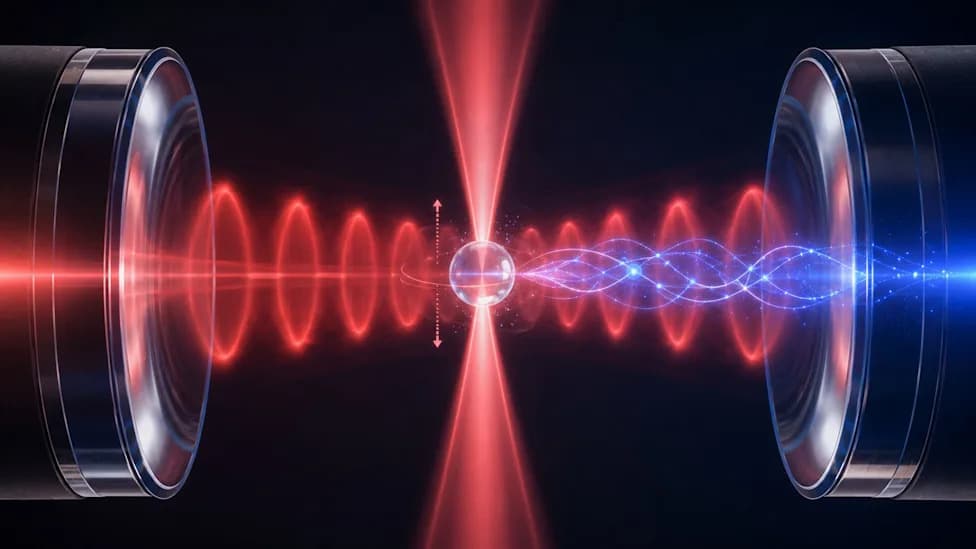
A new study shows light can generate chirality in empty space, without special materials or tight focusing. (CREDIT: AI-generated image / The Brighter Side of News)
Researchers at the University of East Anglia, in collaboration with colleagues in South Africa, report a surprising new way to control light: a beam prepared with the right internal geometry can develop handedness (chirality) as it propagates through empty space. Published in Light: Science & Applications, the study shows that this effect arises without mirrors, bulk materials or tight focusing — it is driven by a topological property encoded in the beam itself.
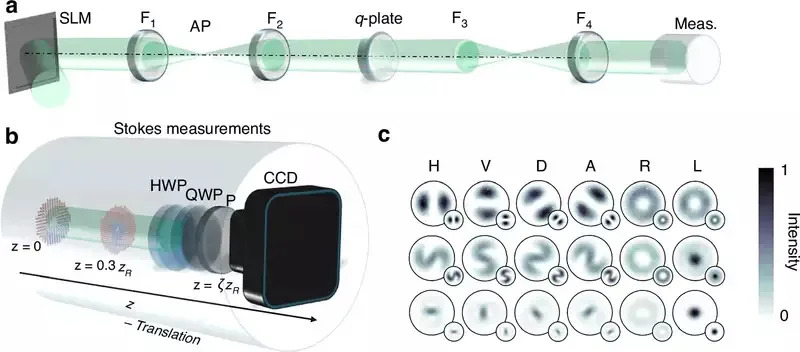
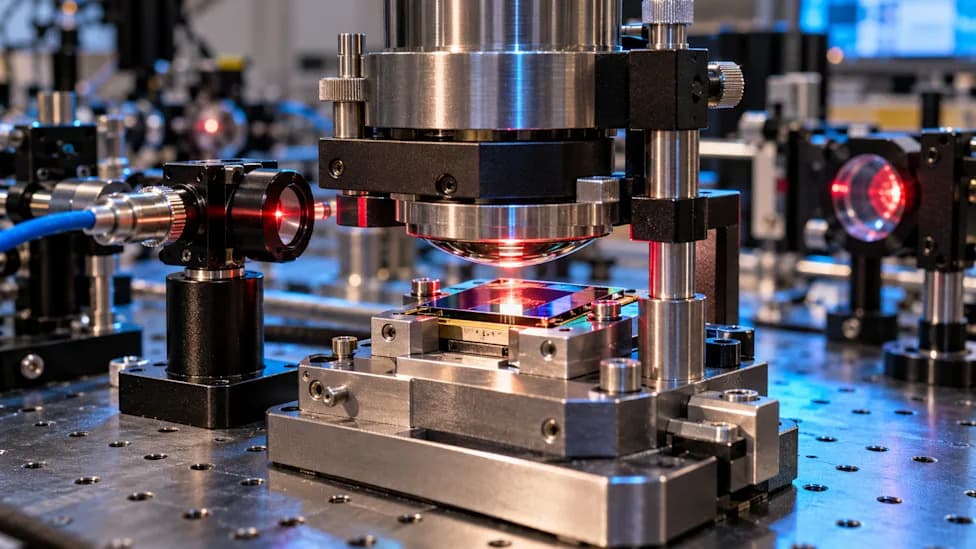
Schematic of the experimental setup depicting (a) the generation and (b) detection components. (c) Experimentally recorded polarization intensities for H, V, D, A, R and L for 3 separate propagation planes (inserts denote corresponding theoretical intensity profiles). ζ = 0, 0.5 and the farfield. (CREDIT: Light: Science & Applications)
How the Effect Works
The experiments involve structured light — beams whose amplitude, phase and polarization are shaped in a precise superposition. A key quantity identified by the authors is the Pancharatnam topological index, denoted ℓp. When ℓp is nonzero, the two circular-polarization components of the beam acquire different Gouy-phase and divergence behavior as the beam propagates in the paraxial (weakly focused) regime. That difference pushes the left- and right-circular components into different radial regions, producing a measurable radial separation and the appearance of local spin and optical chirality.
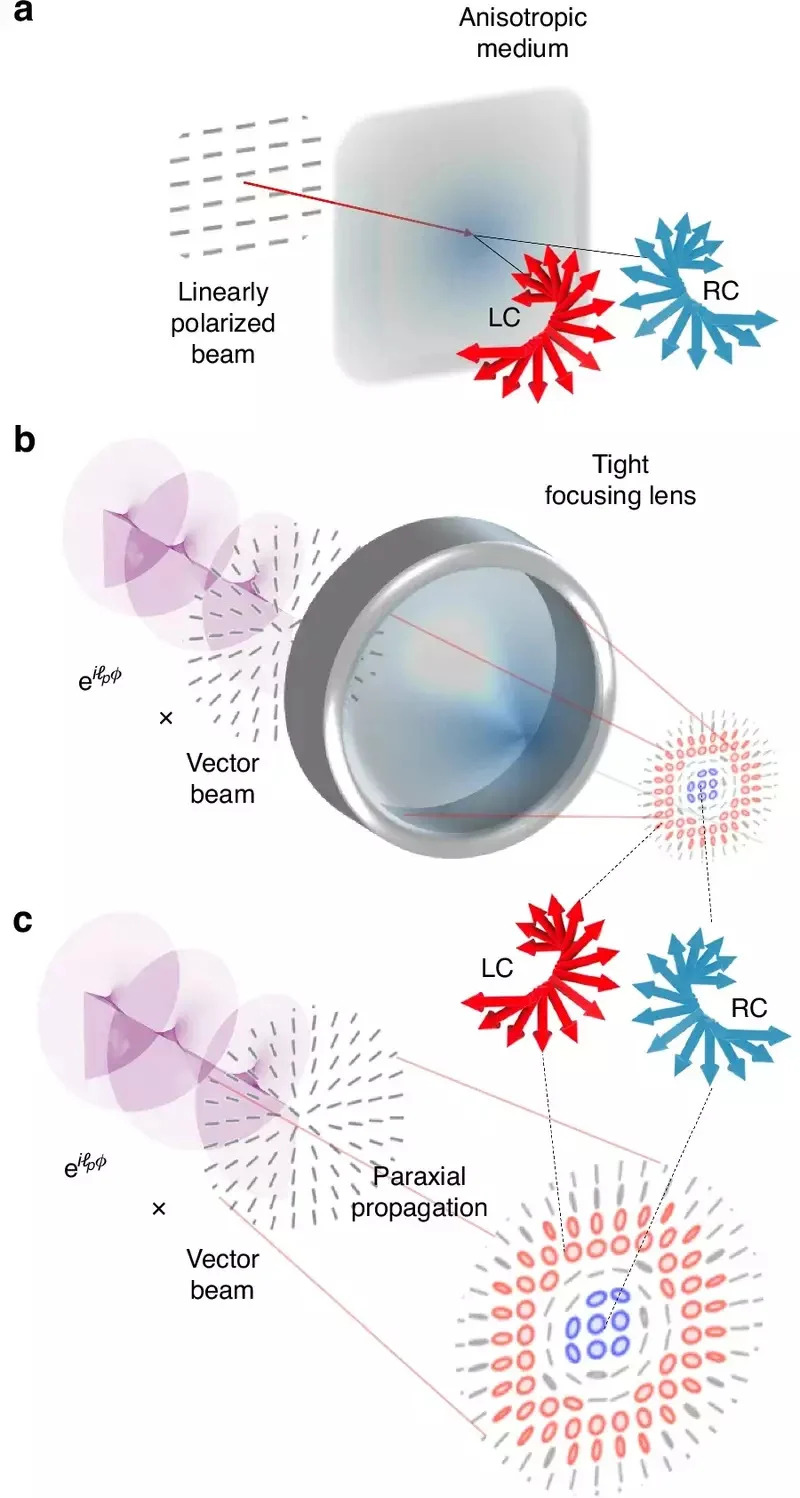
Concept of spin-separation in vectorial fields. (CREDIT: Light: Science & Applications)
Topology, Not Materials
Unlike earlier demonstrations of spin-orbit coupling that relied on tight focusing or engineered materials, this phenomenon emerges in free space because the beam’s topology — the way its polarization and phase wind together — remains encoded during propagation. As Dr. Isaac Nape (University of the Witwatersrand) explains, topology preserves certain features under smooth deformation, and here that persistent feature steers how the beam evolves.
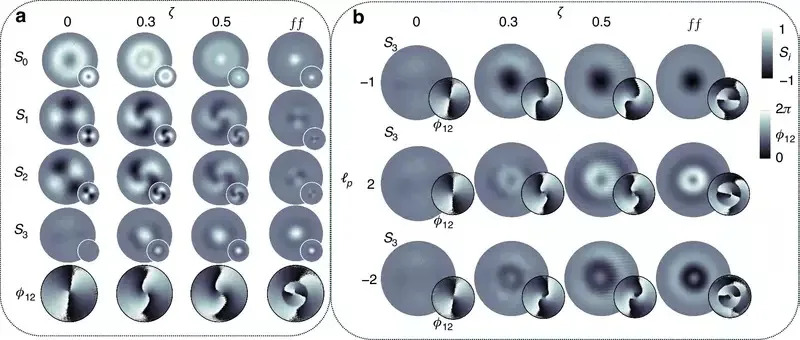
Experimental stokes parameter analysis. (CREDIT: Light: Science & Applications)
"It starts off with no spin at all," says MSc student Light Mkhumbuza, who led key experiments. "But as the beam travels forward, spinning regions appear and separate out, almost as if the spin was hiding and then revealed itself."
Experimental Approach
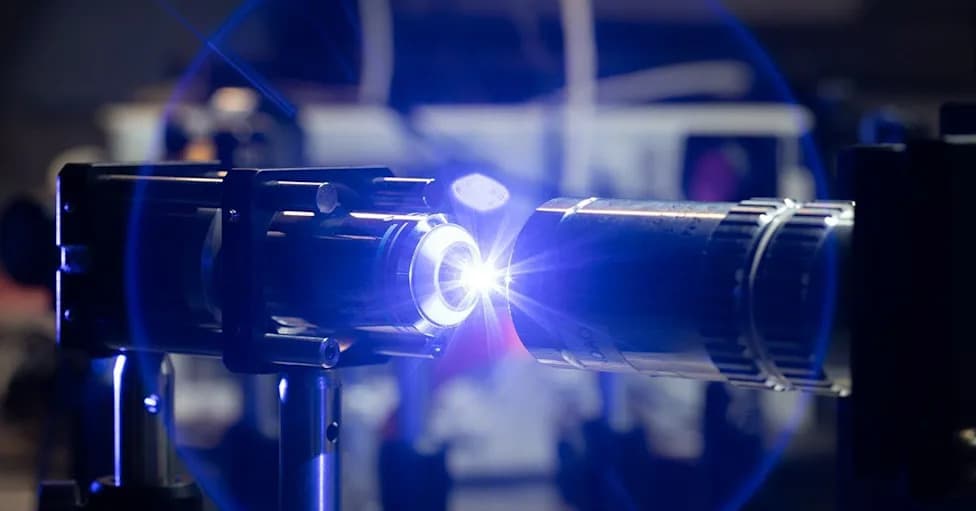
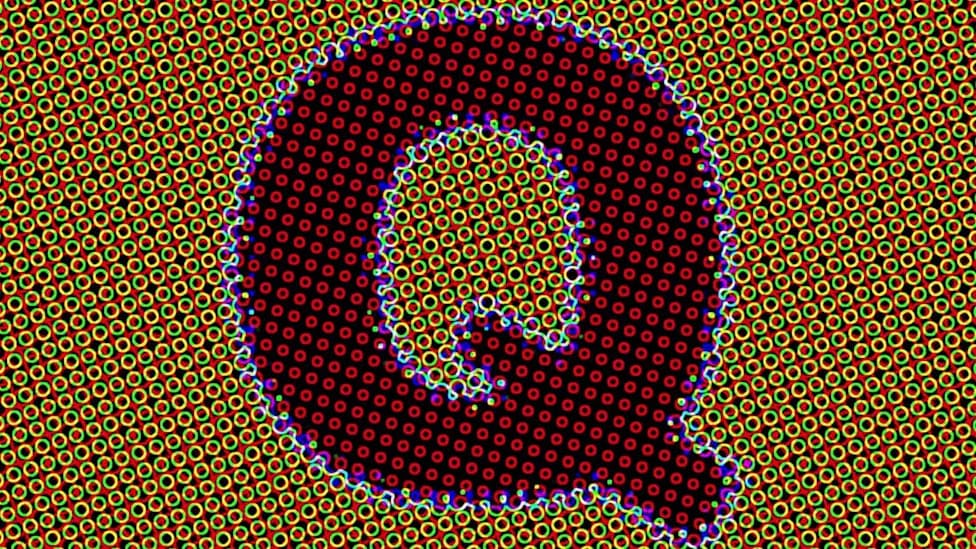
In the reported experiments the team prepared horizontally polarized Laguerre–Gaussian modes and used a q-plate to generate the required balanced superposition. The authors emphasize that the q-plate was a convenient preparation tool, not the origin of the effect — equivalent initial states can be made with spatial light modulators or interferometric schemes. The decisive ingredient is the Pancharatnam index ℓp embedded in the starting beam.
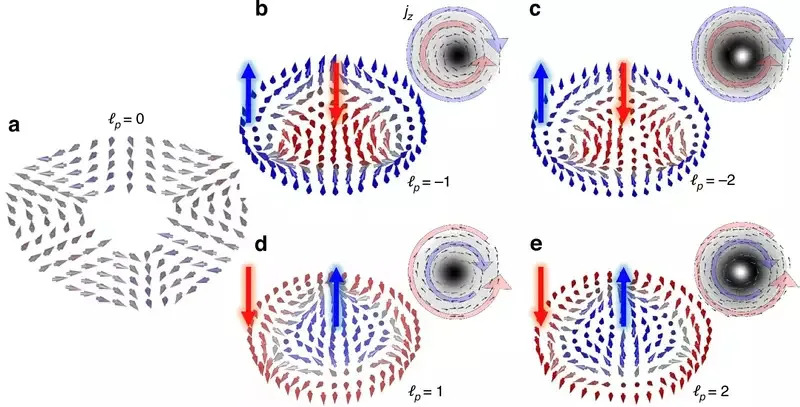
Emergent orbit-induced Hall effect. (CREDIT: Light: Science & Applications)
Key Observations
- When ℓp = 0, far-field measurements show no spin separation; the beam remains locally non-chiral.
- For ℓp ≠ 0 the left- and right-circular components separate radially, producing what the authors describe as a topology-driven optical Hall effect.
- The sign of ℓp determines which handedness dominates near the beam center; the magnitude of ℓp controls the radial profile of the spin density.
- As the beam propagates, its polarization states evolve from purely linear at the source plane to occupy the full Poincaré sphere, indicating emergence of all spin states.
Applications and Limits
The material-free, topology-driven route to chirality could simplify tasks that rely on chirality-sensitive light, including chiral sensing, molecular identification, polarization-tailored optical trapping, optical manipulation of particles, and high-dimensional information encoding for communications or quantum systems. Because ℓp offers a single tuning parameter, it may enable compact ways to encode or switch chirality without engineered surfaces.
The study also notes limitations: the authors did not directly measure the orbital angular momentum content of each polarization component, and some source-plane polarization ellipses likely arose from experimental calibration errors in the waveplates. While some transverse profiles resembled optical skyrmions, the work does not claim to engineer skyrmions or reproduce prior paraxial-skyrmion constructions.
Conclusion
This work challenges the assumption that spin–orbit effects require strong focusing or tailored materials. Instead, it reveals that free-space propagation can unlock hidden spin and chirality when a beam’s topology is prepared appropriately — a design rule that could influence future photonic devices and sensing strategies.
Help us improve.