HKU launched the I‑School in 2024 to mainstream interdisciplinary, project‑based innovation education inside a major research university. Led by Hayden So and Jason Woodward, the BSc in Innovation and Technology (inaugural cohort ~40 students, Sept 2025) emphasizes semester‑long projects, human‑centered design and industry engagement. The program experiments with novel assessment (multiplicative pass/fail) and aims to prepare graduates as founders and intrapreneurs across the Greater Bay Area. Planned expansions include a potential MSc, deeper AI integration and regional short courses.
HKU’s I‑School: Building a New Generation of Interdisciplinary Innovators
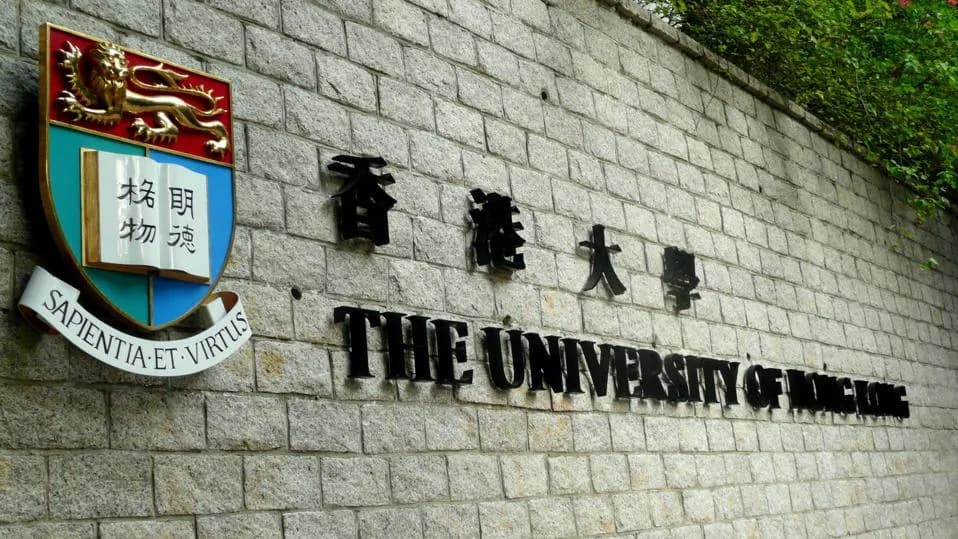
Hong Kong, China - October 16, 2008: A view of University of Hong Kong, Hong Kong (China)getty
The University of Hong Kong (HKU) launched a dedicated School of Innovation—branded the I‑School—in 2024 to train graduates who can move fluidly across disciplines, tackle ill‑defined societal problems, and turn prototypes into practical solutions. The I‑School is an institutional effort to embed integrative, project‑driven innovation at the heart of a major research university.
Why the I‑School Was Created
Major challenges—climate adaptation, public health, urban systems and artificial intelligence—do not respect academic boundaries. HKU’s I‑School responds to this reality by combining technical depth, human‑centered design and entrepreneurship so students can address complex problems that span multiple domains.
Inspiration and Context
The I‑School’s founding concept draws on international models such as UC Berkeley’s melding of rigorous technical training with entrepreneurial practice and Olin College’s project‑based, department‑free curriculum. It also aligns with the Hong Kong Innovation and Technology Development Blueprint (2023), which positions innovation as central to Hong Kong’s economic future and to stronger integration across the Greater Bay Area.
Leadership and Approach
HKU appointed Associate Professor Hayden So (Faculty of Engineering) as Director, with Jason Woodward (Senior Academic Partner at Olin College of Engineering and former Singapore Management University faculty) as co‑Director. So holds a doctorate in Electrical Engineering and Computer Sciences from UC Berkeley and researches reconfigurable computing across hardware and software. Woodward earned a PhD from Harvard in a joint program spanning business and engineering and focuses on complex product and systems design.
Hayden So: "I like working with different people across different domains. When we collaborate across faculties, imagine the impact we can make."
Curriculum and Pedagogy
The I‑School’s flagship degree, the Bachelor of Science in Innovation and Technology (BSc I&T), welcomed its inaugural cohort of about 40 students in September 2025. The curriculum is anchored by semester‑long project workshops across all four years. Sample courses include Physical Computing, Modelling the World, Sensing the World and Forms and Materials.
Pedagogically, the program flips the traditional sequence: students begin building projects from day one and later pursue disciplinary depth as a minor. The major provides the innovation framework; the minor supplies technical specialization. Assessment emphasizes teamwork, iterative prototyping and public demonstration rather than high‑stakes exams.
Signature Projects and Assessment Experiments
A notable example is the first‑year course Human‑Centered Innovation, taught by Jason Woodward and Rachel Lui, which culminated in a public showcase called InnoJoy. Students were tasked with designing experiences that create joy for passersby in a campus lobby. The exercise required ethnographic interviews, design iteration and public testing—producing nine distinct interpretations of the same brief.
The course also tested alternative grading: a pass/fail multiplicative system in which students received a 0 or 1 across core dimensions (attendance, team contribution, engagement, etc.). A zero in any essential area results in a failing grade, ensuring baseline expectations while avoiding minute comparisons of individual effort within teams.
Regional Integration and Future Plans
Woodward frames the I‑School as part of a regional strategy that leverages Hong Kong’s role as a gateway to mainland China and the Greater Bay Area’s manufacturing and prototyping strengths—especially in Shenzhen. The school aims to prepare graduates to launch startups and to act as intrapreneurs inside established firms.
Planned expansions include a potential Master of Science in Innovation and Technology, deeper incorporation of artificial intelligence into the curriculum, and short summer programs in technopreneurship and social‑impact innovation for regional students.
Why This Matters
The I‑School provides a test case for scaling integrative, project‑based, human‑centered innovation education inside a major research university. If successful, HKU’s approach could influence how large institutions worldwide prepare students to solve complex, cross‑disciplinary challenges.
This article was originally published on Forbes.com.
Help us improve.