Archaeologists at Oxyrhynchus uncovered a Roman-era mummy with a fragment of Homer’s Iliad attached to its abdomen — the first known example of a literary text used in this funerary context. The passage matches the Catalogue of Ships in Book II, but the papyrus is fragile and fragmented. Researchers have not yet applied advanced imaging and are considering hypotheses ranging from an embalmer’s signature to an unconventional protective role. The site also yielded tombs with mummies bearing gold or copper on their tongues and jars containing burned human remains and animal bones.
Rare Roman-Era Mummy Found With Fragment of Homer's Iliad Affixed to Abdomen
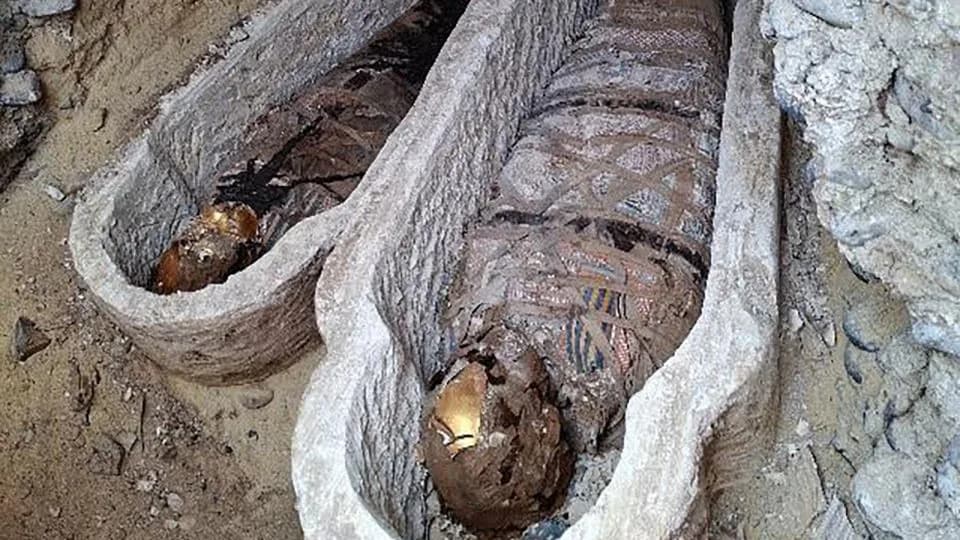
The mummy was among several to be found at a site in Egypt. - Ministry of Tourism and Antiquities
Archaeologists working at the ancient Egyptian city of Oxyrhynchus have uncovered a Roman-era mummy with a fragment of Homer’s Iliad affixed to its abdomen — the first documented instance of a literary text used in this funerary context.
The discovery was announced by researchers from the University of Barcelona. Ignasi-Xavier Adiego, a classical philologist involved in the excavation, told CNN that while sealed papyrus packets containing ritual formulas have been found on other mummies at the site, this is the first time a clearly literary passage has been recovered in such a position.
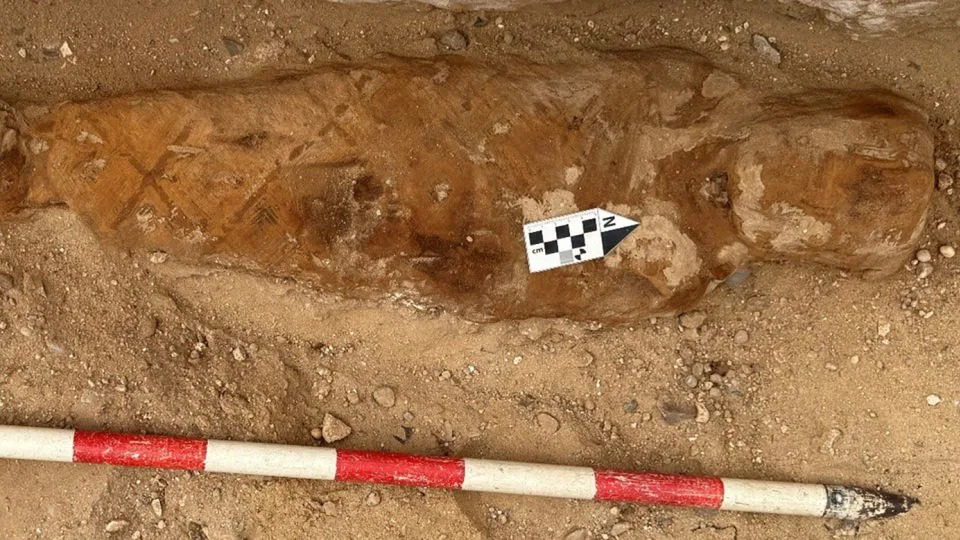
The mummy is around 1,600 years old. - Ministry of Tourism and Antiquities
“This is the big development for us,” Adiego said, noting the long-term research presence at Oxyrhynchus. “Until now, we didn’t know that they would have used literary texts as part of this funerary ritual.”
The mummy was recovered near the modern town of Al Bahnasa, roughly 200 kilometers (124 miles) south of Cairo. The burial is dated to about 1,600 years ago, placing it in the Roman era.
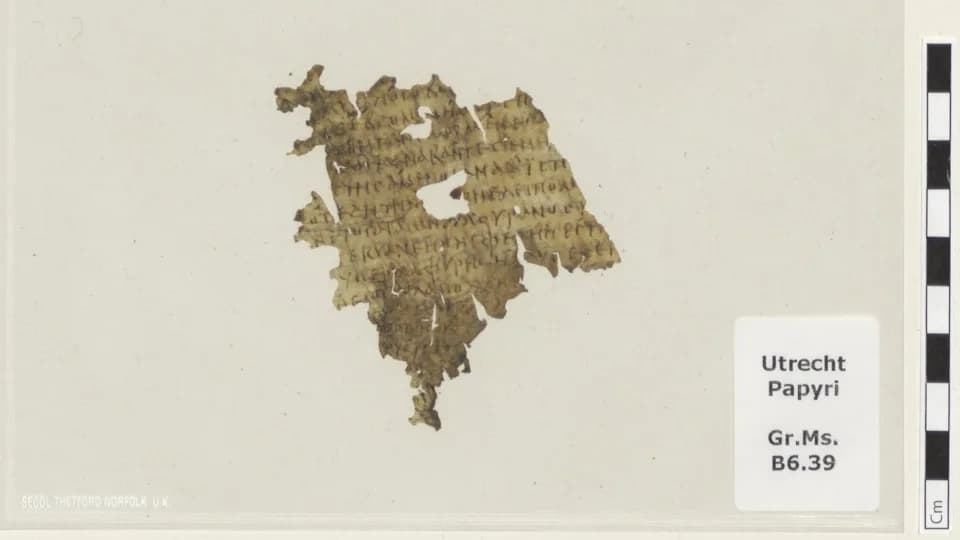
Although the papyrus is fragmented and in poor condition, specialists have identified the preserved words as coming from the Catalogue of Ships in Book II of the Iliad. Because the material is fragile, the team has so far avoided invasive analysis; Adiego said they have not yet used high-resolution imaging such as X-rays or multispectral scanning, which could reveal additional letters without damaging the papyrus.
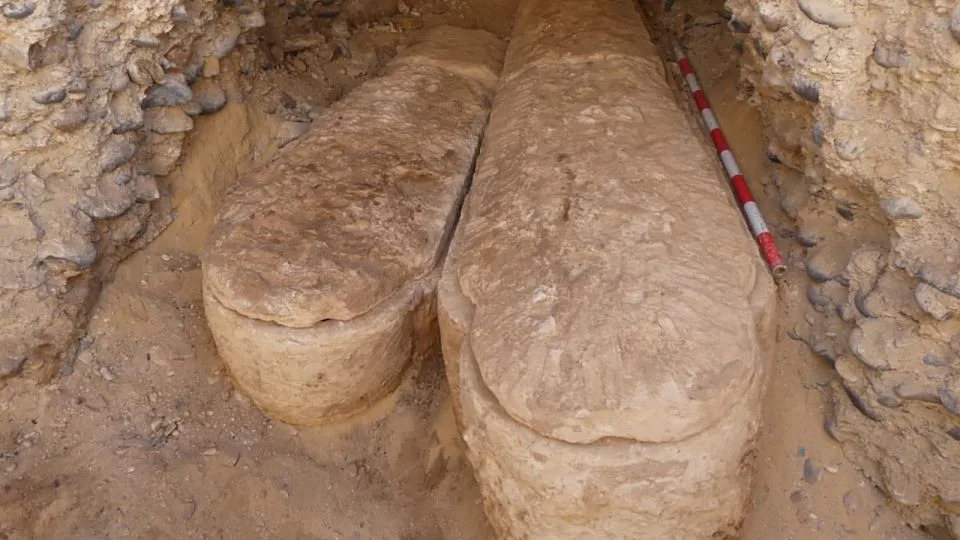
The site would have been part of the ancient city of Oxyrhynchus. - Ministry of Tourism and Antiquities
Research is preliminary and several key questions remain unanswered. The exact role of a literary papyrus in the embalming ritual is unclear. One hypothesis is that fragments like this might have served as an embalmer’s signature, while earlier finds of papyri with apparent ritual instructions led some scholars to suggest a protective or magical function for the texts.
“The idea that a papyrus containing a literary text would have fulfilled this same function is much stranger,” Adiego said. “So to this point we aren’t able to interpret the reason why there is this literary papyrus.”
Beyond this unusual papyrus, Egypt’s Ministry of Tourism and Antiquities reported that the excavation exposed three limestone tombs containing several mummies. Three of the mummies had gold foil placed on their tongues and one had copper on its tongue — a funerary practice known from other contexts in late antique Egypt.
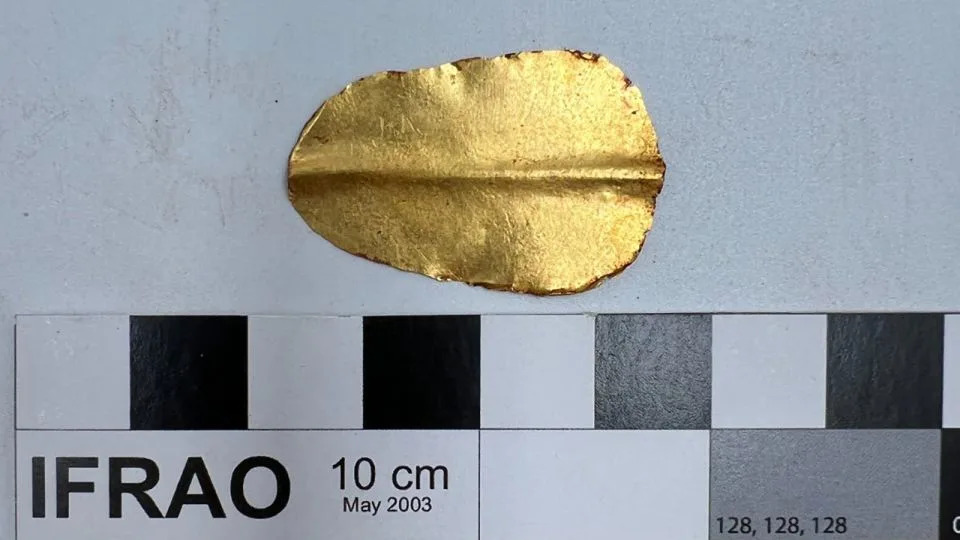
Three mummies had gold foil on their tongues. - Ministry of Tourism and Antiquities
The ministry also described chambers containing large jars with burned human remains, the bones of an infant and the head of a feline animal, all wrapped in fabric. A second chamber held a similar jar containing the burned remains of two people alongside animal bones.
Because the finds are fragile and the research is ongoing, the team plans further non-destructive imaging and conservation work before publishing a full scholarly study. CNN’s Sarah Tamimi contributed to this report.
Help us improve.