Supreme Court Limits Section 2: In a 6-3 ruling, the Supreme Court tightened the standard for proving violations of Section 2 of the Voting Rights Act, emphasizing proof of intentional racial discrimination over the longstanding effects-based "results test." The decision upheld a lower-court finding against a Louisiana map that had created a second Black-majority congressional district. Critics warn the ruling weakens protections against vote dilution and could encourage partisan redistricting ahead of November’s elections.
Supreme Court Narrows Section 2 of Voting Rights Act, Blocking Louisiana’s Second Black-Majority District
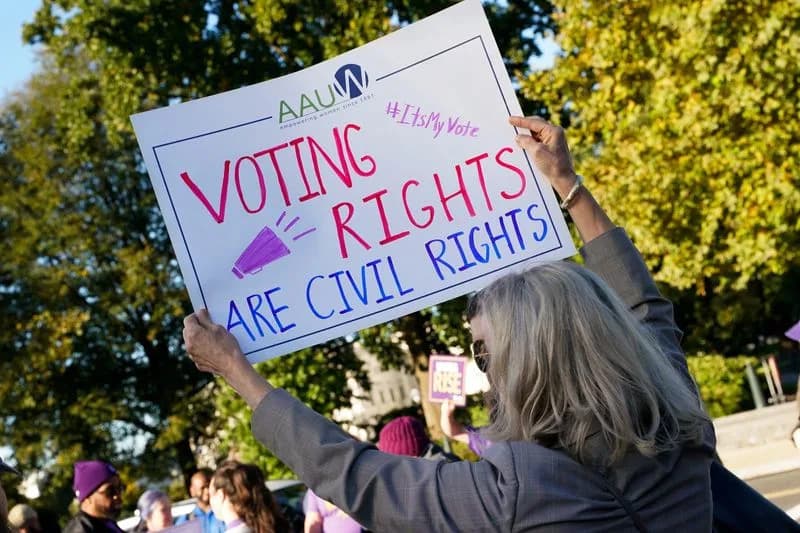
People protest on the day the U.S. Supreme Court hears arguments regarding the composition of Louisiana electoral districts, in Washington, D.C., U.S., October 15, 2025. REUTERS/Elizabeth Frantz
The U.S. Supreme Court on Wednesday significantly narrowed the reach of Section 2 of the Voting Rights Act, issuing a 6-3 decision that makes it harder for minority voters to challenge congressional maps based on discriminatory effects alone. The majority opinion, authored by Justice Samuel Alito and joined by the court’s five other conservative justices, upheld a lower-court ruling that blocked a Louisiana congressional map that had created a second Black-majority U.S. House district.
What the Ruling Does
The court’s majority held that Section 2 must be read in light of the Fifteenth Amendment and that plaintiffs must now show intentional racial discrimination rather than relying solely on the long-used "results test" — which permitted Section 2 claims based on discriminatory effects even without proof of intent. The decision was described by several legal experts as effectively converting Section 2 from an effects-based standard into one that places far greater weight on evidence of purposeful discrimination.
"Only when understood this way does (Section 2) of the Voting Rights Act properly fit within Congress's 15th Amendment enforcement power," Justice Alito wrote.
Reactions And Ramifications
The ruling drew sharp criticism from civil rights leaders, Democratic officials and the court’s three liberal justices. Justice Elena Kagan, in a dissent joined by the two other liberals, warned that the decision renders the Voting Rights Act "all but a dead letter" and predicted it could allow states to "systematically dilute minority citizens' voting power" without legal consequence.
Former President Barack Obama said the ruling could enable legislatures to reconfigure districts in ways that "systematically dilute and weaken the voting power of racial minorities — so long as they do it under the guise of 'partisanship.'" Senator Raphael Warnock called the decision "a devastating and profound step backwards for American democracy."
The Trump administration and supporters of the challenge welcomed the decision. President Donald Trump praised the ruling and called Justice Alito "brilliant," while Edward Greim, attorney for the plaintiffs who challenged the second Black-majority district, said the decision restored equal treatment for voters who felt their influence was reduced.
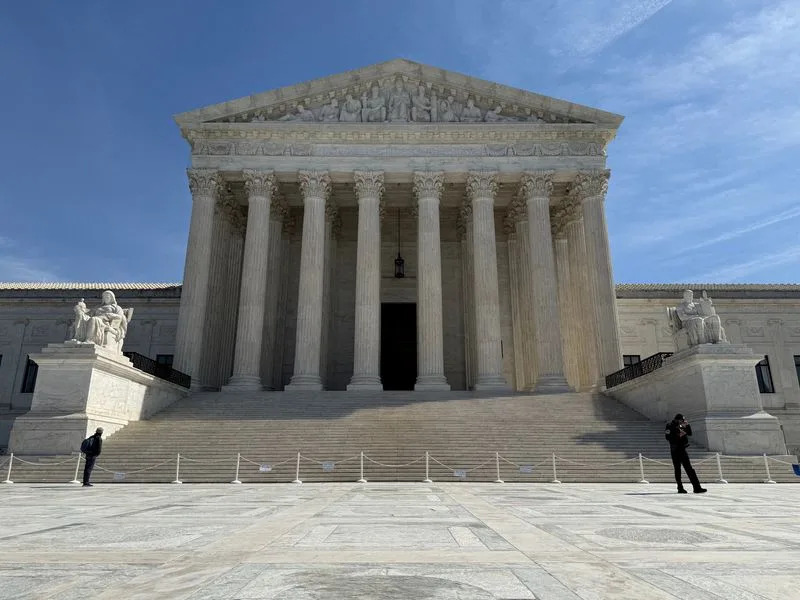
FILE PHOTO: People walk outside the U.S. Supreme Court building in Washington, D.C., U.S., March 14, 2026. REUTERS/Will Dunham/File Photo
Context: Louisiana Case And Redistricting Stakes
The case stems from a post-2020-census redistricting fight in Louisiana. After the state’s Republican-controlled legislature initially adopted a map with only one Black-majority district, Black voters sued under Section 2. A judge found the map likely harmed Black voters, prompting the legislature to adopt a new map that created a second Black-majority district. That second map then drew a separate legal challenge from 12 plaintiffs who identified as "non-African American," arguing it unconstitutionally reduced their influence. A three-judge panel found the redrawn map relied too heavily on race; the Supreme Court on Wednesday affirmed that decision.
The decision arrives amid nationwide redistricting battles ahead of November’s congressional elections. Louisiana has six U.S. House districts and a state primary scheduled for May 16. Reports said Governor Jeff Landry has signaled plans to suspend that primary to allow the legislature to adopt a new map, raising urgency and political maneuvering in the state.
Broader Legal And Political Impact
Legal scholars noted the ruling compounds earlier Supreme Court decisions that have reduced Voting Rights Act protections, including the 2013 Shelby County ruling that struck down the Voting Rights Act’s preclearance formula. Critics, including Harvard Law professor Nicholas Stephanopoulos, called the outcome a "complete gutting of Section 2," warning states may dismantle minority-opportunity districts while claiming partisan motives.
Public reaction is mixed: a Reuters/Ipsos poll this month found 75% of Americans — including 65% of Black respondents — oppose considering race when drawing maps, yet roughly half of respondents overall and six in 10 Black respondents said communities that share characteristics, including race, should be represented together.
The ruling is likely to prompt additional litigation and political action as states test the new limits of Section 2 ahead of the midterm elections. Courts, legislatures and advocacy groups will now face a reshaped legal standard for proving vote-dilution claims under the Voting Rights Act.
Help us improve.