Justice Clarence Thomas, joined by Justice Neil Gorsuch, urged the Supreme Court to bar Section 2 of the Voting Rights Act from governing how electoral districts are drawn, following the Court’s 6-3 decision in Louisiana v. Callais. The majority, led by Justice Samuel Alito, struck down a majority-Black district as an unconstitutional racial gerrymander but declined to adopt Thomas’s broader view. Justice Elena Kagan’s dissent warned the decision could undermine legal protections against diluting minority voting power.
Thomas Urges High Court To Bar Section 2 From Redistricting After Louisiana Ruling
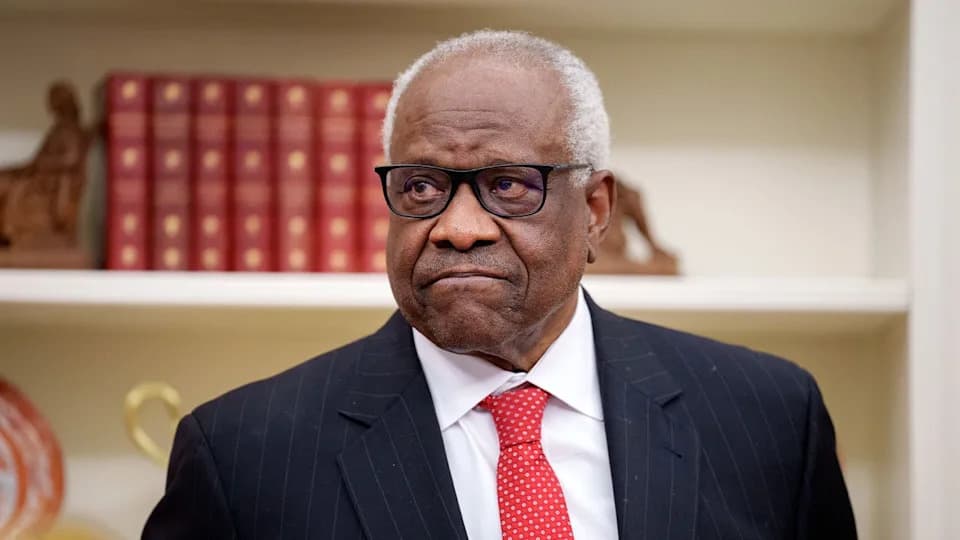
U.S. Supreme Court Justice Clarence Thomas appears before swearing in Pam Bondi as U.S. attorney general in the Oval Office at the White House in Washington, D.C., on Feb. 5, 2025.(Getty Images)
Justice Clarence Thomas urged the Supreme Court to take a far-reaching step after the Court’s decision in Louisiana v. Callais, arguing that Section 2 of the Voting Rights Act should not be used to regulate how electoral district lines are drawn.
Concurrence And Case Outcome
In a concurrence joined by Justice Neil Gorsuch, Thomas reiterated a long-standing view: he would hold that Section 2 "does not regulate districting at all." The comment accompanied the Court’s 6-3 decision that one of Louisiana’s majority-Black congressional districts was an unconstitutional racial gerrymander.
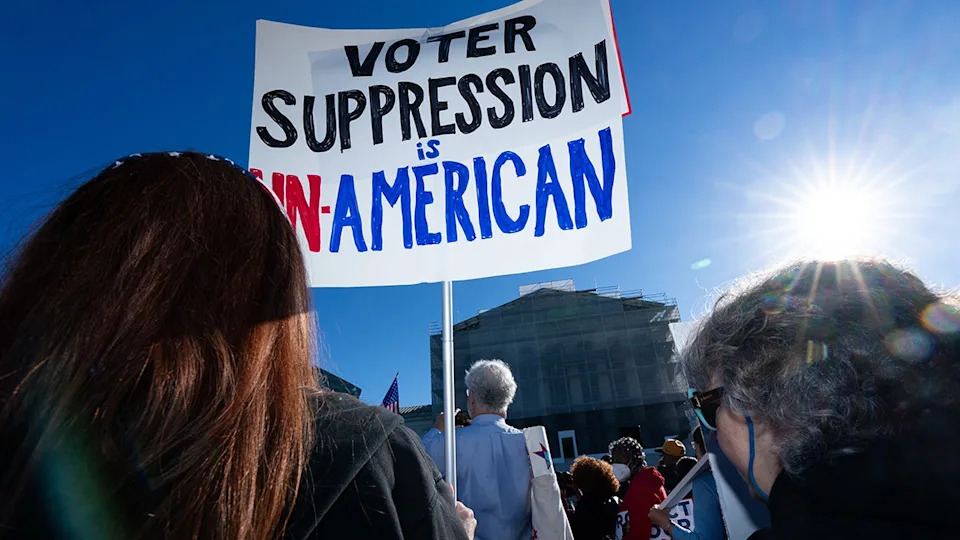
Voting rights activists protest outside the U.S. Supreme Court in Washington on Oct. 15, 2025, as the court prepares to hear arguments challenging Louisiana's congressional map.
Majority Opinion
Justice Samuel Alito wrote the majority opinion, which declined to adopt Thomas’s broader position. Alito concluded that while compliance with the Voting Rights Act can sometimes involve consideration of race, the statute did not require Louisiana to create a second majority-Black district and that the state had "no compelling interest" in packing Black voters into that district.
Dissent And Concerns
Justice Elena Kagan, writing for the three liberal justices, dissented. Kagan warned that the majority’s decision and Thomas’s more extreme view would significantly weaken Section 2 protections and make it easier for states to dilute minority voting strength without legal consequence.
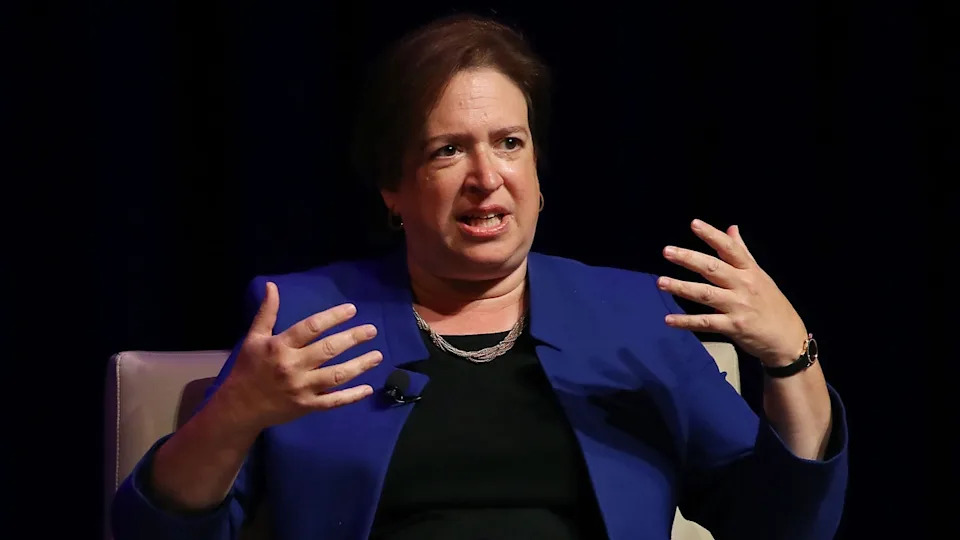
Supreme Court Justice Elena Kagan participates in a discussion at George Washington University Law School in Washington, D.C., on Sept. 13, 2016.
Background And Implications
The dispute began after Louisiana’s post-2020 census redistricting. A lower court had ordered the state to add a second majority-Black district under Section 2; Louisiana adopted such a map, which was later struck down as a racial gerrymander, prompting the litigation that reached the Supreme Court. The ruling narrows the circumstances in which courts can apply Section 2 to justify race-conscious districting and could make it harder for plaintiffs to obtain minority-protective districts in the future.
Thomas’s View: "As I explained more than 30 years ago, I would go further and hold that [section two] of the Voting Rights Act does not regulate districting at all."
Thomas, an appointee of President George H. W. Bush and the second Black justice in the Court’s history, first expressed similar objections in a 1994 concurrence (Holder v. Hall), arguing that vote-dilution doctrines conflict with a color-blind constitutional ideal. The long-term effect of the Court’s decision will depend on how lower courts interpret and apply the narrower reading of Section 2 going forward.
Help us improve.