The author recounts a personal path into medicine after losing a grandfather to cancer and working at a pediatric referral center where most rare diseases lack cures. They argue that AI, already able to design novel proteins, could scale to simulate entire cells and tissues — but only if scientists build comprehensive, open cellular datasets. To that end, Biohub is launching the Virtual Biology Initiative with a $100M seed for data generation and a broader $400M roadmap for advanced imaging, partnering with major institutes and industry to accelerate cures.
If AI Can Simulate Cells, Science Can Deliver Cures — Biohub Launches the Virtual Biology Initiative
—Pobytov—Getty Images
My journey into medicine began after I lost my grandfather to cancer. I still remember him dropping me off at my sixth-grade classroom one morning; by the time I returned home he had died. Not long after, I bought an oncology textbook. Science had always been my favorite subject, and I hoped it might provide answers.
Years later I sat on the other side of the exam room as a physician, but the searching continued. The hospital where I worked is a national referral center for pediatric rare diseases — roughly 95% of which currently have no cure. Every day I faced how much about my patients’ conditions medicine still cannot explain: cellular dysfunction we cannot see and symptoms we struggle to interpret.
Why AI Could Change Everything
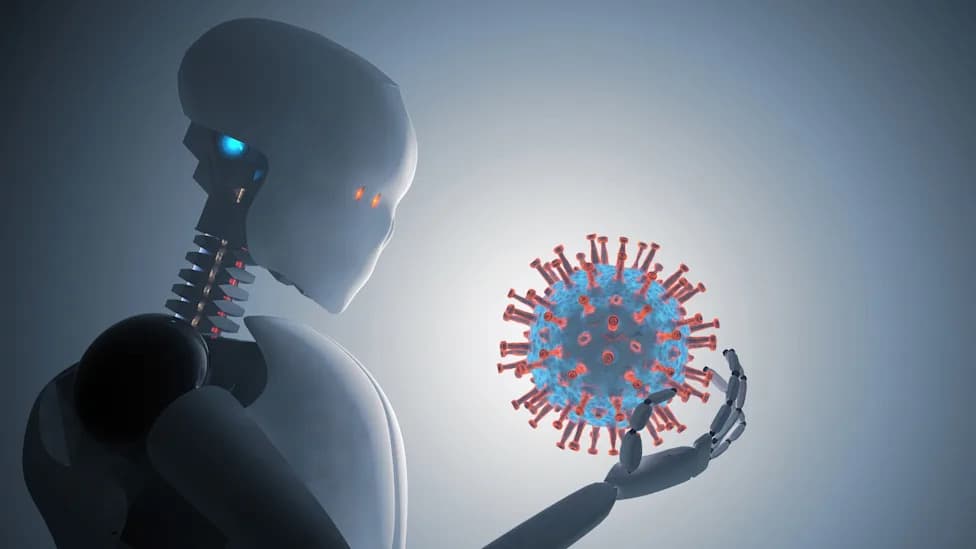
There are glimmers of transformation already. Researchers have built frontier AI models that can design entirely new proteins to target cancer cells or neutralize pathogens. These systems succeed because they are trained on massive datasets and develop deep representations of how proteins fold and function. The same class of models, given the right data, should be capable of modeling whole cells, tissues, and eventually complex human biology.
The Missing Ingredient: Data About Cells
But the most important challenge remains: before AI can simulate biology it must be able to see biology. Protein models are trained on protein databases; genomic models learn from genomic databases. We still lack a comprehensive, public dataset for cells — a resource that captures the diversity of cell types, states, interactions, and behaviors across organisms. Without that foundation, we cannot train models to understand cellular systems at scale.
The Virtual Biology Initiative
To address this gap, the institute I lead, Biohub, is launching the Virtual Biology Initiative. This coordinated effort will help build an open data foundation for AI-accelerated biology by pooling resources, measurement technologies, and expertise across institutions and disciplines.
The Initiative begins with a $100 million commitment to fund large-scale data generation and open-data infrastructure. Partners include the Allen Institute, Arc Institute, Broad Institute, Wellcome Sanger Institute, and consortia such as the Human Cell Atlas and the Human Protein Atlas. NVIDIA is partnering on compute and tooling, and Renaissance Philanthropy will help catalyze additional funding. The Initiative will also build on existing programs like the Billion Cells Project and the world’s growing single-cell and imaging repositories.
Measurement Roadmap: Imaging and Engineering
Within Biohub, we are matching the seed funding with a broader $400 million roadmap focused on measurement and experimental capabilities. Key elements include:
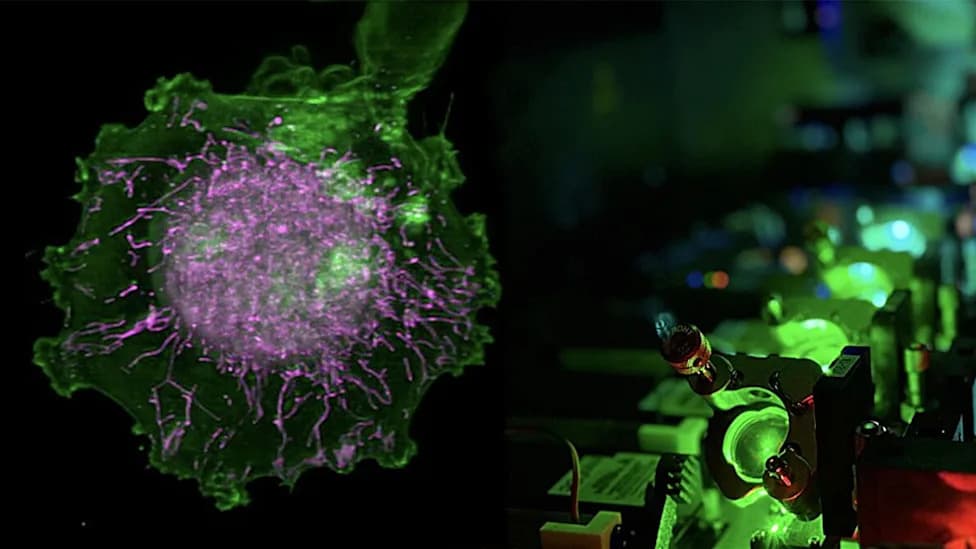
- Advanced Microscopy: Systems to observe millions to billions of cells across living tissues and organisms.
- Cryo-Electron Tomography: Atomic-level resolution to map intracellular structures and molecular complexes.
- Cell and Tissue Engineering: Platforms that enable new, scalable experiments to probe biology that is currently inaccessible.
Why Collaboration and Openness Matter
Powerful cell models will require unprecedented collaboration. No single lab, company, or government can assemble the diversity and scale of data needed. Open-source tools, public datasets, and cross-disciplinary teams will accelerate progress and ensure the benefits reach patients worldwide.
Millions of people — patients, anxious spouses, families without explanations, and those who have not yet begun searching — are counting on our success.
If you have the means to support or conduct biological research, I urge you to join. With shared data, better measurement technologies, and the right AI models, we can solve mysteries in human health that a century of fragmented research has not. We can make personalized, preventive, and curative medicine a reality far sooner than many expect.
Note: The Virtual Biology Initiative seeks to be open, collaborative, and ethical. Building datasets and models at this scale requires rigorous standards for data quality, privacy, and equitable access, which we are committing to develop with partners worldwide.
Help us improve.