The United States and five Latin American countries issued a joint statement after Panama's Supreme Court annulled port contracts held by CK Hutchison's subsidiary, accusing China of applying "targeted economic pressure" against Panamanian-flagged vessels. U.S. regulators say China detained nearly 70 Panama-flagged ships in March, a move that could disrupt U.S. containerised trade. Beijing denies the charges, while CK Hutchison pursues more than $2bn in arbitration; experts warn shipping is increasingly a geopolitical tool.
US and Five Latin American Countries Condemn China's Economic Pressure After Panama Canal Ruling
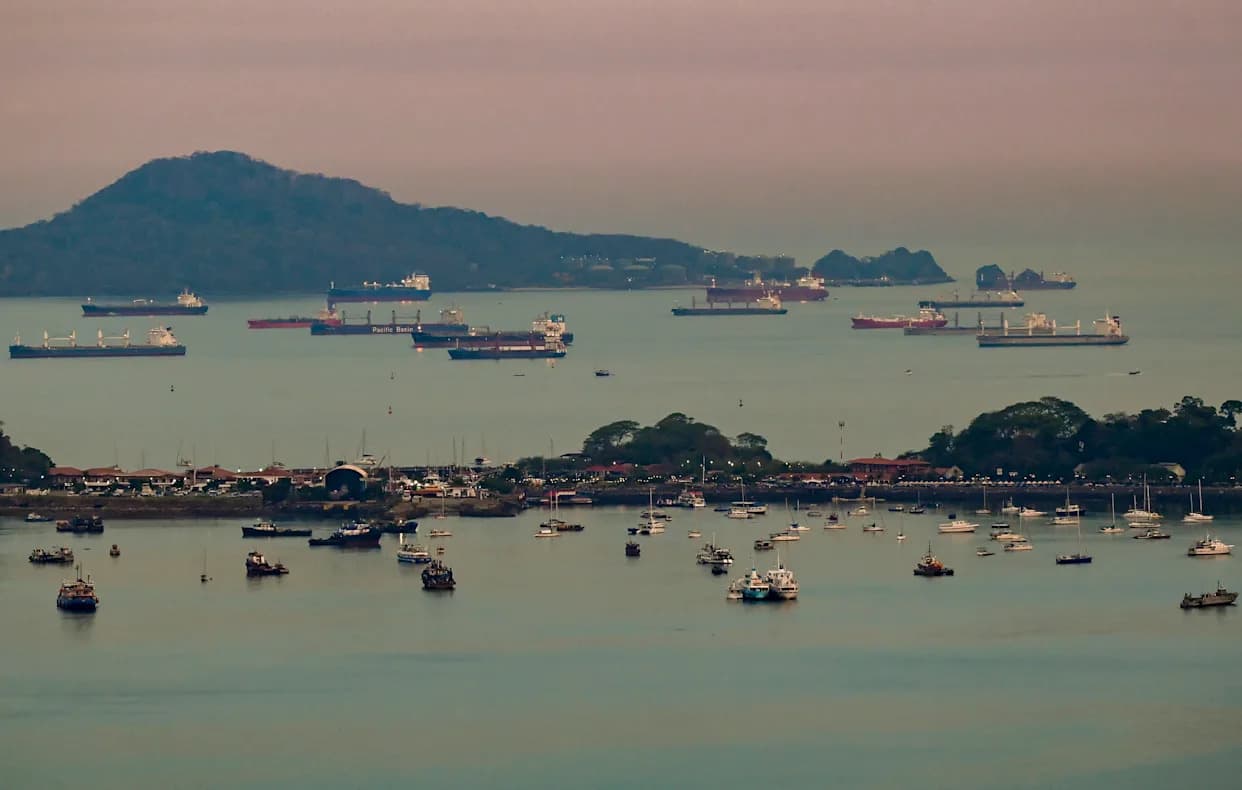
Cargo ships wait to transit the Panama Canal in Panama City on April 26, 2026 [AFP]
The United States, together with Bolivia, Costa Rica, Guyana, Paraguay and Trinidad and Tobago, issued a joint statement condemning what they described as targeted Chinese economic pressure following Panama's Supreme Court decision to annul port contracts held by a subsidiary of Hong Kong conglomerate CK Hutchison.
In late January Panama's highest court declared unconstitutional the decades-old agreements that had allowed Panama Ports Company, a subsidiary of CK Hutchison, to operate the Balboa and Cristobal terminals on the Panama Canal. The ruling returned control of those terminals to Panama and set off a diplomatic dispute involving Beijing and several Western and regional governments.
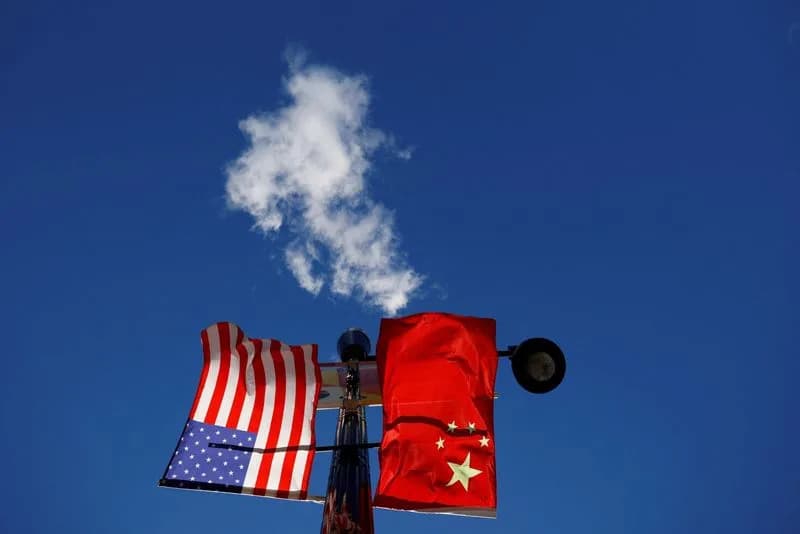
In their joint declaration the six countries said China responded to the court ruling with "targeted economic pressure" against vessels flying the Panamanian flag. The U.S. Federal Maritime Commission reported that Chinese authorities detained nearly 70 Panamanian-flagged ships in March — a figure the commission said "far exceed[ed] historical norms."
"These actions — following the decision of Panama's independent Supreme Court regarding the Balboa and Cristobal terminals — are a blatant attempt to politicise maritime trade and infringe on the sovereignty of the nations of our hemisphere," the statement said.
U.S. Secretary of State Marco Rubio said on X that Washington was "deeply concerned" by Beijing's actions and pledged solidarity with Panama. Laura DiBella, chair of the U.S. Federal Maritime Commission, warned that the intensified inspections — which she said appeared to be carried out under informal directives — could have meaningful commercial and strategic consequences for U.S. shipping because Panama-flagged vessels carry a significant share of U.S. containerised trade.
China has rejected the accusations, accusing the United States of "bullying" and saying the Panamanian court decision was "absurd" and "shameful." Beijing has also engaged directly with major shipping companies: the Federal Maritime Commission reported that representatives from Maersk and the Mediterranean Shipping Company (MSC) were summoned for high-level talks by China's Ministry of Transport, and Chinese carrier COSCO has suspended operations at the Balboa terminal.
CK Hutchison, via its Panama Ports Company arm, has launched international arbitration against the Panamanian government seeking more than $2 billion in damages.
Observers say the dispute highlights how maritime logistics have become an increasingly prominent geopolitical lever. David Smith, associate professor at the University of Sydney's US Studies Centre, told Al Jazeera that states now recognise the vulnerability of global shipping and may use inspections, detentions or operational suspensions to exert political pressure.
Context: The court ruling and subsequent tensions come amid heightened attention on the Panama Canal after U.S. President Donald Trump raised the issue in his January 2025 inaugural address, alleging that China was "operating" the canal and pledging to "take back" control. The episode has prompted concerns about how legal, commercial and diplomatic disputes can ripple through global supply chains.
Help us improve.