Barcelona researchers used standardized airway organoids grown from postmortem tissues to test influenza susceptibility across multiple wild and domestic species. Results varied: some organoids (Iberian wolf, dama gazelle) suffered severe cell loss, while others supported replication with little cell death; all species produced infectious virus. Sequencing revealed host-specific mutations—most notably D190E in Goeldi’s monkey hemagglutinin—suggesting some mammals could act as "gateway" hosts for viral adaptation. A frozen organoid library could enable rapid, ethical screening of new flu variants.
Lab-Grown Mini Airways Reveal Which Wild Animals Can Catch—and Adapt—Influenza
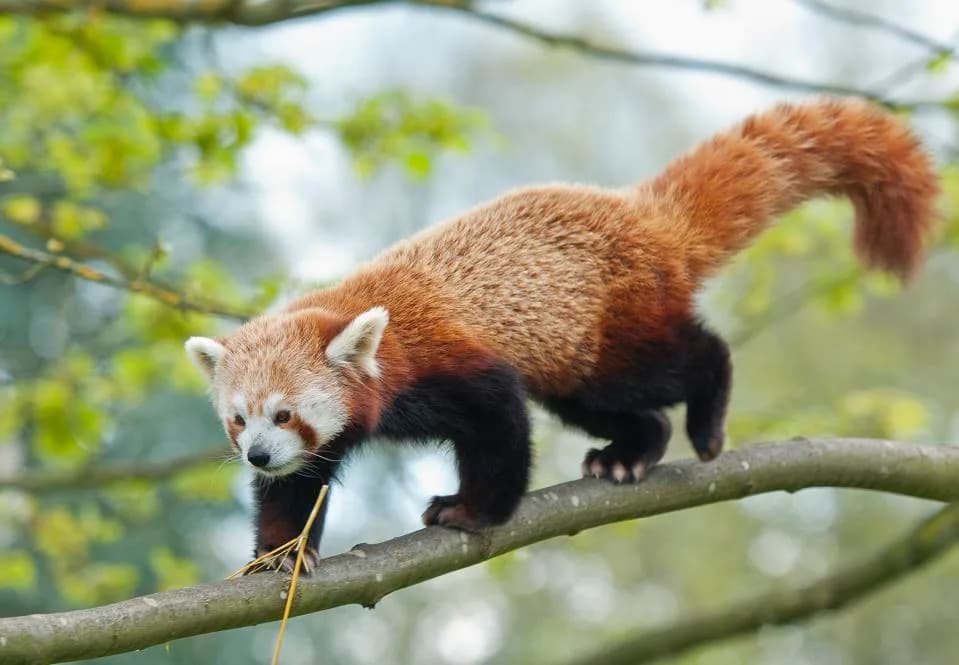
An adult red panda (Ailurus fulgens) climbing a tree branch at Cotswold Wildlife Park in Oxfordshire, taken on May 8, 2012. (Photo by Chris George/N-Photo Magazine/Future via Getty Images)Future via Getty Images
Researchers have developed an ethical, scalable way to test which wild and domestic species can be infected by influenza viruses: lab-grown airway organoids derived from postmortem lung or tracheal tissue. Using a single standardized protocol, teams in Barcelona produced miniature, three-dimensional respiratory tissues from multiple species and exposed them to two influenza A viruses to map susceptibility and viral adaptation without deliberately infecting live animals.
How the Study Worked
The Centre de Recerca en Sanitat Animal team, led by Ferran Tarrés-Freixas and Gerardo Ceada, grew airway organoids from ten wildlife and livestock species by embedding cells from postmortem samples in a gel matrix. These organoids self-organize into structures that mimic real airways and preserve key features such as sialic acid receptor distribution, host proteases and innate immune responses.
Key Findings
The researchers infected the organoids with an avian H5N1 strain and the pandemic H1N1 (pH1N1) strain and monitored outcomes over three days. Results varied widely by species: some cultures (Iberian wolf and dama gazelle) lost more than 90% of their cells within three days, while others (alpaca and Goeldi's monkey) supported viral replication with little cell death. Significantly, every species tested—including buzzard, chicken, pig, red panda and wolf—produced infectious viral particles, indicating the capacity to generate transmissible virus.
Red panda organoids were especially susceptible to pandemic H1N1, while chicken cultures were severely damaged by H5N1 but largely spared by pH1N1. Pig organoids showed roughly equal susceptibility to both strains, consistent with historical in vivo data.
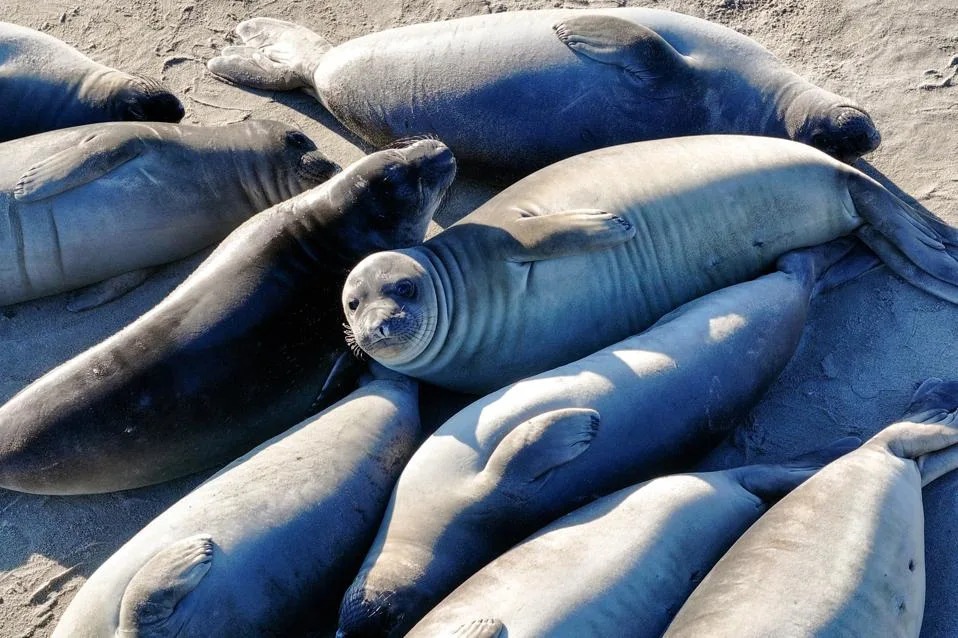
PESCADERO, CA - MARCH 19: A view of elephant seals at Ano Nuevo State Park by the Pacific Coastline in Pescadero of San Mateo County, California, United States on March 19, 2026. A highly pathogenic avian influenza (H5N1) outbreak is affecting northern elephant seals at Año Nuevo State Park in San Mateo County, California. This is the first confirmed H5N1 outbreak in California elephant seals, with over 27 seals testing positive and causing over 30 deaths, prompting partially park closures. The virus causes severe respiratory and neurological symptoms in pups. (Photo by Tayfun Coskun/Anadolu via Getty Images)Anadolu via Getty Images
Viral Evolution Inside Different Hosts
Beyond measuring damage and replication, the team sequenced viruses after three days of replication in each species' cells and found host-specific mutation patterns. The most notable change was a dominant D190E substitution in the hemagglutinin protein in Goeldi's monkey cultures—an alteration that appears to increase affinity for avian-type (alpha-2,3) sialic acid receptors. Unexpectedly, these Goeldi's monkey organoids expressed unusually high levels of avian-type receptors, which likely favored that shift.
The authors suggest certain mammals could act as "gateway" hosts where a virus adapts toward a different receptor preference—potentially enabling jumps between bird and mammal populations.
Receptors Matter—But Not Alone
The organoid panel broadly confirmed known trends: species with higher alpha-2,6-linked sialic acids tended to be more susceptible to pH1N1, while species with higher alpha-2,3-linked receptors tended to be more vulnerable to H5N1. However, receptor distribution alone did not explain all variation. Downstream factors—host proteases that activate viral proteins, innate immune responses, and intracellular factors that facilitate or restrict replication—also shaped outcomes, and organoids capture many of those influences.
Scalability and Practical Use
The Barcelona team has already expanded the protocol to more than 20 additional species, including wallabies, sea lions, Sumatran tigers, iguanas and African elephants. Organoids can be passaged and cryopreserved, creating a frozen library that could be thawed and screened within days when a new influenza variant appears. That capability offers a rapid, ethical tool for pandemic preparedness—particularly relevant as H5N1 clade 2.3.4.4b continues to circulate among wild birds, some domestic animals and sporadic human cases across the Americas.
Real-world context: Recent H5N1 outbreaks in marine mammals—such as northern elephant seals at Año Nuevo State Park in California—underscore the ongoing risk of cross-species spread and the need to understand which animals can harbor and transmit flu.
Published in Emerging Microbes & Infections, the study demonstrates a practical, ethically acceptable approach to map influenza host range, study viral adaptation across species and prioritize surveillance of animals most likely to contribute to spillover or viral evolution.
Help us improve.