The Supreme Court heard nearly two-and-a-half hours of argument in Chatrie v. United States, which tests whether so-called "geofence warrants"—orders that compel companies like Google to search all users' location histories—violate the Fourth Amendment. Defense counsel called the practice a modern "general warrant," while the government warned limiting it would restrict access to location records. Justices debated narrower, case-specific standards and raised alarms about potential mass surveillance. The ruling will shape how constitutional protections apply to digital location data.
Supreme Court Considers 'Geofence Warrants' — What Chatrie v. United States Means For Location Privacy

SCOTUS Weighs 'Geofence Warrants' and the Future of Digital Privacy
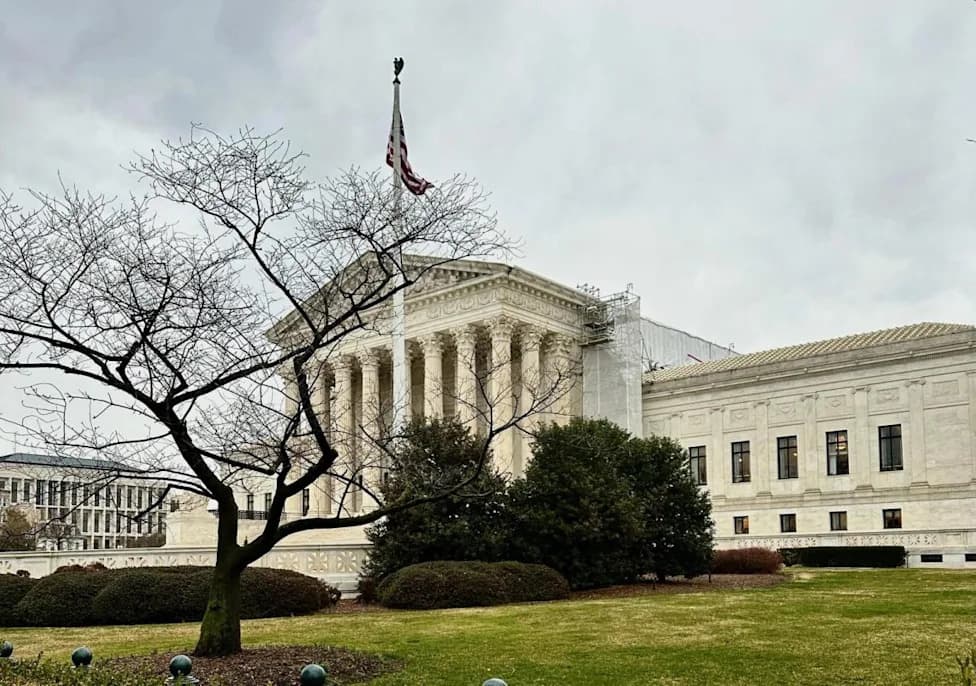
It was a notable day at the U.S. Supreme Court as justices spent nearly two-and-a-half hours hearing oral argument in Chatrie v. United States, a case that pits Fourth Amendment protections against a modern investigative tool capable of revealing the location histories of millions of cellphone users.
What Is a Geofence Warrant? A "geofence warrant" is an order that directs a company such as Google to search the location histories of all users whose devices were within a defined geographic area and time window, in order to identify possible witnesses or suspects.
Defense counsel Adam Unikowsky argued that the warrant used to convict Okello Chatrie was essentially an unlawful "general warrant"—a sweeping, suspicionless search the Fourth Amendment was designed to prohibit. As Unikowsky put it, "There was not probable cause to search the virtual private papers of every single person within the geofence merely because of their proximity to the crime."
Deputy Solicitor General Eric Feigin, representing the federal government, warned that adopting Chatrie's view would produce "an unprecedented transformation of the Fourth Amendment into an impregnable fortress around records of his public movements that he affirmatively consented to allow Google to create, maintain, and use." The government argued such orders are a legitimate investigative tool when properly tailored.
Key Exchanges From Oral Argument
Several justices probed for narrower approaches. Justice Ketanji Brown Jackson asked whether Chatrie's arguments were "maximalist" and whether the Court could simply require a magistrate judge to assess the reasonableness of each geofence request rather than resolving a broader Fourth Amendment rule.
"Setting aside your general warrant point," Jackson asked, "why shouldn't the standard be that a presiding judge at the outset simply focuses on whether the initial geofence warrant was reasonable?"
Other justices voiced strong concern about the government's position. Chief Justice John Roberts asked whether the tool could be used to identify everyone attending a particular church or political meeting. Feigin responded he did not see categorical protection for such locations—an answer that drew pointed skepticism.
Justice Neil Gorsuch summarized the government's view bluntly: if geofence warrants are not treated as searches, the government could identify attendees at churches, rallies, abortion clinics, or other sensitive locations "as long as we can get Google to comply." Feigin acknowledged there are other legal mechanisms that can compel corporate cooperation.
What’s At Stake
The case raises fundamental questions about how the Fourth Amendment applies in an era when private companies compile detailed, searchable records of our movements. A ruling that geofence warrants are not "searches" could permit far-reaching location surveillance with limited judicial oversight; conversely, a broad prohibition could constrain investigative tools law enforcement currently uses to solve crimes.
Predicting the Court's final decision from the oral argument is difficult. Observers hope the justices will at minimum reject the view that geofence warrants categorically fall outside Fourth Amendment protection, but the outcome remains uncertain.
Originally published on Reason.com.
Help us improve.