Mississippi’s governor has called a special legislative session to redraw Supreme Court districts after a federal judge found the current map reduced Black voters’ influence. Reeves’ proclamation asks the legislature to delay compliance until 21 days after the U.S. Supreme Court rules in Louisiana v. Callais, a case that could weaken the Voting Rights Act. Democrats and civil-rights groups say the move risks entrenching racially discriminatory maps and have vowed to fight any attempt to suppress Black votes.
Mississippi GOP Waiting on Supreme Court — Critics Warn Redraw Could Suppress Black Votes
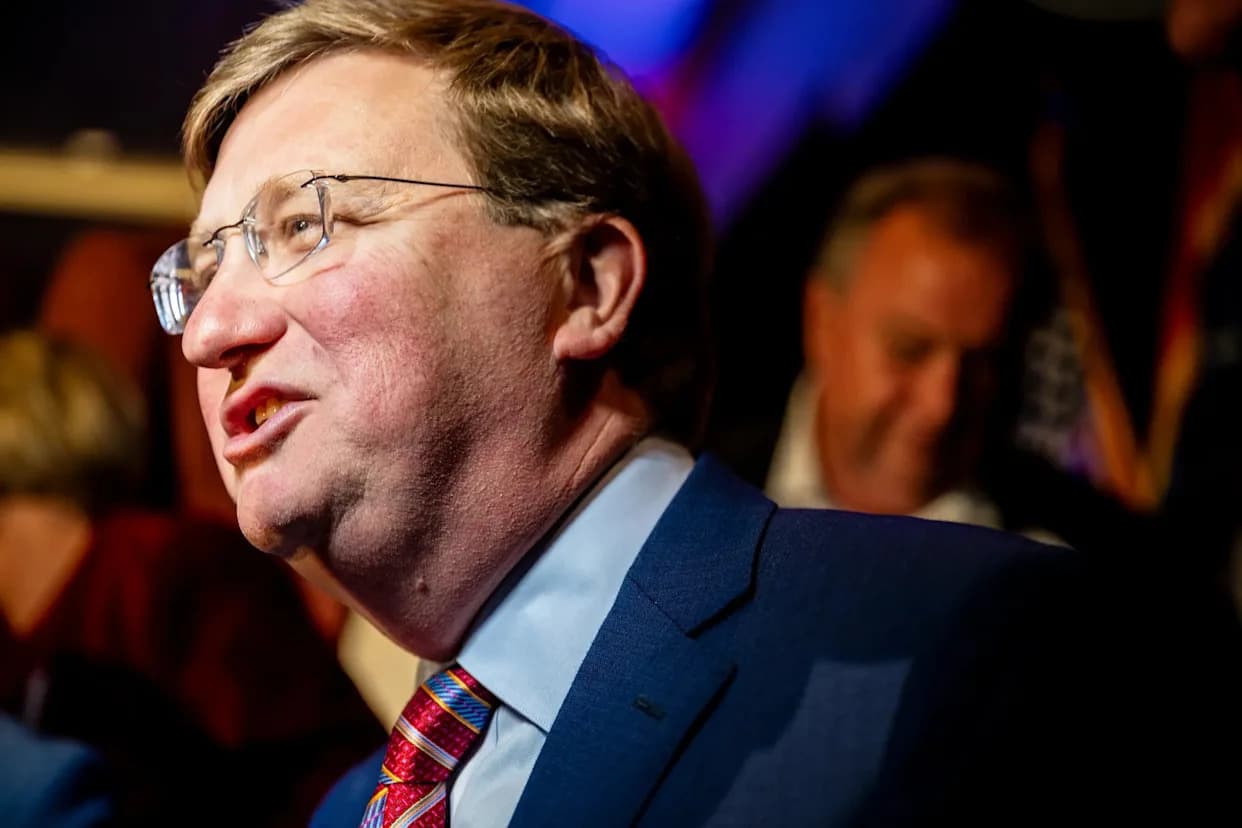
Mississippi incumbent Republican Gov. Tate Reeves speaks to members of the press after an election night watch party on Nov. 07, 2023 in Flowood, Miss.(Brandon Bell / Getty Images)
Mississippi Republicans have called a special legislative session to redraw the state Supreme Court districts — a move critics say is aimed at weakening Black voting power and entrenching GOP control of statewide offices.
Governor Tate Reeves announced the session in a social media post and included an official proclamation invoking his executive authority to delay implementing a federal court order to redraw the map. In August, a federal judge concluded that Mississippi’s current Supreme Court district lines effectively diluted Black voters’ influence and ordered the state to adopt a new map.
Mississippi has the highest share of Black residents of any state, at nearly 38%. Rather than moving immediately to comply with the federal court’s ruling, Reeves asked the legislature to wait until 21 days after the U.S. Supreme Court issues its decision in Louisiana v. Callais. Several observers note that justices aligned with the Federalist Society are likely to influence that ruling, which many fear could significantly weaken protections of the Voting Rights Act.
Arguments And Stakes
Conservative litigants challenging federal remedies have argued that some race-conscious remedies amount to discrimination themselves — an argument similar to those used against certain diversity policies. Reeves echoed that reasoning in criticizing aspects of the Voting Rights Act as inconsistent with what he called the “animating principle that all Americans are created equal.”
Opponents say the timing and rationale for the pause amount to a political strategy: keeping the current map in place while awaiting a national ruling that might make it easier to adopt an even more exclusionary map.
“We are going to call this what it is: racist,” Mississippi Democratic Party Chair and state Representative Cheikh Taylor said. “We are going to fight it.”
Responses And Outlook
Democrats, civil-rights groups and voting-rights advocates have pledged to challenge any effort they view as racially discriminatory or designed to suppress minority voting power. Legal observers and advocacy organizations are closely watching the Supreme Court’s decision in Louisiana v. Callais for how it might reshape the legal landscape for voting-rights protections nationwide.
As the special session approaches, the immediate question is whether Mississippi’s legislature will adopt the governor’s proposed delay and how quickly lawmakers will move to redraw the map. The broader question is whether a forthcoming Supreme Court ruling will limit federal tools used to remedy racially discriminatory districting across the country.
Help us improve.