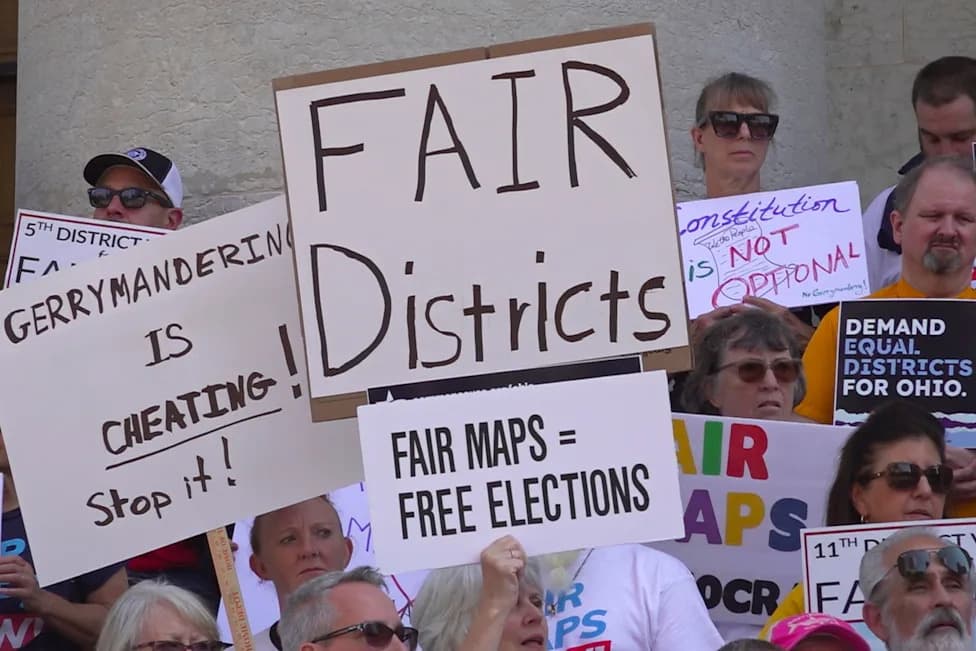
TALLAHASSEE, Fla. — Gov. Ron DeSantis on Monday released a proposed mid‑decade redraw of Florida's congressional map that, if enacted as drawn, would shift the state's delegation from a 20‑8 Republican advantage to 24‑4 in favor of Republicans on paper. The governor presented the plan as both a response to population changes and a challenge to Florida’s constitutional Fair Districts provisions.
Early Release, Partisan Graphics and Legal Concerns
The governor's office first shared the new map with Fox News before state lawmakers received it. The preview included a graphic shading districts red and blue by partisan lean — a move critics say could itself suggest partisan intent in violation of Florida’s anti‑gerrymandering rules known as Fair Districts.
“I don’t know how you can argue a red and blue map released from the governor’s office doesn’t show some form of partisan intent,” said a Florida Republican consultant who has worked on prior redistricting cycles.
Undercount Claim and Legal Strategy
DeSantis' team argues the redraw is necessary because Florida was undercounted in the 2020 census by more than 760,000 residents. A memo from the governor’s general counsel, David Axelman, frames the map as a legal test of the Fair Districts rules and questions whether considering race in drawing districts conflicts with the Fourteenth Amendment.
Political Stakes and Republican Worries
While the map’s projections would convert four Democratic‑leaning districts into GOP‑leaning ones on paper, some Republican operatives caution the plan could backfire. Redrawn GOP seats in Tampa and Orlando could have narrower Republican margins, making incumbents more vulnerable in a difficult national environment such as a contested 2026 midterm cycle.
“Does he want us to lose? I don’t understand this,” said a veteran GOP operative who has worked multiple redistricting cycles, warning that tighter margins could expose Republican incumbents to losses despite registration advantages.
Who Would Lose Seats
The proposed map appears to eliminate the Democratic‑leaning Tampa seat held by Rep. Kathy Castor and the Orlando seat held by Rep. Darren Soto, leaving only one Democratic seat in central Florida on paper. South Florida — Palm Beach and Broward counties — would retain two Democratic‑leaning districts, down from four today.
Next Steps: Legislature And Courts
The GOP‑controlled Florida Legislature is scheduled to consider the map in a special session. The plan is expected to pass the Legislature, but opponents have signaled lawsuits are likely. The dispute will almost certainly reach the Florida Supreme Court, where DeSantis has appointed six of seven current justices — though legal experts and some Republicans say Fair Districts language could still block the map.
Analysts warn that even if the map increases the number of GOP‑leaning districts on paper, many of those seats may not be safe in an unfavorable national environment. Dave Wasserman of the Cook Political Report noted the map targets four Democratic seats but cautioned that a 24‑seat GOP delegation would not mean all seats are secure in a tough year for Republicans.
Context: Florida will be the eighth state to redraw congressional lines this cycle, part of a wider national effort by Republican leaders to shore up House gains — an effort that has produced mixed results as blue states also redrew maps.
This article was originally published on NBCNews.com.