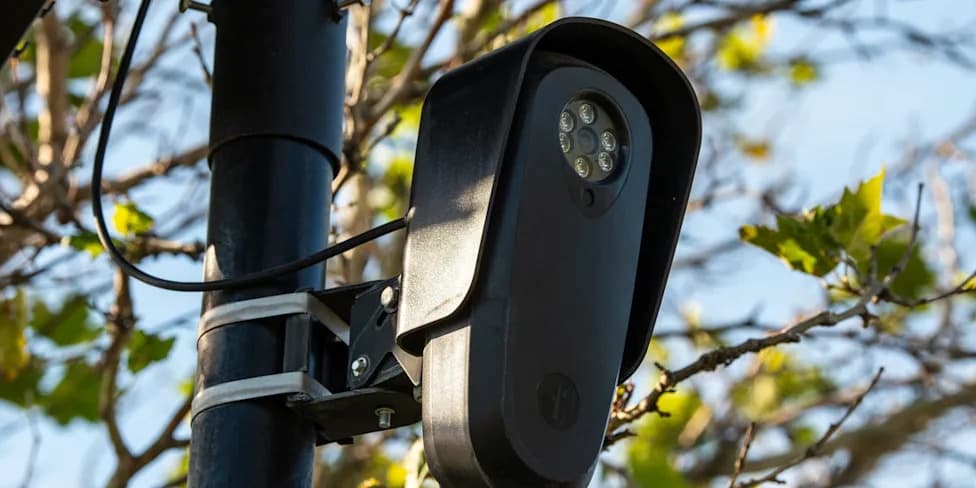
The Supreme Court is weighing whether "geofence" warrants — court orders that request location data for all devices in a defined area and time — violate the Fourth Amendment. The case grew out of a 2019 Midlothian bank robbery in which Google Location History helped identify a suspect who later pleaded guilty and received nearly 12 years. The government argues geofence requests are not searches or were supported by probable cause; privacy advocates warn they create dragnet surveillance that can sweep up many innocents. The Court’s ruling will affect how far police can go in using digital location data.
Supreme Court Weighs Legality of Broad "Geofence" Warrants for Cellphone Location Data
In a similar case, the court ruled in 2017 that warrants are required to obtain location information derived from cell tower data. (NBC News; Getty Images)(NBC News; Getty Images)
WASHINGTON — At 4:50 p.m. on May 20, 2019, a gunman carrying a cellphone entered the Midlothian, Virginia, branch of Call Federal Credit Union and handed a teller a note demanding cash. He brandished a weapon during the robbery and walked away with $195,000.
Local investigators initially had few leads. The lead detective ultimately used a court-authorized "geofence" warrant to request location data from Google for devices in a defined area and time window surrounding the robbery. Google initially returned data for 19 accounts; further investigation — aided by one device’s Google Location History being enabled — pointed to Okello Chatrie. He later pleaded guilty to federal charges of armed robbery and brandishing a firearm and received nearly 12 years in prison.
What’s at Issue
The case now before the Supreme Court asks whether broad geofence warrants — which seek location records for all devices in a specified area and time period — amount to an unconstitutional search under the Fourth Amendment. The question has broad implications for modern surveillance, privacy and the boundaries of digital police investigations.
Arguments From Both Sides
The government, represented in the litigation by Solicitor General D. John Sauer, argues either that geofence requests do not constitute a "search" that requires a warrant, or that the warrant in this case was supported by probable cause because Google likely held information that could identify the suspect. The Justice Department also contends that users lack a reasonable expectation of privacy for certain location information they have shared with tech companies.
Privacy advocates describe geofence warrants as a dragnet that can sweep in data from hundreds of innocent people and warn the tactic could be abused to monitor or target protesters and other lawful demonstrators. Supporters of warrant protections point to the Supreme Court’s technology-era decisions — including Carpenter v. United States (2018), which held that obtaining historic cell-site location information typically requires a warrant — as relevant precedent.
Technology And Policy Changes
Since the Midlothian investigation, Google has altered how it handles Location History. The company says that Location History is now stored primarily on users’ devices rather than on Google’s servers, and therefore Google can no longer respond to geofence warrants seeking Location History data in the same way it once did.
Why The Ruling Matters
A decision that narrows or eliminates warrant requirements for geofence searches could expand law enforcement access to mass location data and raise new civil liberties concerns. Conversely, a ruling that requires stricter Fourth Amendment protections could limit investigative tools available to police but strengthen privacy safeguards for ordinary people whose devices happen to be near a crime scene.
Bottom line: The Supreme Court’s decision will shape how the Fourth Amendment applies to location data in an era when our movements leave extensive digital traces.
Help us improve.