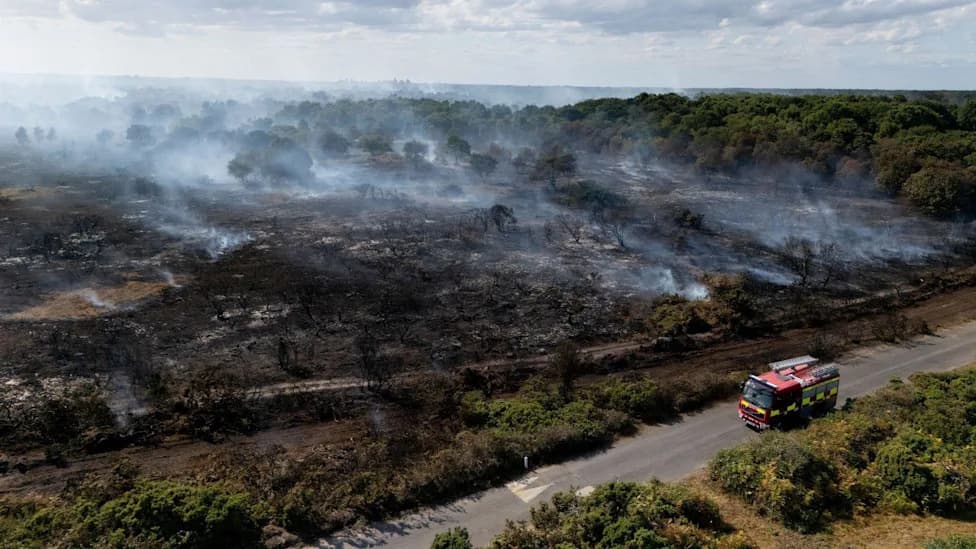
Ryota Haga, who lost his family home in the 2011 tsunami, is leading volunteer firefighters against a six-day wildfire that has scorched over 1,600 hectares near Otsuchi. Roughly 1,400 firefighters and dozens of Self-Defense Force personnel have been mobilised, but the blaze remained uncontained as crews battled exhaustion. Officials warn that climate change is elevating early-spring fire risk, and Haga cautions that Japan's ageing, understaffed volunteer brigades may struggle in future outbreaks.
Tsunami Survivor Leads Volunteer Firefighters in Sixth-Day Battle to Save Otsuchi
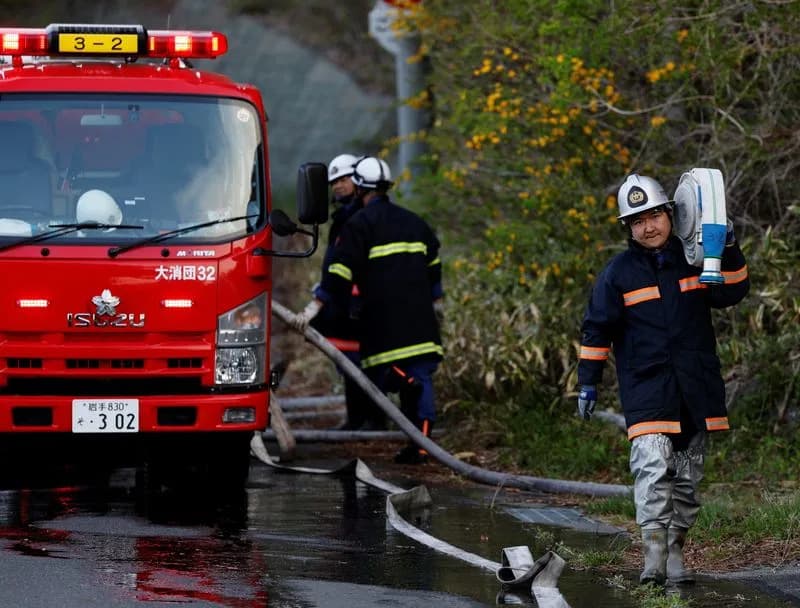
Volunteer firefighter Ryota Haga carries a fire hose to battle a wildfire in Otsuchi, Iwate Prefecture, Japan, April 26, 2026. REUTERS/Kim Kyung-Hoon
OTSUCHI, Japan — Ryota Haga, a 31-year-old volunteer firefighter who lost his family home in the 2011 tsunami, is again on the frontline of a major disaster: a wildfire that has raged for six days and threatens his coastal hometown.
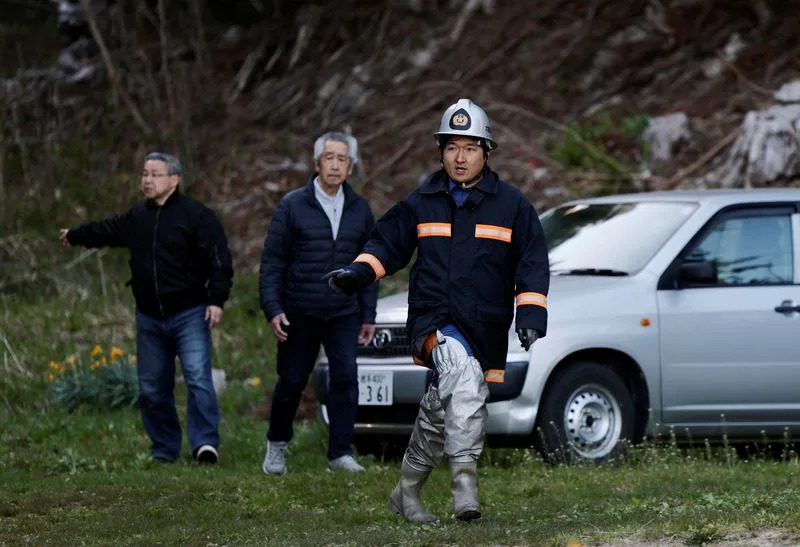
Volunteer firefighter Ryota Haga runs to connect fire hoses to battle a wildfire in Otsuchi, Iwate Prefecture, Japan, April 26, 2026. REUTERS/Kim Kyung-Hoon
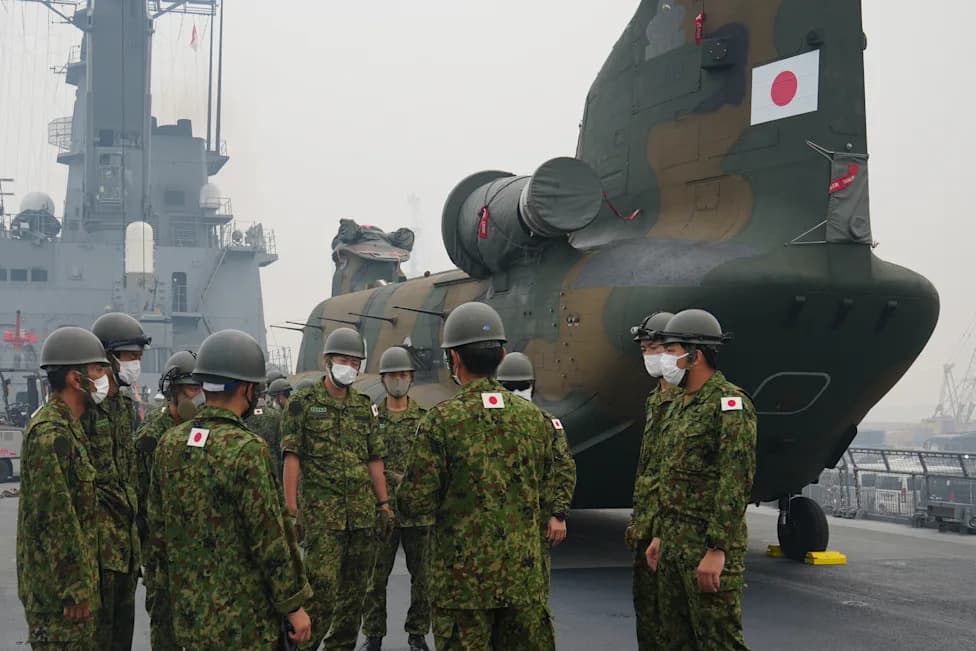
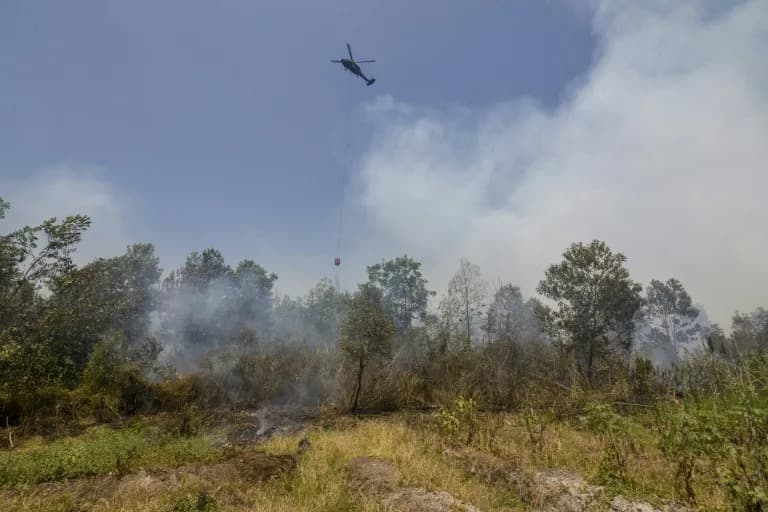
The blaze had burned more than 1,600 hectares of forest as of Monday morning. About 1,400 firefighters, supported by dozens of personnel from the Japan Self-Defense Forces, have been deployed, but crews had not yet brought the fire under control despite forecasts for scattered rain.
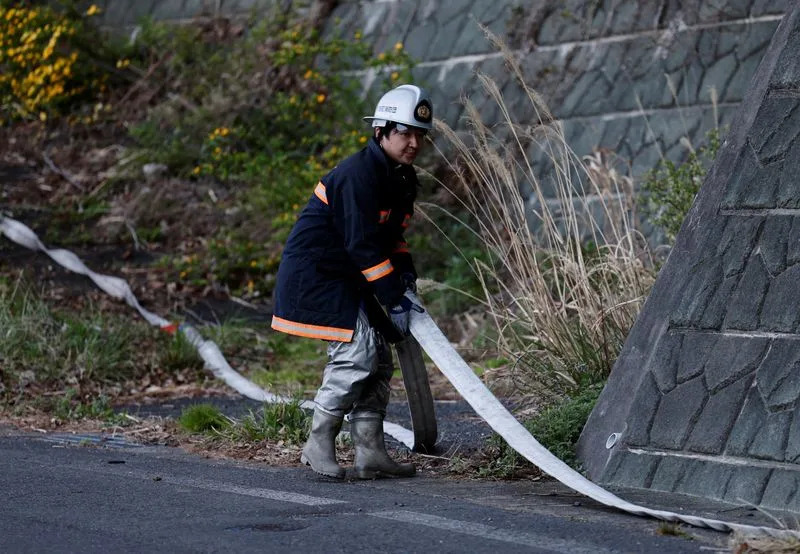
Volunteer firefighter Ryota Haga prepares to connect fire hoses to battle a wildfire in Otsuchi, Iwate Prefecture, Japan, April 26, 2026. REUTERS/Kim Kyung-Hoon
Otsuchi was among the coastal towns hit hardest by the Great East Japan Earthquake and tsunami in March 2011, when waves estimated at around 10 metres (33 ft) swept through the fishing community. Nearly 1,300 residents — roughly one in ten people — died in that catastrophe, including the town's mayor.
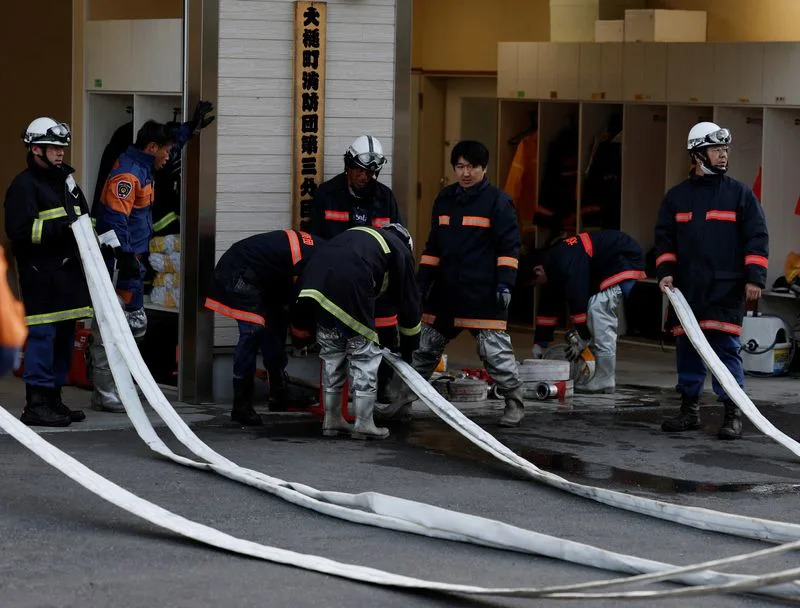
Volunteer firefighter Ryota Haga and his colleagues roll back fire hoses after their operation to battle a wildfire in Otsuchi, Iwate Prefecture, Japan, April 26, 2026. REUTERS/Kim Kyung-Hoon
Haga, who was a high school student when the 2011 disaster destroyed his family home, described the emotional and physical toll of fighting the current blaze. 'It's been 15 years since the Great East Japan Earthquake, and our lives were finally beginning to settle down,' he said after another draining day. 'We can't let people lose what is precious to them all over again. The fire is spreading and our exhaustion is at a limit, but it's our hometown. We will protect it at all costs, even if it feels like we're running on empty.'
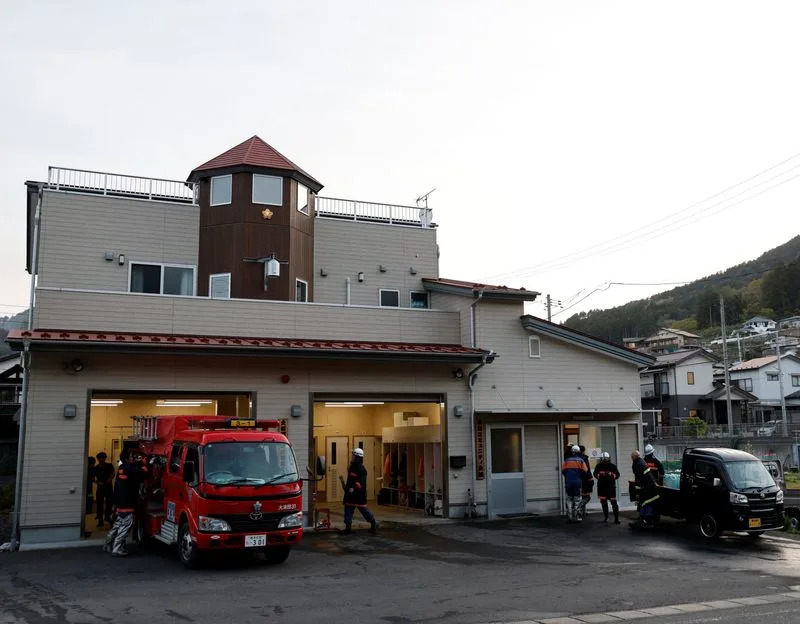
Volunteer firefighter Ryota Haga and his colleagues work at the fire station in Otsuchi, Iwate Prefecture, Japan, April 26, 2026. REUTERS/Kim Kyung-Hoon
Wider Risks and Community Strain
Japan typically experiences fewer large-scale wildfires than many other regions, but observers and officials link a recent rise in wildfire frequency to climate change. Early spring months have become hotter and drier in parts of Japan, and strong winds ahead of the humid rainy season can rapidly fan flames. On Sunday, another wildfire ignited in Fukushima, also in the country's northeast.
Haga said the scale of this fire is unlike anything he has experienced. He also warned of a longer-term challenge: an acute shortage of firefighters as Japan's population shrinks and ages. His volunteer brigade already falls below the staffing levels set by local authorities.
'If a forest fire breaks out when I'm in my 50s or 60s, and I'm the one gasping for breath while trying to fight it, I don't think we'll be able to stop it,' he said, voicing concern about the brigade's capacity as members grow older.
Despite exhaustion and limited resources, Haga and his fellow volunteers continue to defend their town. They hope their determination will encourage younger residents to join the volunteer fire brigade and help secure Otsuchi's future.
Reporting note: Emergency response numbers and details are based on local reports as of Monday morning; conditions may change as crews continue to battle the fire.
Help us improve.