Bruce, a 13-year-old kea missing his upper beak, was rescued to Willowbank Wildlife Reserve and later studied by scientists. He developed a pebble-assisted preening technique and used a lower-beak "jousting" move to assert dominance—behaviors not previously documented in kea. Stress tests showed Bruce had the lowest stress levels in his group, indicating alpha status. Researchers say his story highlights animal ingenuity and raises questions about when prosthetics truly benefit welfare.
Disabled Kea With No Upper Beak Becomes Alpha After Inventive Adaptations
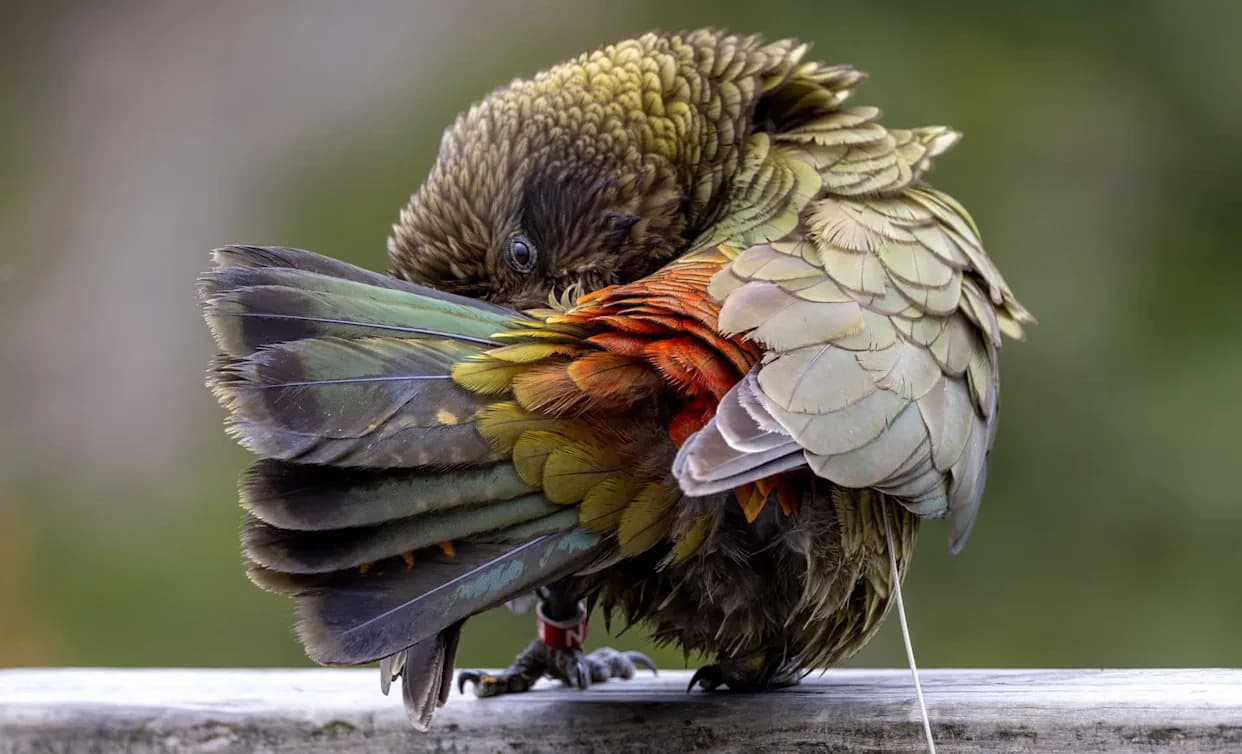
Photo Credit: iStock (web)
Bruce, a 13-year-old kea missing his upper beak, surprised researchers when he rose to become the alpha male of his group despite an injury that would normally be debilitating in the wild.
The research, published in Current Biology and reported by The New York Times, highlights how animals with physical impairments can develop novel solutions to survive and even thrive in social groups.
Background: Kea are intelligent parrots native to New Zealand. Bruce likely lost his upper beak after trying to take food from a rat trap, an injury that would make life in the wild exceptionally difficult. Rescuers brought him to Willowbank Wildlife Reserve, where visiting scientists studied the reserve's kea group (referred to in the study as a "circus").
Ingenious Preening: Observers noticed Bruce habitually holding a small pebble between his tongue and lower beak and running it through his feathers. Kea normally use the upper beak to preen; Bruce’s pebble-assisted technique appears to be a novel, previously undocumented adaptation that lets him maintain plumage without an upper mandible.
Unconventional Dominance: Male kea typically assert dominance by biting rivals around the neck. Because Bruce cannot bite in the usual way, he developed a different tactic: using his lower beak in a striking maneuver researchers described as "jousting." When scientists measured stress levels across the group, Bruce showed the lowest stress readings—consistent with alpha status.
"The link between innovation and disability in animals is important and completely understudied," said Alice Auersperg, a cognitive biologist at the University of Veterinary Medicine Vienna, who was not involved in the research.
"We haven't been tracking his dominance and stress over the last 12 years to know the journey that he's been on," said Alex Taylor, director of the Animal Minds Lab at Universitat Autònoma de Barcelona. "We weren't really looking for it, so we didn't really join the dots."
Human actions—traps, vehicle collisions, pollution, and the exotic-pet trade—are responsible for many animal injuries and disabilities. The report notes other interventions, such as a human-made beak transplant for a rescued toucan, and cautions that prosthetic assistance does not automatically guarantee improved welfare.
"The world is a living lab now," said Sarah Turner, a primatologist at Concordia University in Montréal, summarizing why studying these adaptations is increasingly important.
Bruce’s case underscores two key points: animals can show surprising behavioral flexibility after injury, and conservation and welfare efforts should carefully consider when and how human interventions (like prosthetics) actually benefit animals. As climate change and human activity push wildlife into closer contact with people, understanding how animals adapt to disability will be increasingly relevant to conservation policy and animal welfare.
Help us improve.