California voters will decide in November whether to require government-issued photo ID for in-person voting and a four-digit PIN for mail ballots. The measure, led by Republican Carl DeMaio and qualified with nearly one million signatures, has drawn $8.8 million in backing and national GOP attention. A UC Berkeley poll shows the electorate nearly evenly split, and the issue is unfolding amid parallel federal and state efforts and continuing court challenges.
California To Vote In November On Controversial Voter ID Measure Requiring Photo ID
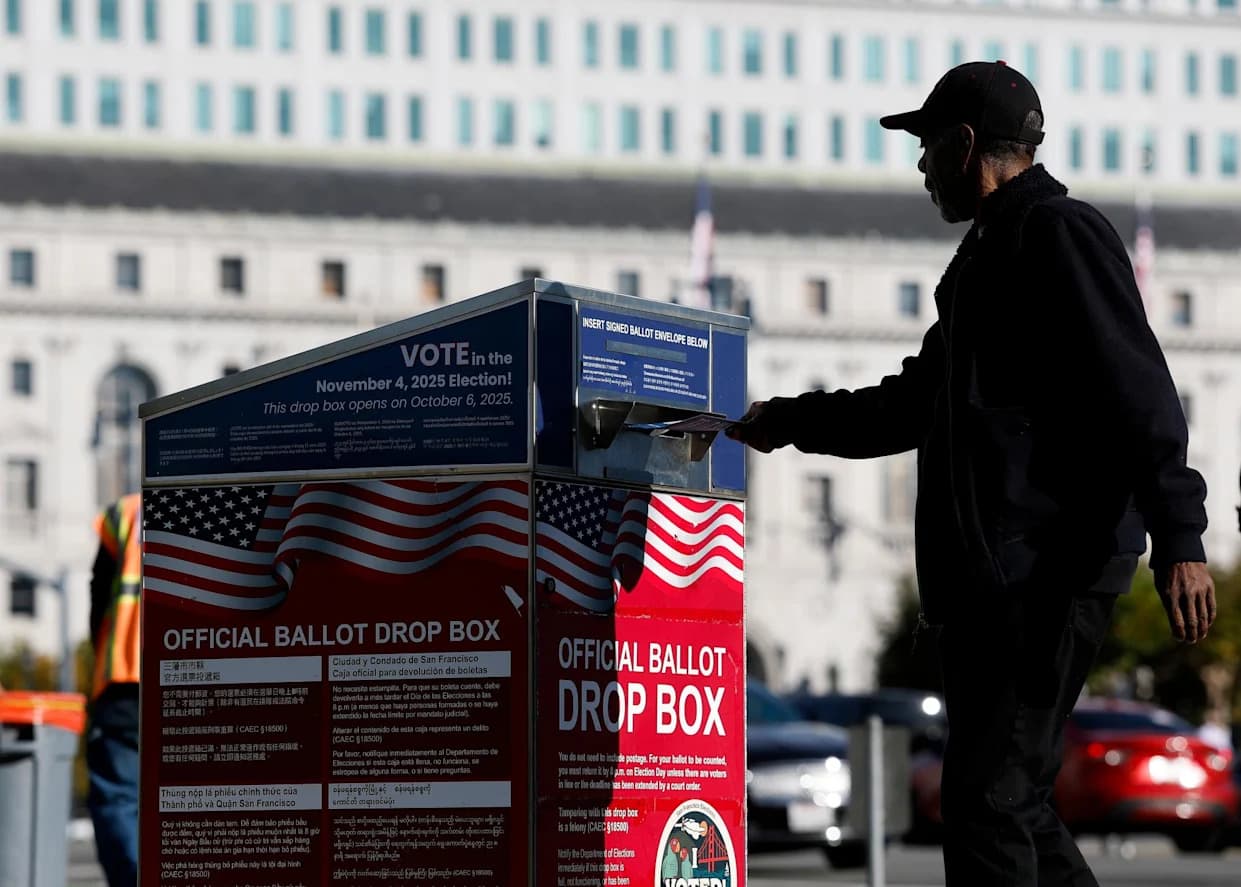
A voter drops his ballot in a drop box outside of city hall on 4 November 2025 in San Francisco, California.Photograph: Justin Sullivan/Getty Images(Photograph: Justin Sullivan/Getty Images)
California voters will decide this November whether the state should require a government-issued photo identification to vote in person, marking the latest high-profile battleground in a national conservative push for voter ID laws. The effort has been amplified by former President Donald Trump’s repeated — and unproven — claims of widespread election fraud.
How the Measure Would Work
If approved, the initiative would require voters to present a photo ID at polling places. Voters returning mail ballots would be asked to validate their ballot with a four-digit personal identification number (PIN) instead of a signature match or other verification method.
Who’s Behind It
The drive to put the measure on the ballot was led by Carl DeMaio, a Republican from San Diego. Nearly one million Californians signed petitions to qualify the initiative for November. In a video posted to X, DeMaio said the proposal would allow voters to “restore election integrity in our state, citizenship verification, auditing voter rolls — and yes, requiring ID to vote.”
Political Reaction
Democrats and voting-rights advocates argue that voter ID requirements create unnecessary hurdles that disproportionately affect low-income voters and communities of color. Supporters counter that the rules would strengthen election integrity.
Polls, Money And National Context
A recent poll from the Institute of Governmental Studies at the University of California, Berkeley found Californians nearly evenly split: 44% in favor, 45% opposed and the remainder undecided. The campaign backing the ballot measure raised $8.8 million last year, according to Politico, and has attracted national Republican attention and funding. Opponents have only recently begun organizing their response.
The debate in California is unfolding alongside federal and state initiatives on voting rules. Former President Trump last week urged Congress to eliminate the filibuster so lawmakers could pass the Save America Act, a proposal that would impose a federal proof-of-citizenship requirement for voting. Florida Governor Ron DeSantis signed a state bill on April 1 modeled on the stalled federal proposal.
Legal Battles
Voter ID laws continue to be litigated in federal courts. U.S. District Judge Loretta Biggs recently upheld North Carolina’s 2018 voter ID law after challenges from civil rights groups, while last year the U.S. Court of Appeals for the Ninth Circuit struck down key provisions of Arizona’s 2022 voter ID measures, finding several elements to be unlawful forms of voter suppression.
What To Watch: The measure’s fate will depend on turnout, messaging from both sides and ongoing legal scrutiny that could affect how — or whether — the rules are implemented.
Help us improve.