Zohran Mamdani and President Donald Trump — political opposites — have alternated between fierce public exchanges and pragmatic, policy-driven meetings over the past year. After Trump’s harsh attacks and threats to withhold federal funds during the 2025 mayoral race, Mamdani won and met with Trump twice in the Oval Office to discuss housing, zoning and federal investment. Tensions reemerged around a proposed tax on expensive second homes, but both men continue to engage on affordability and development issues.
From Insults to the Oval Office: How Zohran Mamdani and Donald Trump’s Unlikely Relationship Evolved
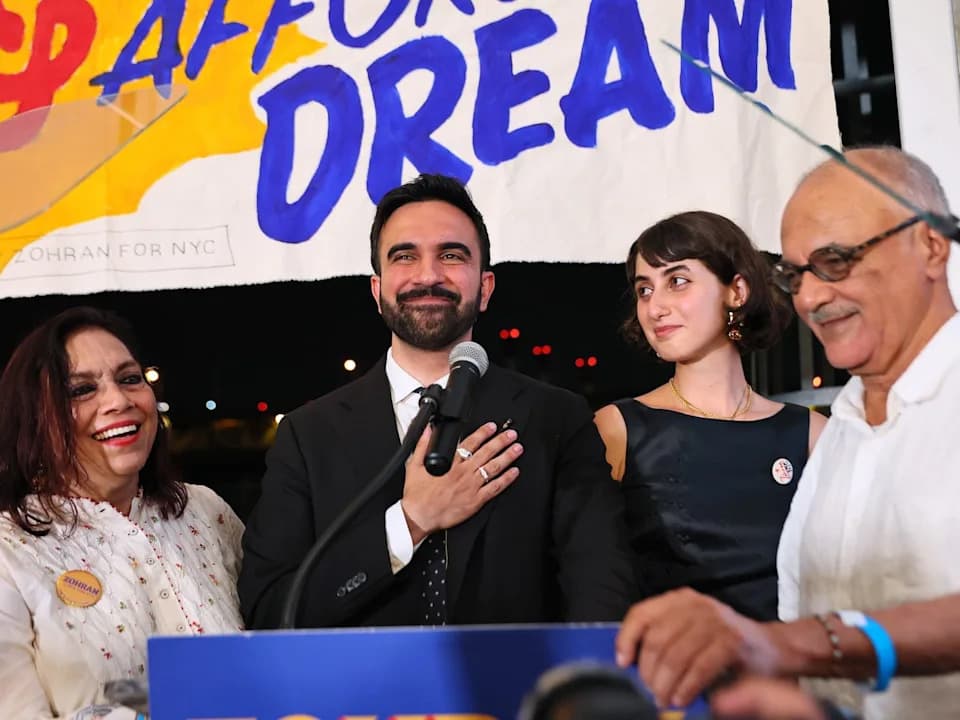
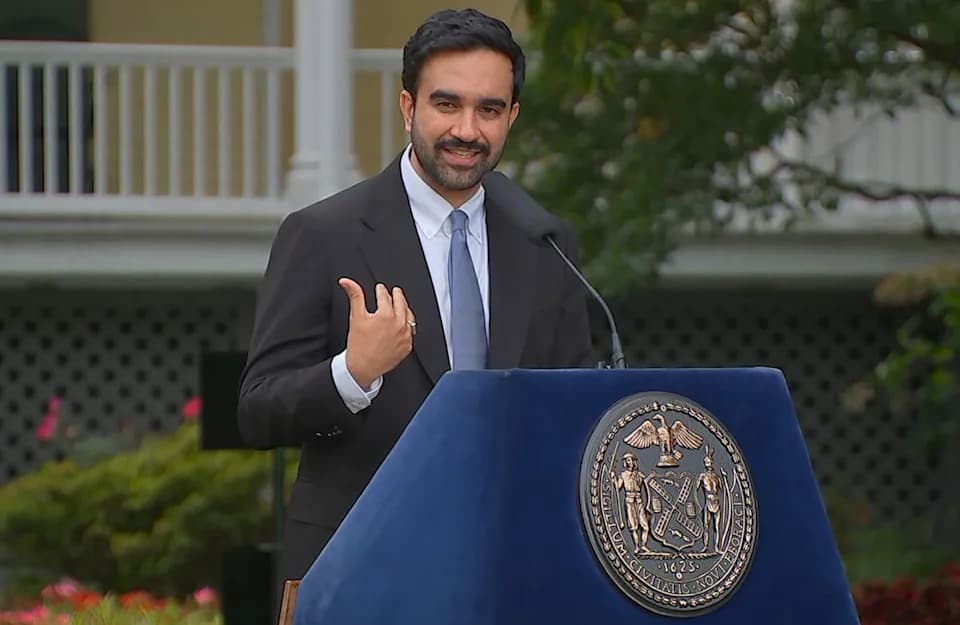
Mamdani addresses supporters after winning the NYC mayoral primary on June 24, 2025.Michael M. Santiago/Getty Images
Overview: Zohran Mamdani and President Donald Trump occupy opposite ends of the political spectrum, yet over the past year their interactions have alternated between sharp public attacks and surprisingly pragmatic, policy-focused meetings. Their relationship has become one of the more unexpected dynamics in contemporary American politics — a mix of confrontation, negotiation and occasional goodwill.
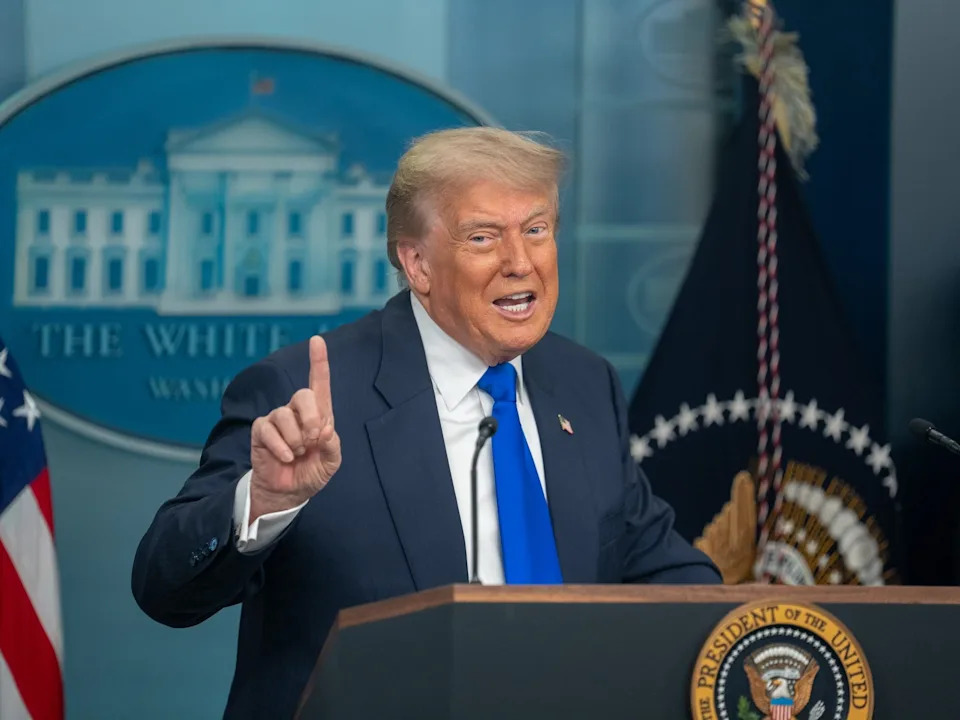
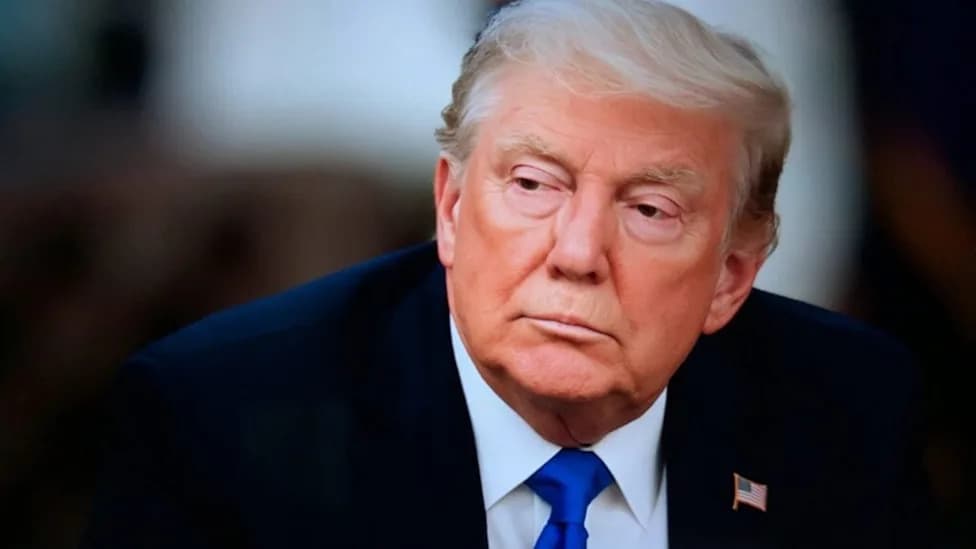
Trump speaking to reporters at the White House in June 2025.Hu Yousong/Xinhua via Getty Images
How the Relationship Developed
June 2025 — Primary Fireworks. Trump’s first public reaction to Mamdani’s upset victory in the Democratic primary was blistering. On social media he called Mamdani a "100% Communist Lunatic," criticized his appearance and demeaned his voice. Mamdani responded by urging critics and New Yorkers to judge his policy agenda on affordability rather than on rhetoric.
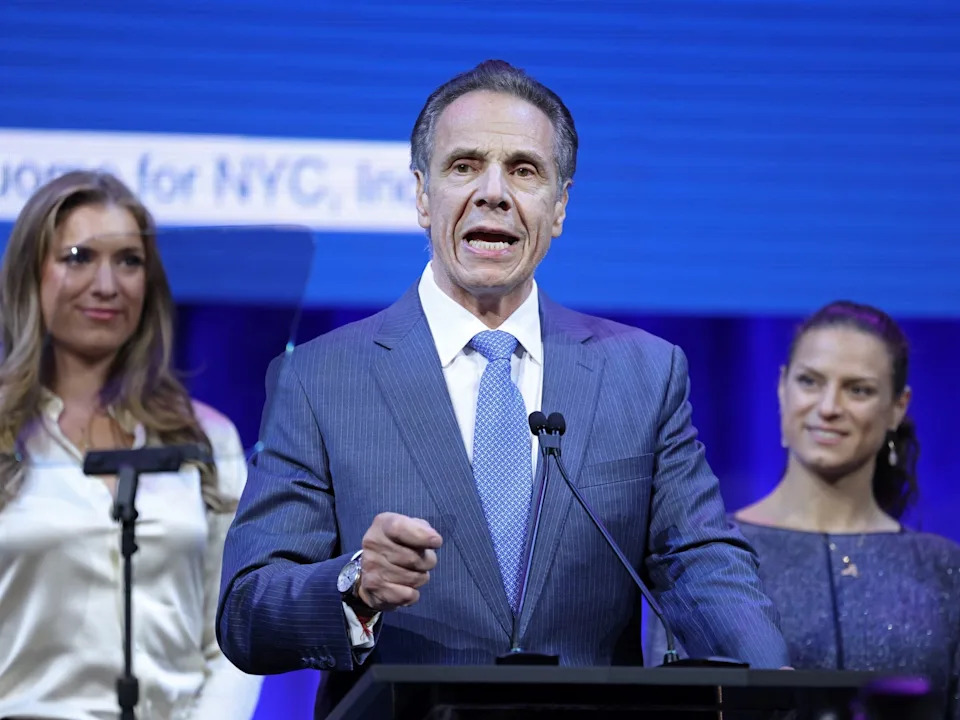
Former Gov. Andrew Cuomo speaks at an event in November 2025.Chary Triballeau / AFP via Getty Images
Summer–Fall 2025 — Threats Over Federal Funding. As Mamdani surged toward the general election, Trump repeatedly threatened to withhold federal funding from New York City if Mamdani won. Analysts noted such a move would likely face legal challenges, but the threat underscored real stakes: the New York City Comptroller reported that roughly 8.3% of the city’s FY2025 budget — about $9.6 billion — came from federal sources.
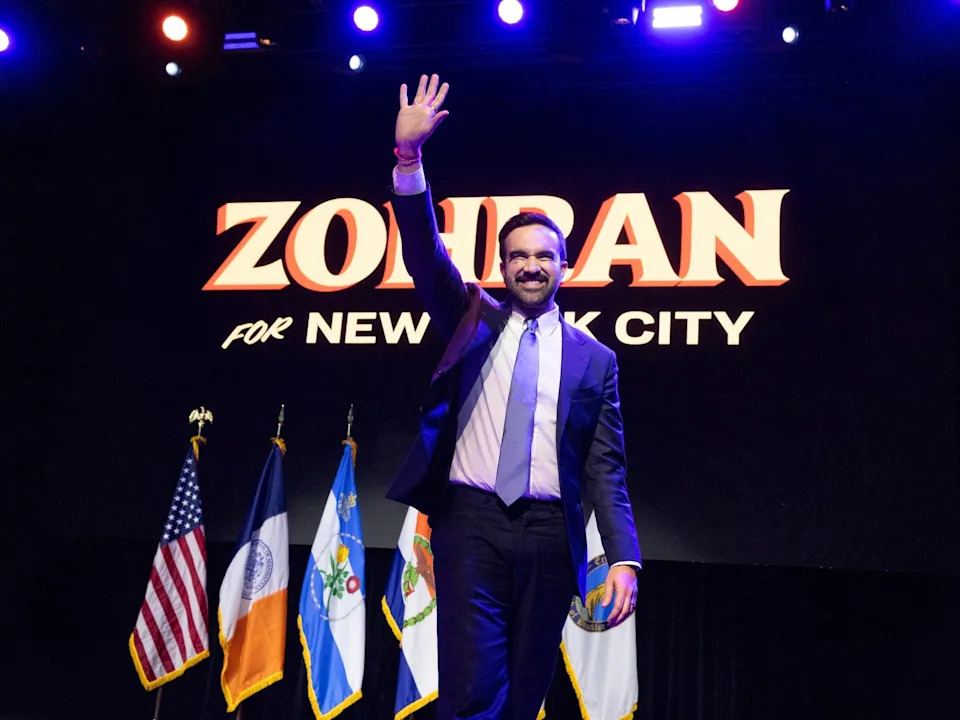
Mamdani on election night in November 2025.Andrew Lichtenstein/Corbis via Getty Images
November 2025 — A Last-Ditch Endorsement. In an effort to block Mamdani, Trump endorsed former Gov. Andrew Cuomo, who had mounted an independent bid after losing the Democratic primary. Several high-profile backers, including Elon Musk, also publicly urged voters to support Cuomo.
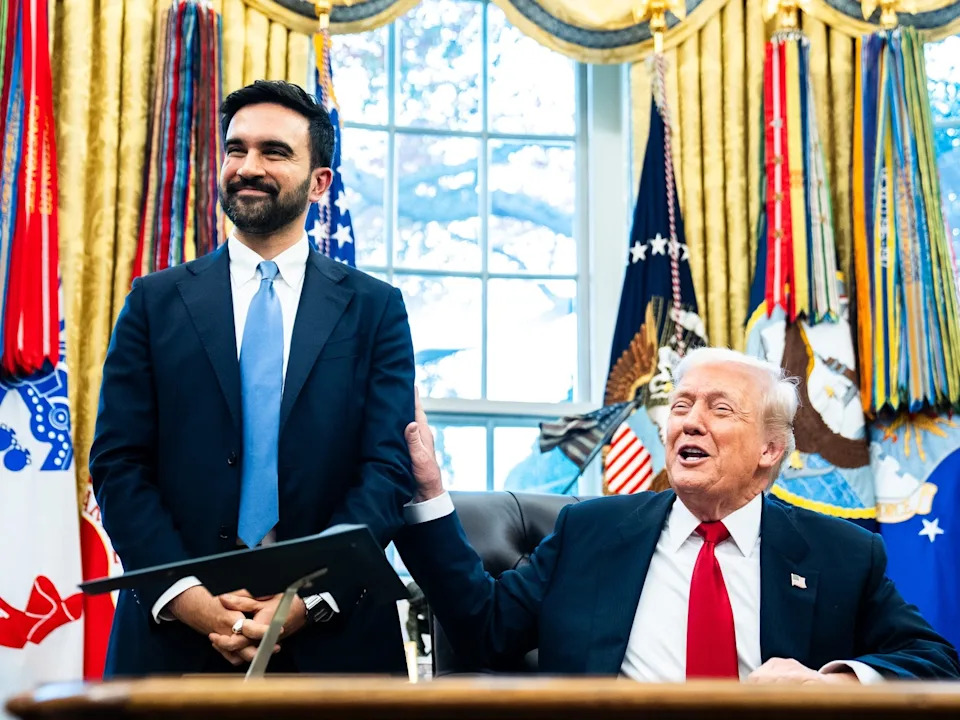
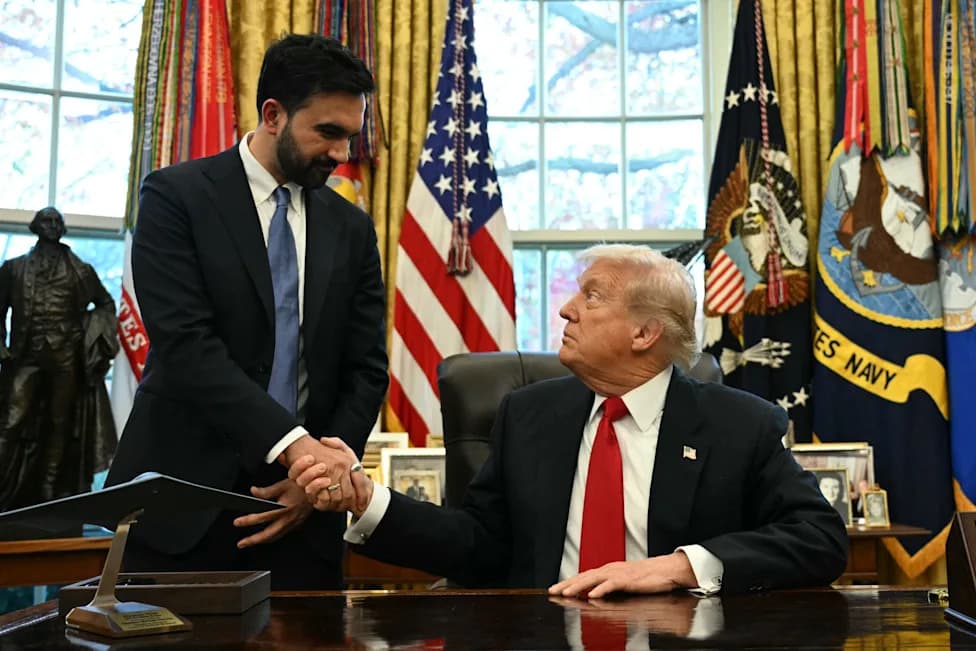
Trump and Mamdani in the Oval Office on November 21, 2025.Demetrius Freeman/The Washington Post via Getty Images
November 2025 — Election Night and the First Oval Office Meeting. Mamdani won the mayoralty. In his victory speech he taunted the president with four words: "Turn the volume up." Shortly afterward, Trump invited the new mayor to the White House. The Oval Office meeting proved unexpectedly cordial: both men emphasized shared concerns such as housing affordability and energy costs, and described granular conversations about rent, groceries, utilities and zoning.
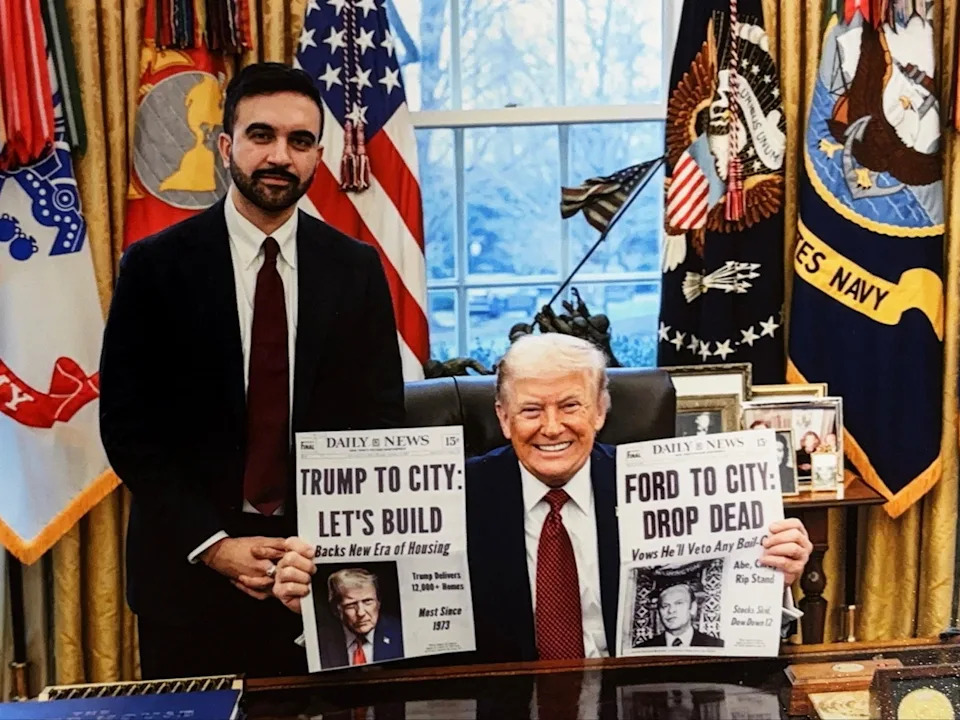
Trump holding a mock-up of a newspaper made by Mamdani's team at a meeting in February 2026.New York City Mayor's Office
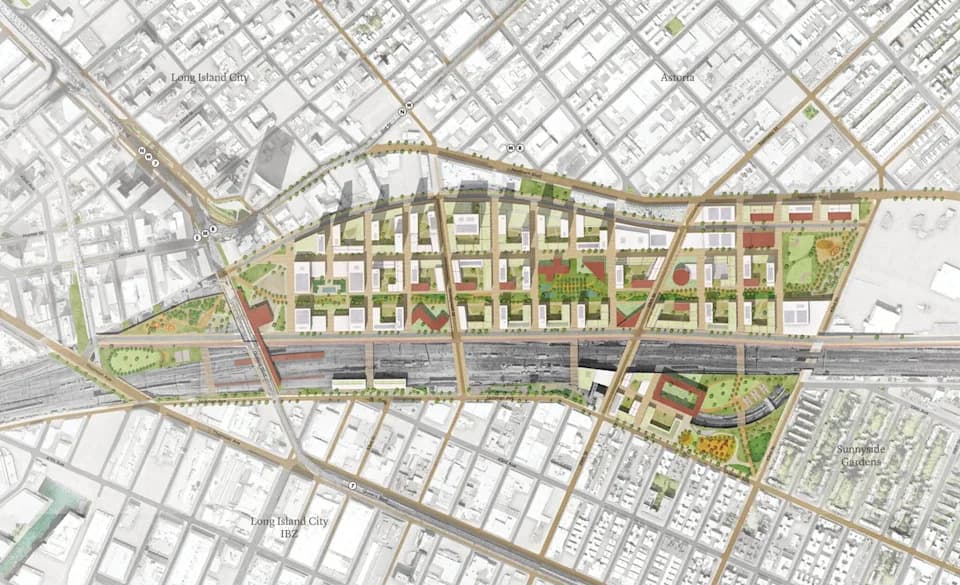
February 2026 — A Second Visit and a Housing Pitch. About a month into Mamdani’s term he returned to the Oval Office, bringing a mock Daily News front page reading "Trump to City: Let's Build" — a deliberate echo of the paper’s famous 1975 "Ford to City: Drop Dead" headline. The two discussed a potential federal role in financing housing at Sunnyside Yard in Queens and broader federal investment to address the city’s affordability crisis.
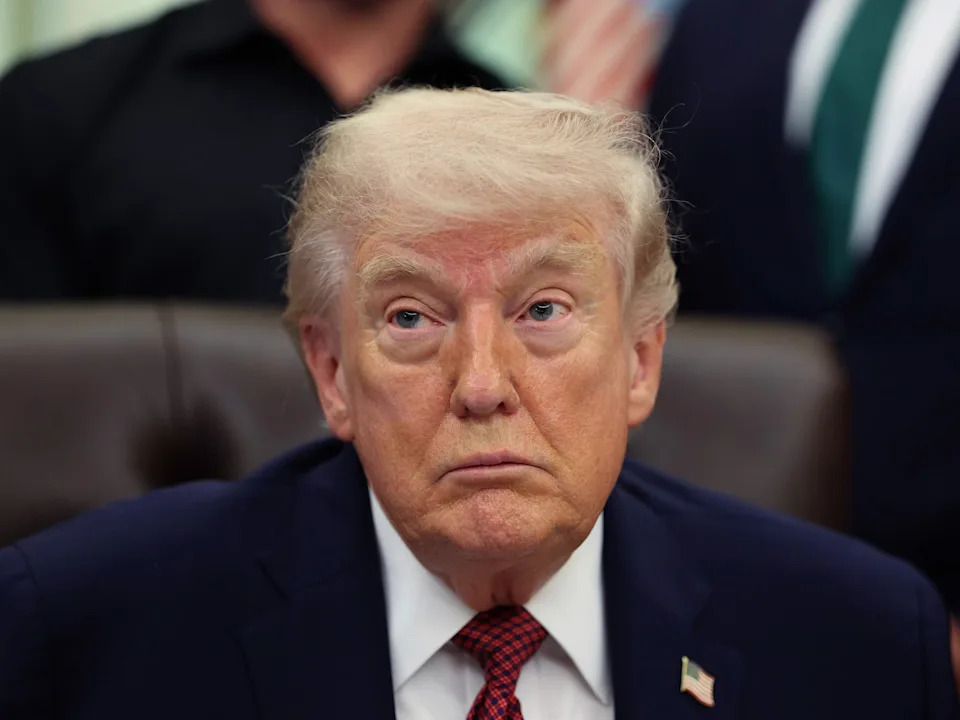
Trump at an Oval Office event in April 2026.Tasos Katopodis/Getty Images
April 2026 — Renewed Tensions Over Tax Policy. Tensions resurfaced after Mamdani proposed a tax targeting second homes worth over $5 million. Trump criticized the measure sharply on social media, calling Mamdani’s approach "TAX, TAX, TAX" and saying the mayor was "destroying" the city. The comment highlighted the ongoing balance between public dispute and continued engagement.
What This Means
Despite abrasive rhetoric on occasion, Mamdani and Trump have shown an ability to pivot to detailed, pragmatic discussions on policy areas that matter to New Yorkers: housing, zoning and federal investment. Their interactions underscore how local governance and federal power can produce unexpected collaborations — even between political adversaries — but also how quickly cooperation can fray when core policy differences resurface.
Quote (Mamdani): "We're both from the same city... We spoke about rent, groceries, utilities and zoning."
Sources referenced in the original reporting include public statements, social media posts from the period, the New York City Comptroller’s fiscal data and reporting on White House meetings.
Help us improve.