The EU is exploring funding alternative energy corridors in the Middle East to reduce dependence on chokepoints like the Strait of Hormuz after conflict-related disruptions spiked fuel prices. European Commission President Ursula von der Leyen said the bloc is ready to help Gulf partners build and repair export infrastructure while strengthening defence cooperation to protect shipping. Oil prices rose with Brent near $100 a barrel and the EU reports an estimated €25 billion rise in its energy bill over 43 days. A planned EU–GCC summit will be used to discuss concrete projects and next steps.
EU Weighs Funding Alternative Middle East Energy Corridors to Bypass Strait of Hormuz
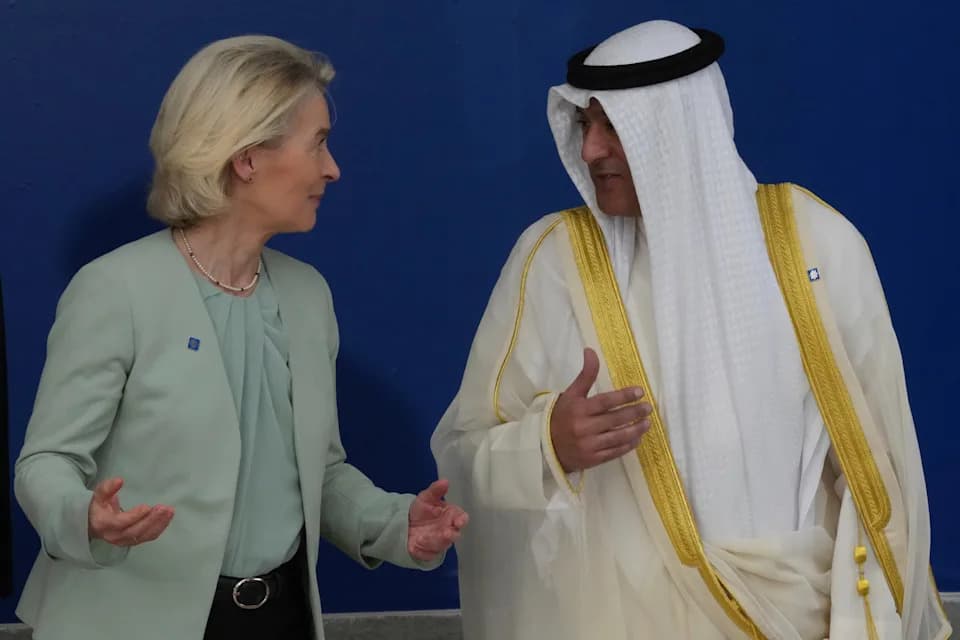
European Commission President Ursula von der Leyen, left, speaks with the Gulf Cooperation Council Secretary General Jasem Mohamed Albudaiwi before a family photo of the EU Summit in Nicosia, Cyprus, Friday, April 24, 2026. (AP Photo/Petros Karadjias)(ASSOCIATED PRESS)
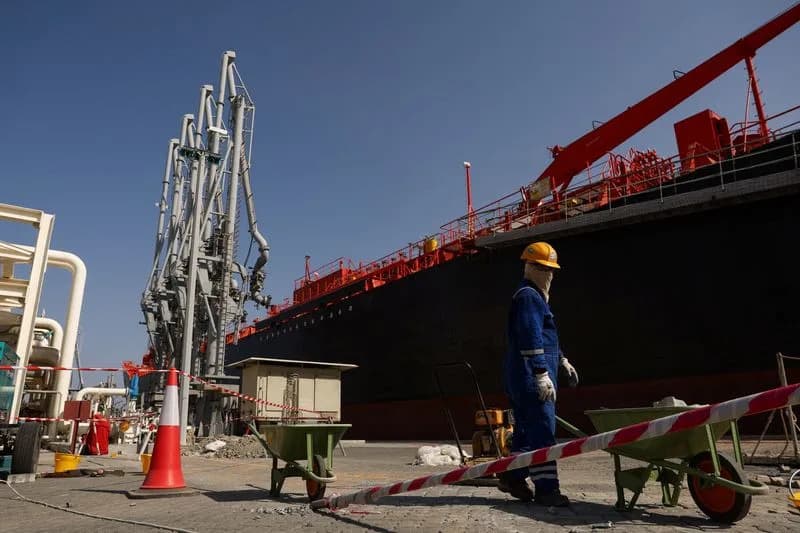
NICOSIA, Cyprus — A severe fuel crunch and surging oil and gas prices tied to recent conflict-related disruptions have pushed the European Union to consider financing alternative energy corridors in the Middle East that would avoid chokepoints such as the Strait of Hormuz.
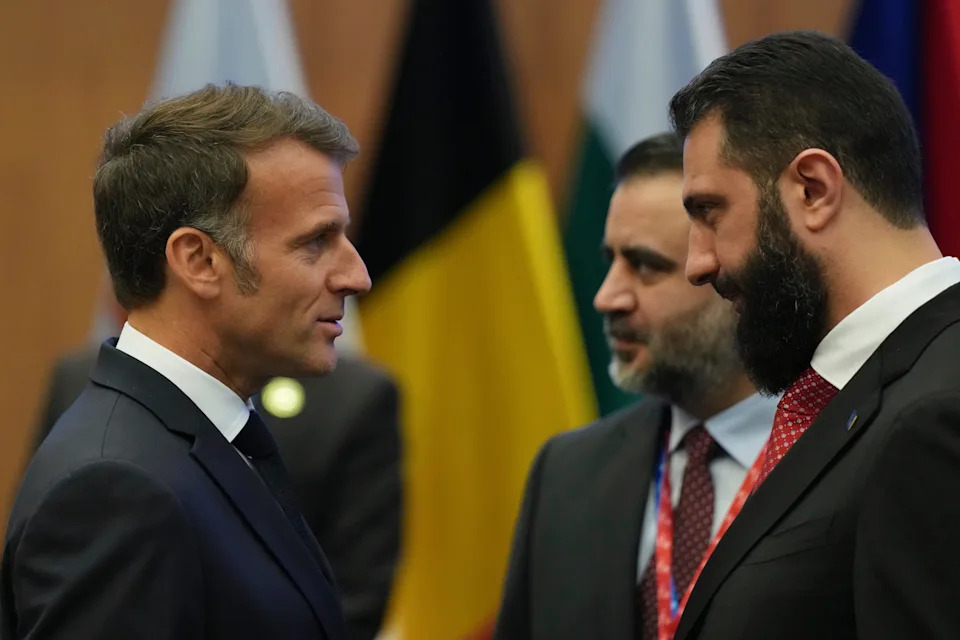
French President Emmanuel Macron, left, talks with the Syrian President Ahmad al-Sharaa during the EU Summit in Nicosia, Cyprus, Friday, April 24, 2026. (AP Photo/Petros Karadjias)(ASSOCIATED PRESS)
EU Offers Partnership With Gulf States
European Commission President Ursula von der Leyen said the EU is prepared to work with Gulf partners on new export routes and to help repair energy infrastructure damaged in the fighting. She stressed that energy security and geopolitical security are increasingly intertwined and that disruptions in the Gulf have direct consequences for factories and consumers across Europe.
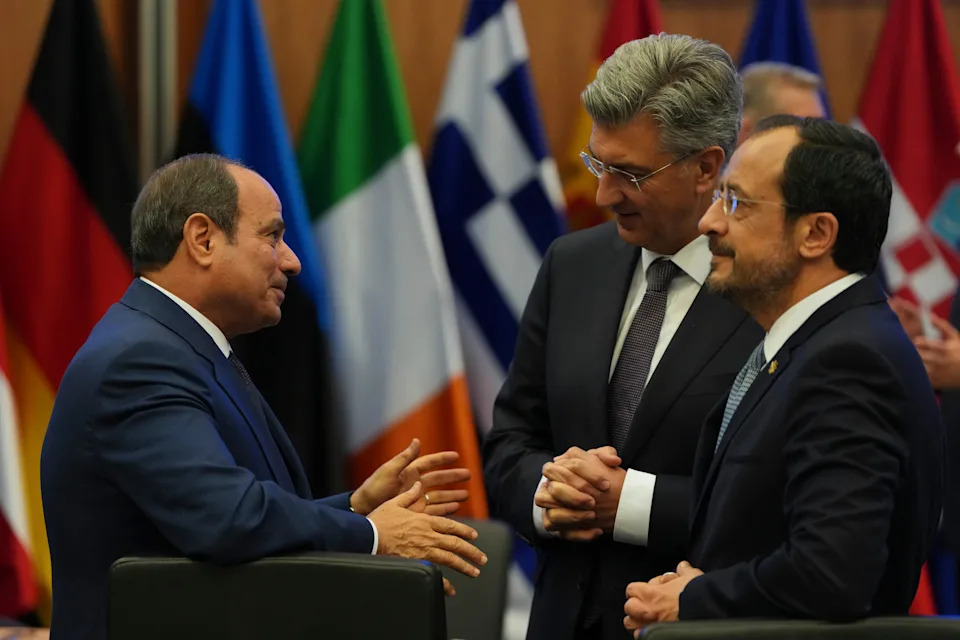
Egypt's President Abdel-Fattah el-Sissi, left, Cypriot President Nikos Christodoulides, right, and Croatia's Prime Minister Andrej Plenkovic talk during the EU Summit in Nicosia, Cyprus, Friday, April 24, 2026. (AP Photo/Petros Karadjias)(ASSOCIATED PRESS)
“The events of the past month have taught us a hard lesson. Our security is not just related, it is intrinsically linked,” von der Leyen said at the close of an informal EU leaders' meeting in Nicosia.
The Commission also urged closer defence cooperation and highlighted the EU's maritime security mission in the Red Sea as one possible naval contribution for protecting shipping lanes in the region. Public comments, however, focused on the bloc's willingness to support construction and repairs of energy infrastructure that would divert exports away from single bottlenecks.
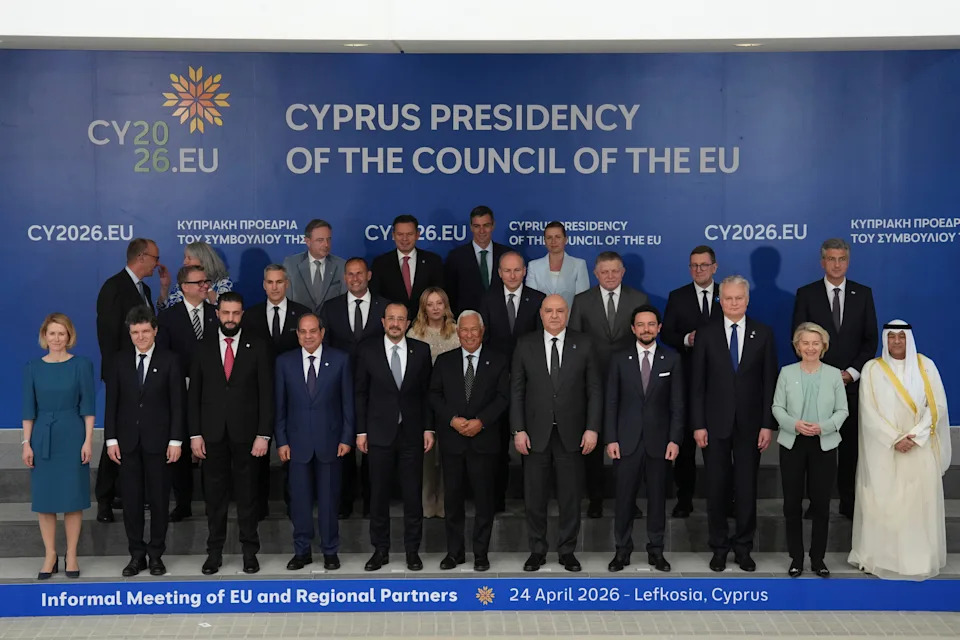
EU and Middle East leaders pose for a family photo of the EU Summit in Nicosia, Cyprus, Friday, April 24, 2026. (AP Photo/Petros Karadjias)(ASSOCIATED PRESS)
Economic Impact
Normally, roughly one-fifth of the world’s oil and gas transits the Strait of Hormuz. Hostilities and threats to merchant shipping have severely disrupted passage through the waterway and pushed fuel prices higher. Early Friday Brent crude traded at about $100.33 a barrel and the U.S. benchmark around $96.66 per barrel. Von der Leyen said those price rises have increased the 27-nation bloc’s energy bill by approximately €25 billion (about $29.3 billion) over the past 43 days.
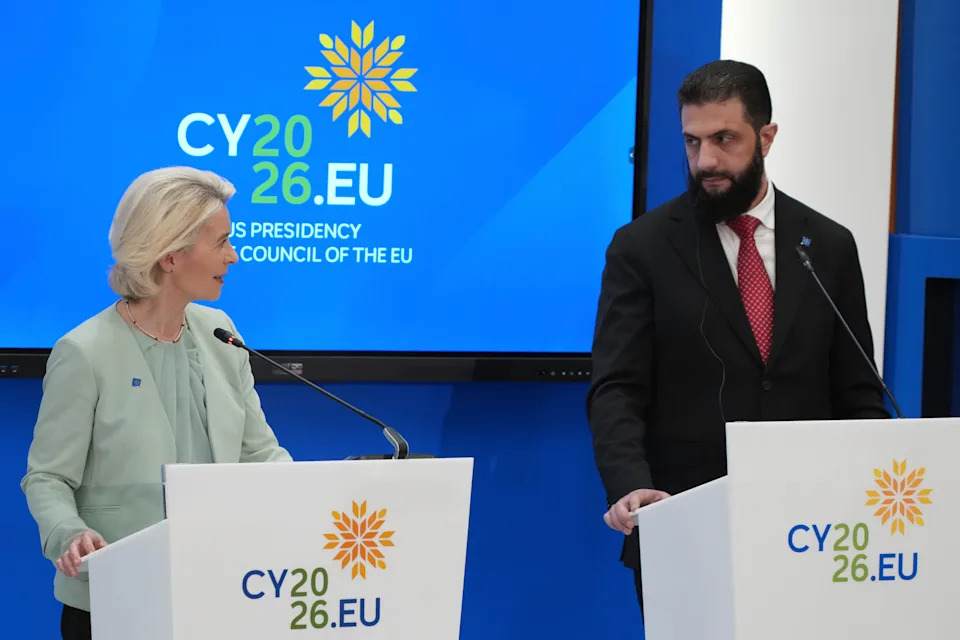
European Commission President Ursula von der Leyen, left, and Syrian President Ahmad al-Sharaa join a press conference after the EU Summit in Nicosia, Cyprus, Friday, April 24, 2026. (AP Photo/Petros Karadjias)(ASSOCIATED PRESS)
While leaders referenced frameworks such as the India–Middle East–Europe Economic Corridor as potential building blocks, neither the Commission nor EU leaders provided detailed project lists or timelines. A summit between the EU and the Gulf Cooperation Council later this year is expected to offer a forum to examine concrete proposals.
Regional Diplomacy and Security
The informal summit in Nicosia included senior representatives from several Middle Eastern countries. Cyprus, which currently holds the rotating EU presidency, has sought to deepen ties with neighboring states to bolster regional economic recovery and security.
Cyprus itself was affected early in the crisis when a Shahed drone reportedly launched from Lebanon on March 2 damaged an aircraft hangar at a British military base on the island’s southern coast. Several EU member states dispatched naval assets with anti-drone capabilities to reinforce Cyprus. That incident revived interest in the EU treaty clause on mutual assistance and prompted leaders to agree to start developing a formal, standing mechanism for collective responses instead of ad hoc arrangements.
Political Context And Criticism
Human rights groups criticized EU leaders for not using the summit to press harder on issues related to civilian protection in the wider conflict. Meanwhile, EU officials — including senior national leaders — said they would not consider lifting sanctions on Iran until concerns such as missile programs and support for proxy groups across the region are resolved.
The EU's proposals remain at an exploratory stage: Brussels is signaling willingness to fund and help build resilient energy routes, but concrete project choices, funding arrangements and timelines are yet to be announced.
Help us improve.