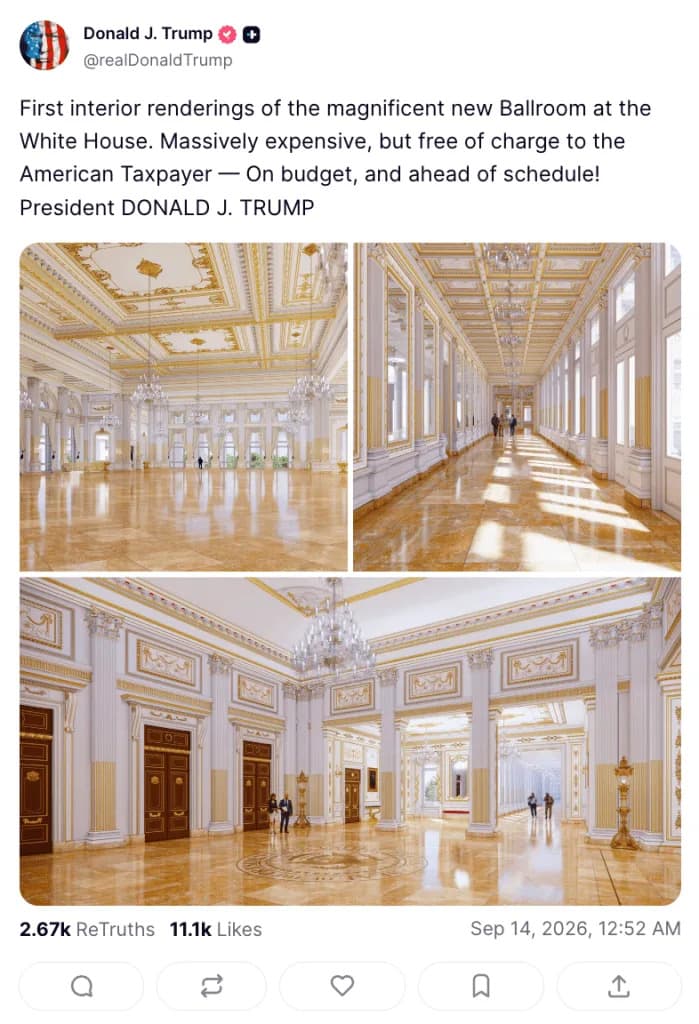
The Presidential Emergency Operations Center (PEOC), a secure facility beneath the White House established under FDR in 1942, was expanded during Truman's 1948–1952 renovation and modernized over subsequent administrations. It served as an operational command center on September 11, 2001, and rare archival photos provide a limited public view. In 2025, President Trump moved to replace the East Wing with a 90,000-square-foot ballroom and confirmed construction of a substantial military-style complex underneath, prompting legal challenges that have paused above-ground work but allowed security-related construction to continue.
Inside the White House Bunker: The PEOC's History, 9/11 Role, and the 'Massive' Complex Beneath Trump's New Ballroom
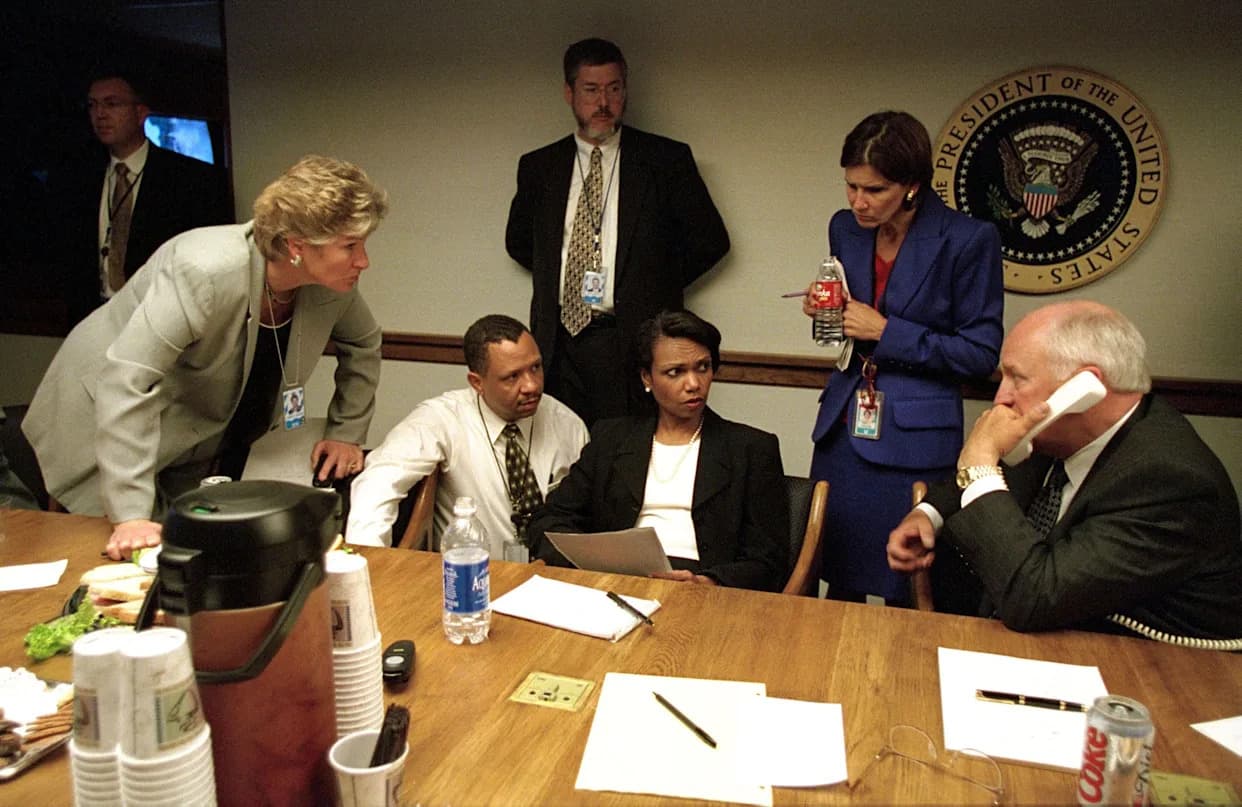
Inside the Presidential Emergency Operations Center.The White House/Getty Images
Visitors often note that the White House looks smaller in person than in photos, but much of its footprint — and critical infrastructure — lies below ground. The Presidential Emergency Operations Center (PEOC), commonly called the White House bunker, is a secure subterranean facility dedicated to presidential safety and continuity. Its origins date to World War II and it has been expanded and modernized across administrations.
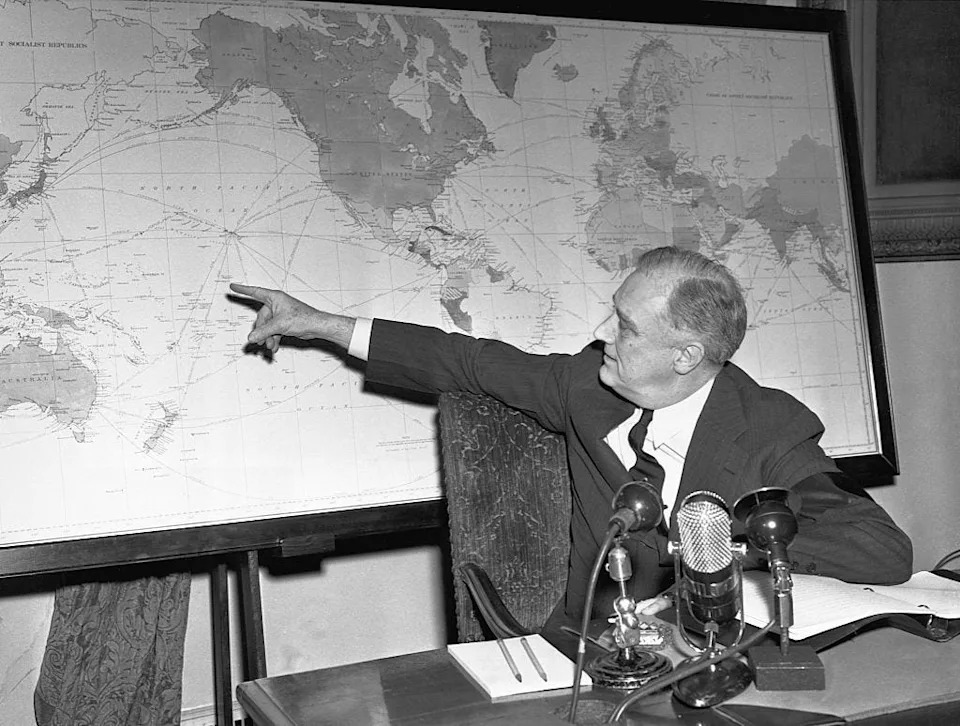
From the Oval Office of the White House, US President Franklin D. Roosevelt speaks to the world on February 23, 1942, over one of the most elaborate radio hookups ever prepared for a "fireside chat." In the speech, he warns that the United States, scorning a "turtle policy" of "not sticking our necks out, will carry the war to the enemy." Here, the President is shown as he points to a map to emphasize a point.Bettmann Archive/Getty Images
Origins and Early Upgrades
The PEOC traces back to 1942, when President Franklin D. Roosevelt added a bomb shelter beneath the East Wing during wartime renovations. That early shelter included basic living quarters, ventilation masks, food supplies, and communications equipment secured behind reinforced concrete.
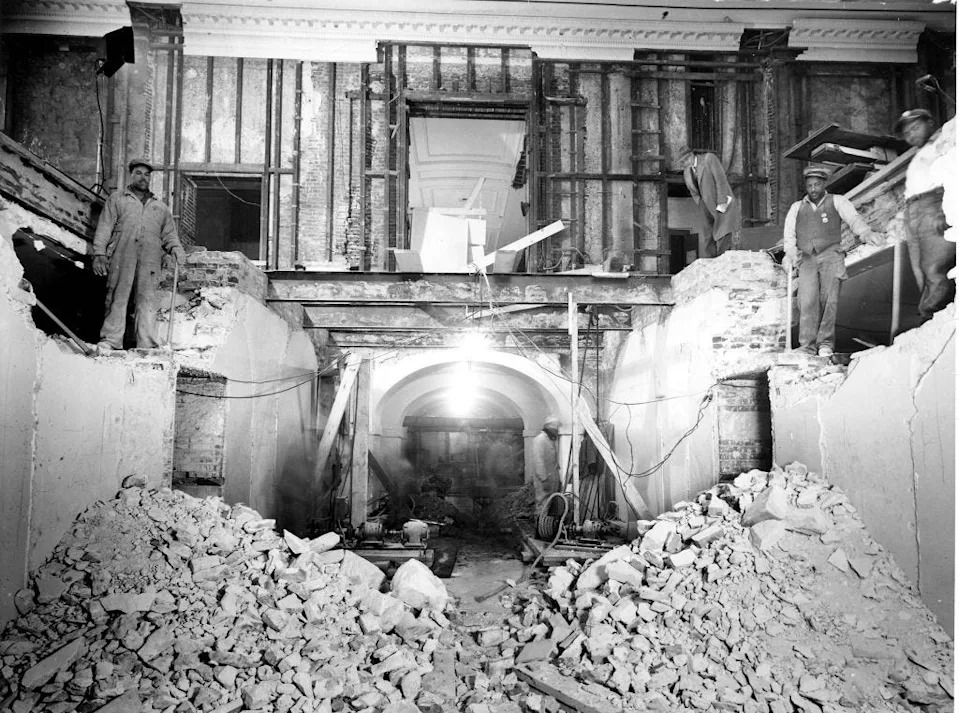
Several men pose amid partially demolished walls, rubble and steel girders in the lower corridor of the White House, photographed during President Truman's White House Reconstruction, Washington, District of Columbia, February 14, 1950.Smith Collection/Gado/Getty Images
During Harry Truman's comprehensive renovation of the White House from 1948 to 1952 — a four-year, $5.7 million effort that essentially gutted and rebuilt the interior with concrete and steel — the underground spaces were enlarged and fortified. As global threats evolved into the nuclear age, the shelter's role shifted from a temporary refuge to a continuity-of-government asset.
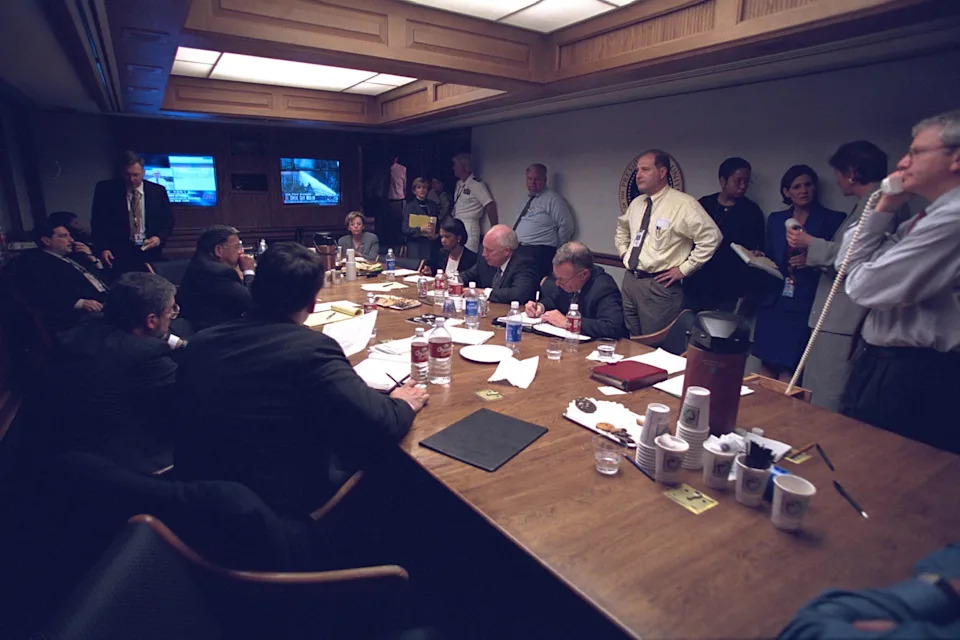
Vice President Dick Cheney and senior staff responded to the September 11 terrorist attacks in the Presidential Emergency Operations Center.National Archives
The PEOC on September 11, 2001
The PEOC remained largely a contingency until the terrorist attacks of September 11, 2001, when it functioned as an operational command center. Vice President Dick Cheney and senior staff were escorted there after the second plane struck, and from the facility they coordinated decisions — including advising President George W. Bush, who was in Florida, not to return to Washington, D.C. — marking the first full activation of modern continuity-of-government plans.
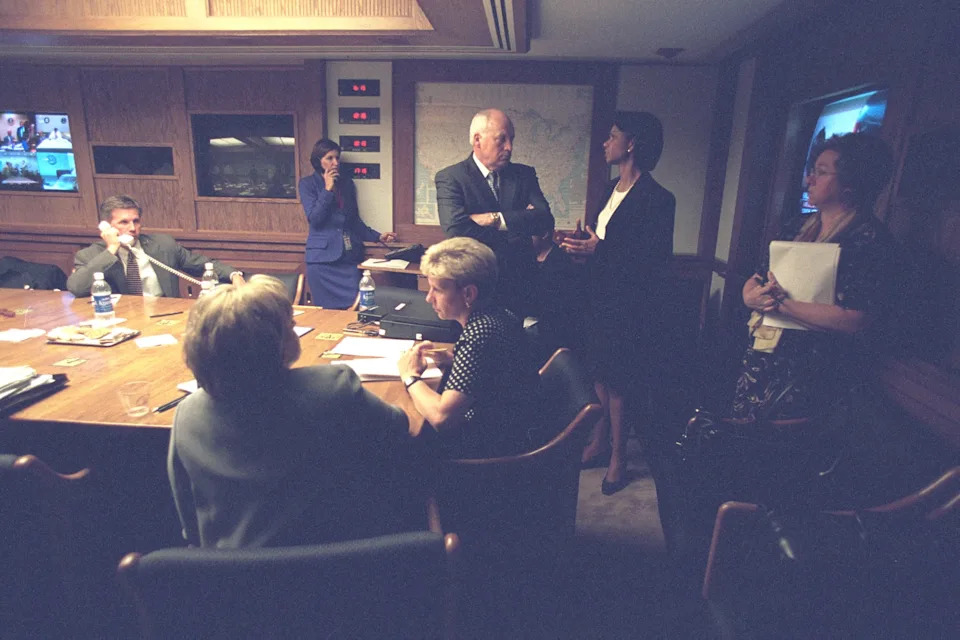
Vice President Dick Cheney with senior staff in the Presidential Emergency Operations Center on September 11, 2001.National Archives
"It is considered the safest place to go on the White House grounds," said Matt Costello, chief education officer and director of the David M. Rubenstein National Center for White House History.
Rare photos from September 11 released by the National Archives in 2014 show a conference-style space equipped with phones, video-conference capability, television monitors, world clocks, and maps — a rare public glimpse into a largely classified facility. Former first lady Laura Bush also described being escorted through subterranean corridors and into the PEOC in her memoir Spoken From the Heart.
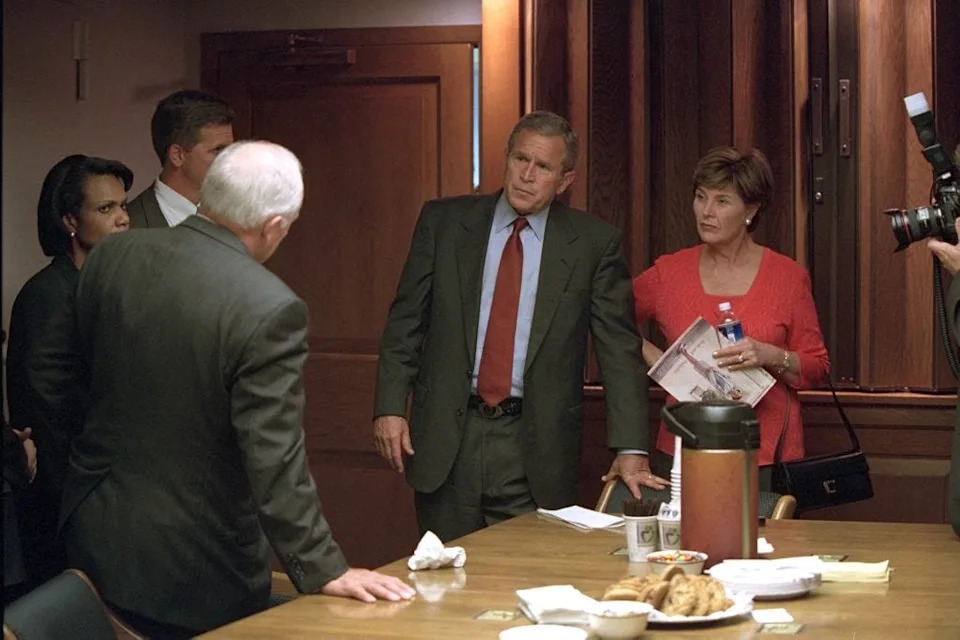
President George W. Bush and Mrs. Laura Bush talk with Vice President Dick Cheney and National Security Adviser Condoleezza Rice Tuesday, September 11, 2001, in the President's Emergency Operations Center. Photo by Eric Draper, Courtesy of the George W. Bush Presidential Library/Getty ImagesEric Draper, Courtesy of the George W. Bush Presidential Library/Getty Images
Modern Updates and Usage
Over the decades the PEOC has been updated with modern telecommunications and secure lines to support the president, vice president, and senior officials during emergencies. The facility has appeared in popular culture and remains only partly public: its existence is acknowledged, but full details about its capabilities remain classified.
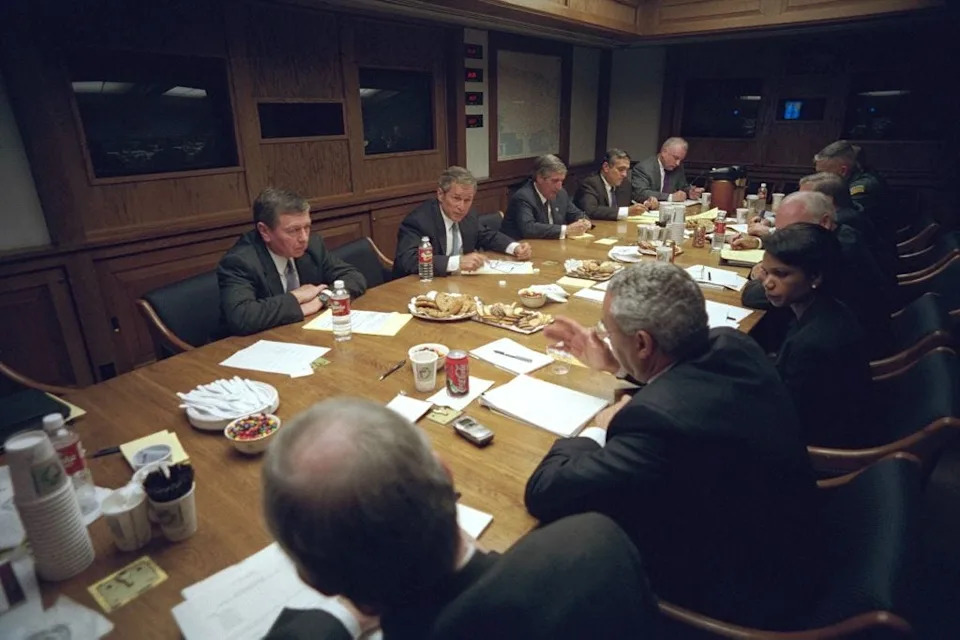
After addressing the nation Tuesday, Sept. 11, 2001, President George W. Bush meets with his National Security Council in the Presidential Emergency Operations Center of the White House. Photo byEric Draper, Courtesy of the George W. Bush Presidential Library/Getty Images
Reports from 2020 indicate that President Donald Trump was taken to the PEOC briefly during protests near the White House; Trump later said his visit was an inspection rather than sheltering.
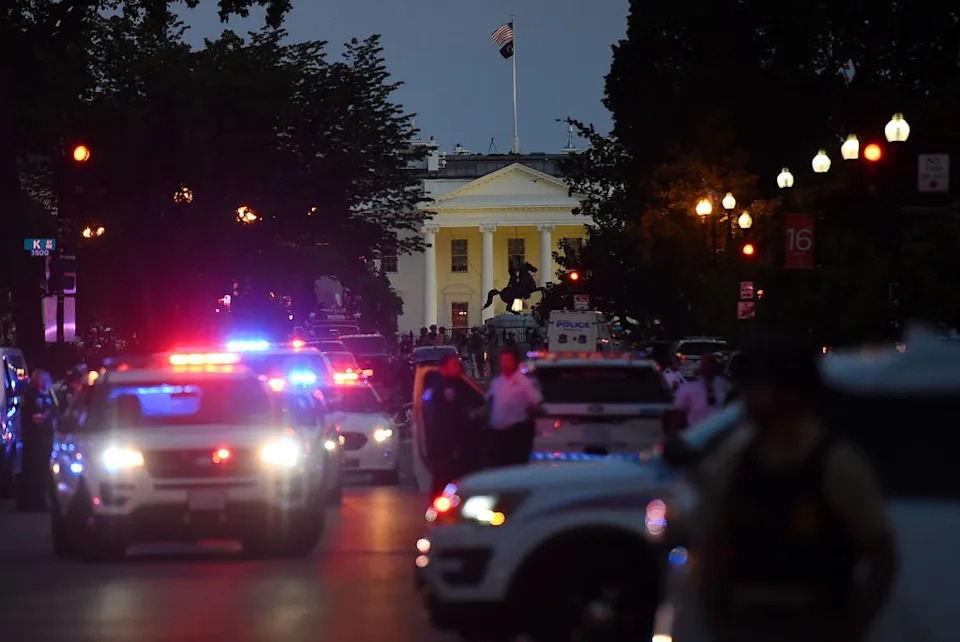
Police officers hold a perimeter near the White House as demonstrators gather to protest the killing of George Floyd on June 1, 2020 in Washington, DC. - Police fired tear gas outside the White House late Sunday as anti-racism protestors again took to the streets to voice fury at police brutality, and major US cities were put under curfew to suppress rioting.With the Trump administration branding instigators of six nights of rioting as domestic terrorists, there were more confrontations between protestors and police and fresh outbreaks of looting. Local US leaders appealed to citizens to give constructive outlet to their rage over the death of an unarmed black man in Minneapolis, while night-time curfews were imposed in cities including Washington, Los Angeles and Houston. (Photo by Olivier DOULIERY / AFP) (Photo by OLIVIER DOULIERY/AFP via Getty Images)OLIVIER DOULIERY/AFP via Getty Images
New Ballroom Project and Subterranean Construction
When President Trump returned to the White House in 2025, he moved forward with plans to replace the East Wing with a new, much larger ballroom. The White House announced the proposed ballroom would total roughly 90,000 square feet, seat about 1,000 people, and be funded by private donors. Litigation followed: the National Trust for Historic Preservation sued, arguing the East Wing could not be demolished without proper authority.
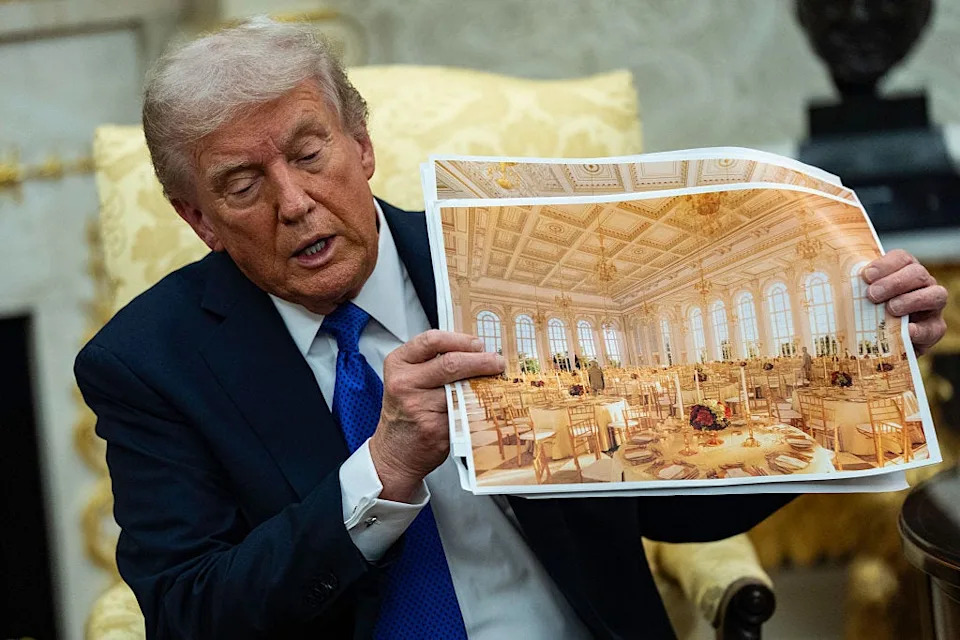
WASHINGTON, DC - OCTOBER 22, 2025: U.S. President Donald Trump speaks holding a photos of the new ballroom during a meeting with NATO Secretary General Mark Rutte in the Oval Office of the White House in Washington, DC on October 22, 2025.Salwan Georges/The Washington Post via Getty Images
A federal judge paused above-ground construction until Congress authorizes the project but allowed work tied to "the safety and security of the White House" to continue. Trump publicly confirmed that a substantial military-grade complex — described by him as "massive" — was being constructed under the ballroom, including secure communications, medical facilities, and other security-related infrastructure. An appeals court temporarily permitted continued work while the case is reviewed; a formal hearing was scheduled for June 5.
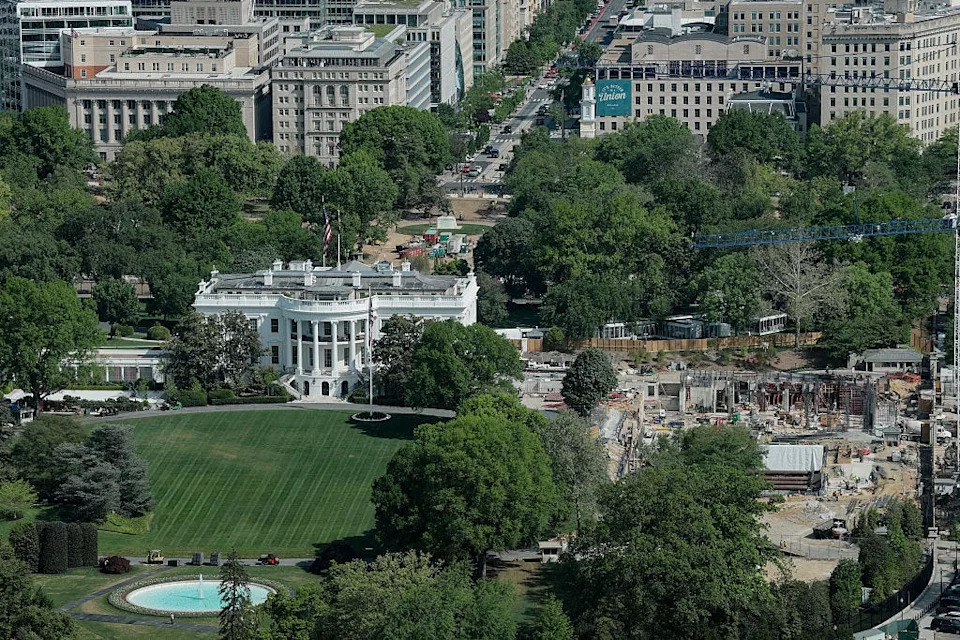
WASHINGTON, DC - APRIL 17: Construction cranes are seen, from the Washington Monument, on the site of the former East Wing of the White House on April 17, 2026 in Washington, DC. A federal judge released a revised order on Thursday blocking the Trump administration from above-ground construction work on the proposed White House ballroom. The ruling does make an allowance for above-ground construction in order to cover and protect national security facilities. (Photo by Anna Moneymaker/Getty Images)Anna Moneymaker/Getty Images
What We Know — And What Remains Secret
Much of the PEOC's detailed layout and capabilities remain classified for obvious security reasons. Public accounts, archival photos from 9/11, firsthand memoirs, and official statements together outline its history and purpose: a continually updated, hardened facility designed to preserve presidential continuity and national command-and-control in crises.
Takeaway: The PEOC is a longstanding, evolving part of White House security infrastructure. Recent construction beneath the new ballroom has renewed public attention and legal scrutiny, but many operational details remain confidential.
Help us improve.