U.S. decisions, led by President Donald Trump, are now the primary force shaping the outcomes of Israel's confrontations with Iran and Hezbollah in Lebanon. Despite Prime Minister Benjamin Netanyahu's warnings and military efforts, ceasefire extensions and diplomatic moves from Washington have limited Israel's room for maneuver. Polling shows significant Israeli opposition to pauses in operations, and critics argue Netanyahu has failed to convert military gains into lasting diplomatic victories.
Reality Check: US Calls the Shots — Israel’s Ambitions Stall in Iran and Lebanon
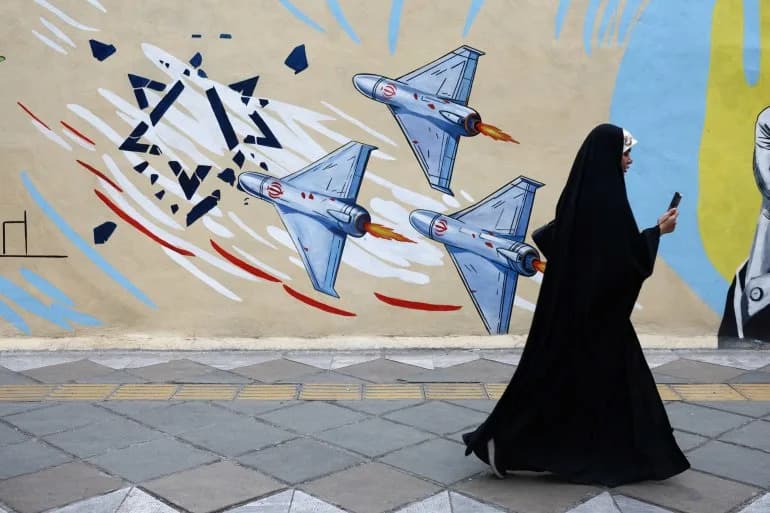
A woman walks next to an anti-Israeli mural on a street, amid a ceasefire between the US and Iran, in Tehran, Iran, April 20, 2026 [Majid Asgaripour/WANA]
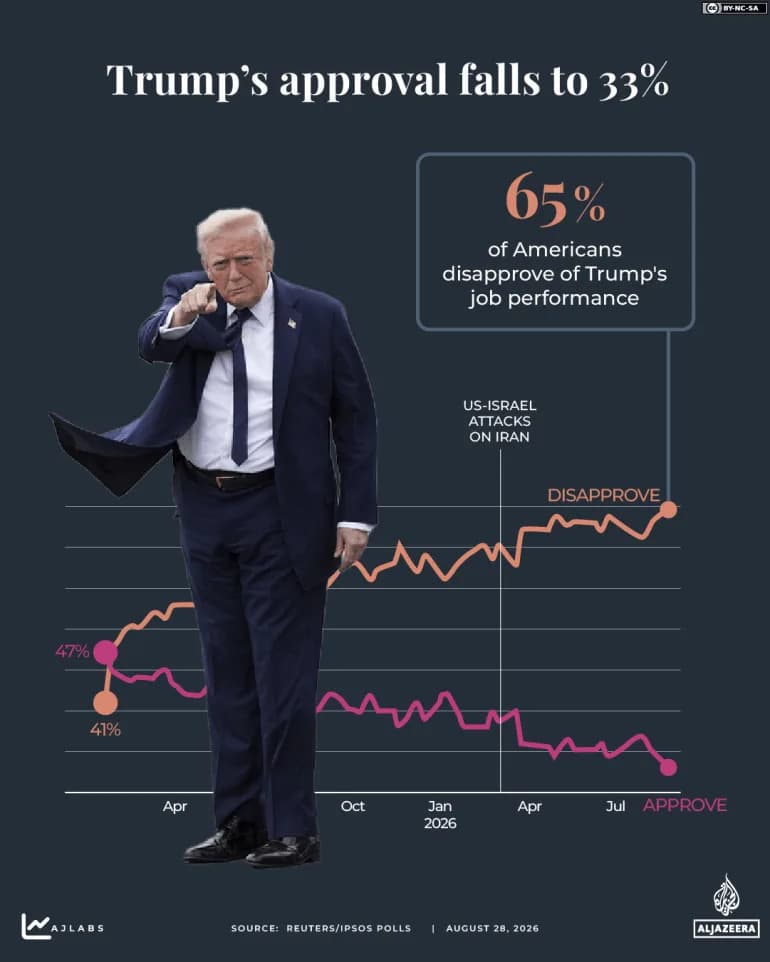
Israel is engaged in two semi-frozen conflicts with Iran and with Hezbollah in Lebanon, but the direction and outcomes of both confrontations are increasingly shaped by Washington rather than Jerusalem. Analysts told Al Jazeera that U.S. decisions — most visibly by President Donald Trump — have constrained Israeli options and reshaped expectations at home.
U.S. envoys Steve Witkoff and Jared Kushner were reported to be traveling to Pakistan for discussions involving Iran that excluded Israel, and Mr. Trump announced a three-week extension to the ceasefire in Lebanon. Although Israeli forces have violated the truce at times, commentators note that U.S. influence remains the decisive factor in both theaters.
Political Blowback for Netanyahu
Prime Minister Benjamin Netanyahu long framed Iran and Hezbollah as existential threats and pushed for the kind of confrontation that escalated in late February with U.S. involvement. But many observers now say the campaign's conclusion appears to be beyond his control — a development that has undermined public confidence in his pledges to neutralize the threats and disarm Hezbollah.
Daniel Levy, a former Israeli government adviser turned critic, said Netanyahu's attempt to steer Washington was 'hubristic and opportunistic' and reflected both excessive confidence in what Israel and the U.S. together could reshape in the region and the prime minister's desire to exploit perceived weaknesses in the current U.S. administration.
Public Opinion And Political Criticism
Public polling underscores domestic unease. A survey conducted by the Israel Democracy Institute found strong support among Jewish Israeli respondents for continuing operations even if that risks friction with the United States, while a Hebrew University of Jerusalem poll reported roughly two-thirds of Israelis opposed the pause in operations against Iran.
Dahlia Scheindlin, an American-Israeli political consultant and pollster, observed that many Israelis fold Iran and Hezbollah into a broader narrative of perpetual regional threats. She added that Americans' role as Israel's stronger partner has led to a recognition that Washington ultimately shapes events — a theme that is growing more apparent to Israeli voters.
Former chief of staff Gadi Eisenkot described the Lebanon ceasefire as one more in a series of pauses effectively imposed on Israel, criticizing the government’s record on translating battlefield outcomes into diplomatic gains. Opposition leader Yair Lapid similarly accused the government of promises colliding with reality.
Alon Pinkas, a former ambassador and consul general, pronounced the situation a strategic setback for Israel: the Iranian regime remains, uranium is still in the country, the IRGC remains strong, and the U.S. is pressing to withdraw. He added that President Trump may prioritize a deal with Iran even if it leaves Israel politically disadvantaged.
What This Means
Damage has been inflicted on both Hezbollah and elements within Iran, yet neither has been eliminated. The current dynamic suggests that Washington's diplomatic priorities and ceasefire decisions will largely determine how, when, and whether these conflicts move beyond their present stalemates — with significant political consequences for Israeli leaders who staked domestic credibility on decisive, unilateral results.
Help us improve.