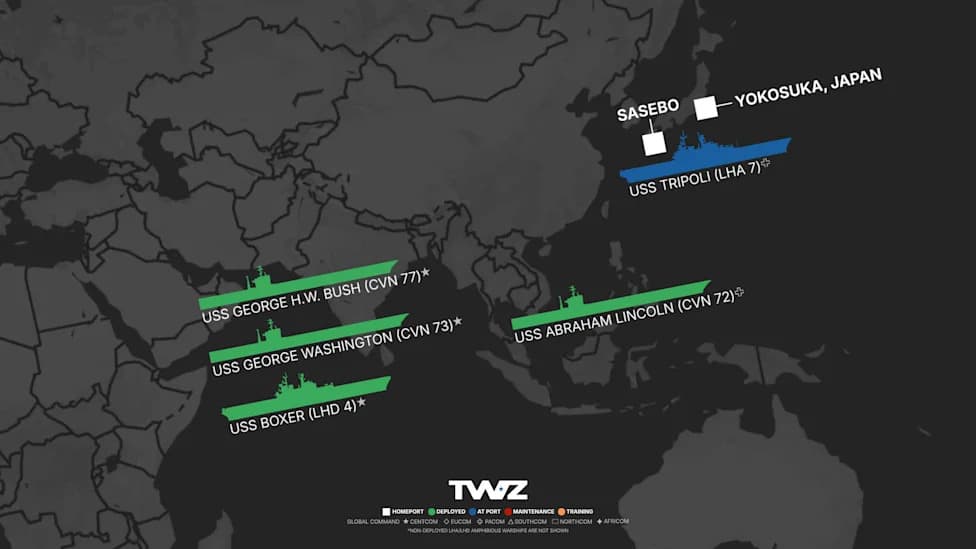
The USS George H.W. Bush, a Nimitz-class carrier, has entered CENTCOM’s area, creating the largest U.S. carrier presence in the Middle East in over 20 years. Analysts say the move increases pressure on Iran ahead of peace talks and expands options if the ceasefire collapses. The Bush departed Norfolk on March 31 and sailed around the Cape of Good Hope to avoid the Suez Canal and contested Red Sea waters. Observers also say the ship may relieve the USS Gerald R. Ford after an extended deployment.
Third U.S. Aircraft Carrier Enters Middle East as Trump Declines Timeline for End to Iran War
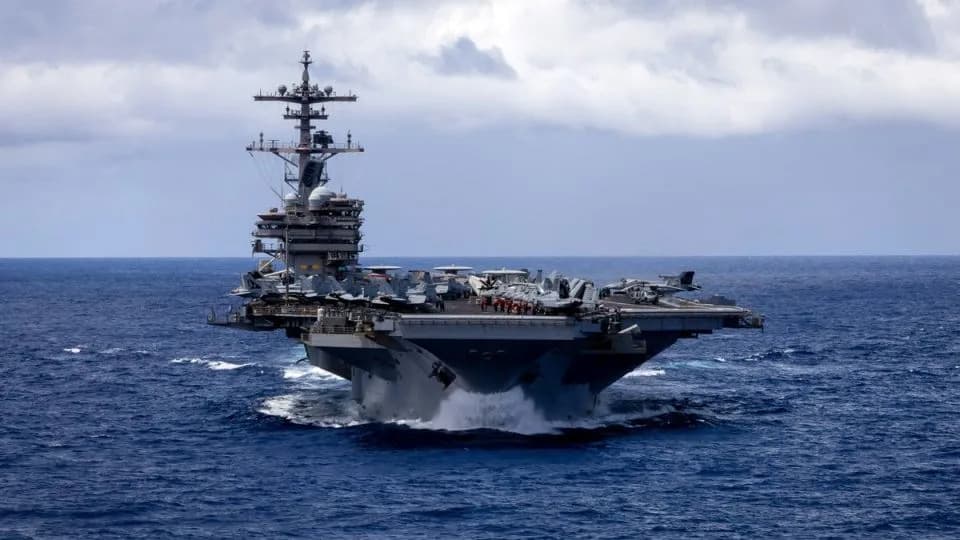
Nimitz-class aircraft carrier USS George H.W. Bush sails in the Indian Ocean in the US Central Command area of responsibility, April 23. - US Central Command/X
The U.S. military confirmed that a third aircraft carrier, the Nimitz-class USS George H.W. Bush, has entered the Middle East, marking the largest American carrier presence in the region in more than two decades, analysts say.
U.S. Central Command (CENTCOM) announced on social media that the Bush has transited into its area of responsibility. The announcement came as President Donald Trump declined to provide a timeline for when the war with Iran might end, telling reporters at the White House, "Don't rush me."
About the USS George H.W. Bush
Commissioned in 2009, the Bush is the newest of ten Nimitz-class carriers. Nearly 1,000 feet long and displacing more than 100,000 tons, it can carry more than 80 aircraft, is powered by two nuclear reactors and typically embarks over 5,500 sailors and aircrew.
Strategic Signal
Defense officials declined to discuss precise ship movements, citing operational security. Still, analysts say the Bush's arrival sends a clear political and military signal: the potential involvement of a third carrier raises pressure on Tehran as peace talks approach.
"Just the potential of a third carrier getting involved adds to the pressure facing the (Iranian) regime as peace talks approach," said Carl Schuster, a retired U.S. Navy captain. "The political imagery is as, and possibly more important, than the military action."
Multiple sources told CNN that planners have drafted options for new strikes on Iranian targets in the Strait of Hormuz if the current ceasefire collapses. Proposed targets include fast attack boats, minelaying vessels and other asymmetric platforms used to disrupt key waterways.
Analysts note that while the Bush can contribute aircraft to such operations, fighter jets from carriers are not necessarily the most efficient tools against small, asymmetric threats. Some experts point to U.S. Air Force A-10 attack jets already in the region as better suited for those missions.
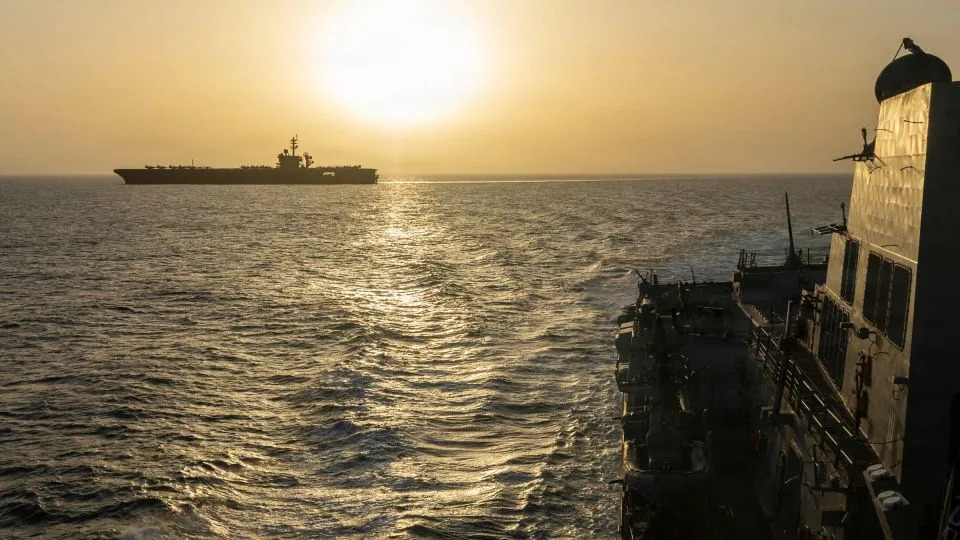
USS Abraham Lincoln conducts US blockade operations in the Arabian Sea, April 16. - US Navy/NAVCENT Public Affairs/US Central Command Public Affairs
Fleet Rotation And Readiness
Observers suggested the Bush may relieve the USS Gerald R. Ford, which has been deployed since last June—well beyond the roughly seven-month deployment typical for carriers. The Ford experienced a laundry-space fire in March that temporarily halted flight operations; it later made port visits in the Mediterranean for repairs and crew rest.
The USS Abraham Lincoln has been tracked in the Arabian Sea since the conflict began on February 28. If the Bush is an addition rather than a replacement, its presence would represent an unusually large commitment of U.S. carrier power to the Iran conflict. According to the Center for Strategic and International Studies, three carriers in the region would be the highest number since 2003.
Transit Route
The Bush left Norfolk on March 31 and steamed to the Middle East via the Cape of Good Hope, avoiding the Suez Canal and the Red Sea—areas where Houthi forces aligned with Iran have influence over critical chokepoints such as the Bab al-Mandab Strait.
Context
Fleet-tracking sites indicate only four or five of the Navy's 11 carriers are typically available for combat at any given time because others are in maintenance, overhaul or training cycles. Spotters recently observed other carriers—such as the USS Theodore Roosevelt, USS Nimitz and USS George Washington—operating or in port at various locations worldwide.
CNN reporters contributed to this report.
Help us improve.