The Trump administration’s "gold card" investor visa—requiring at least $1 million—has produced one approved applicant to date, Commerce Secretary Howard Lutnick told Congress. Lutnick previously claimed $1.3 billion had been sold shortly after the December launch but did not reconcile that figure with the single approval. He said "hundreds" of applicants remain in the queue, highlighted a $15,000 processing fee and corporate sponsorship options, and defended vetting and future use of proceeds.
Trump's $1M "Gold Card" Visa: Only One Approval So Far, Despite $1.3B Claim
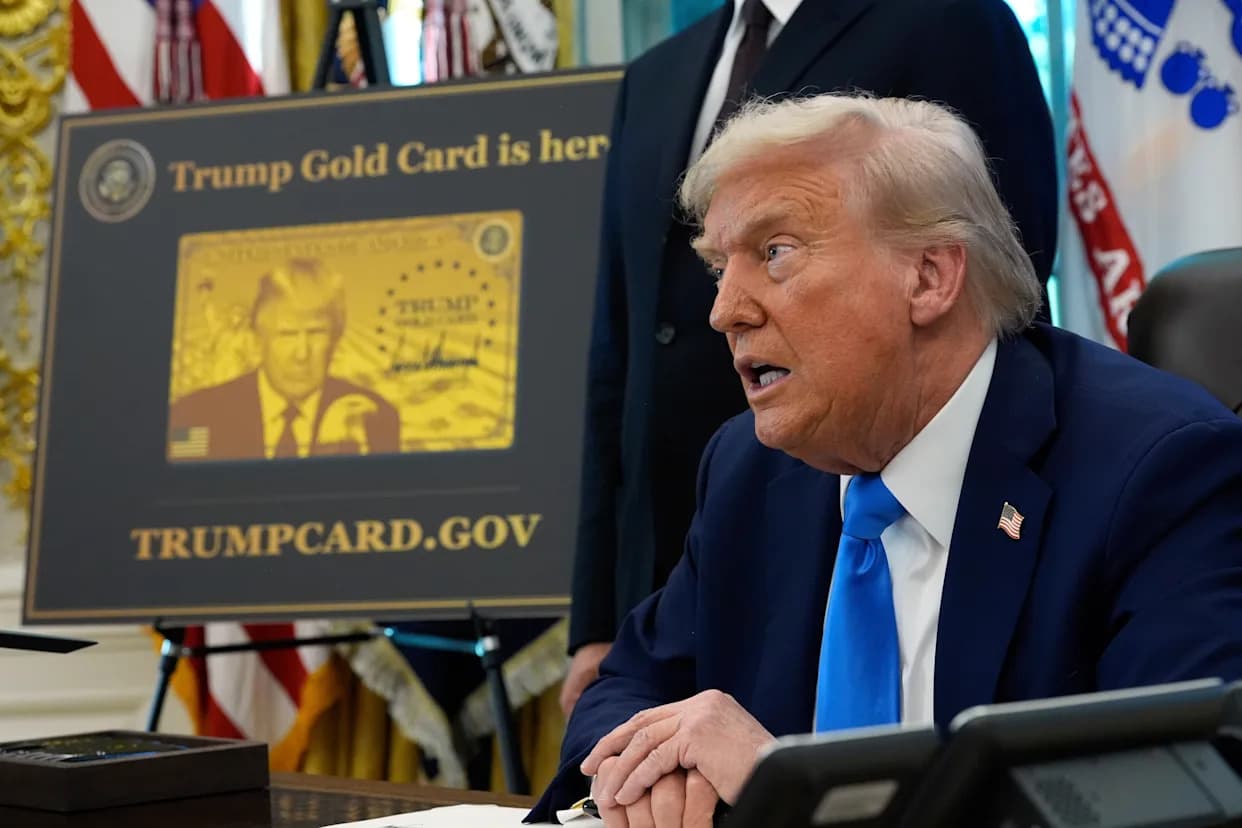
FILE - A poster showing the Trump Gold Card is seen as President Donald Trump signs executive orders in the Oval Office of the White House, Sept. 19, 2025, in Washington. (AP Photo/Alex Brandon, File)(ASSOCIATED PRESS)
The Trump administration's new "gold card" investor visa, which requires a minimum $1 million investment to live and work in the United States, has produced a single approved applicant so far, Commerce Secretary Howard Lutnick told lawmakers on Thursday.
The program, launched in December, was unveiled by former President Donald Trump holding a gilded card and calling it "essentially the green card on steroids." Lutnick previously said the government had sold "$1.3 billion worth" of access within days of the rollout, but he did not explain how that figure squares with the committee hearing report that only one person has been approved.
Rollout, Fees and Vetting
Lutnick told Congress there are "hundreds in the queue" awaiting review, and he defended the rollout process: "They've just set it up, and they wanted to make sure they did it perfectly." Applicants reportedly pay a $15,000 processing fee in addition to the minimum investment; corporations may sponsor foreign employees by investing $2 million and paying a 1% annual maintenance fee under the plan. Lutnick said the fees fund "rigorous vetting" of applicants on a pathway that could lead to U.S. citizenship.
Promises and Context
When the idea was first floated, Trump at one point suggested a $5 million price tag and the administration's promotional site also advertises a $5 million "Trump Platinum Card," which the site claims would permit up to 270 days in the U.S. without taxation of non-U.S. income. At a cabinet meeting a year ago, Lutnick predicted the program could raise $1 trillion and help "balance the budget." For perspective, the U.S. publicly held debt is about $31.3 trillion and independent forecasts put this fiscal year’s budget deficit at roughly $2 trillion.
How It Fits In
The gold card is meant to succeed the EB-5 investor visa program, which historically granted visas for roughly $1 million investments into qualifying U.S. businesses that created jobs. Investment-based residency schemes are common worldwide; countries such as the United Kingdom, Spain, Greece, Malta, Australia, Canada and Italy run similar "golden visa" programs.
When asked how proceeds will be spent, Lutnick said: "That will be determined by the administration, and its terms are for the betterment of the United States of America."
As the program continues to roll out, questions remain about the discrepancy between early revenue claims and the slow pace of approvals. Lawmakers and observers are likely to press for clearer accounting and timelines as more applications move through the queue.
Help us improve.