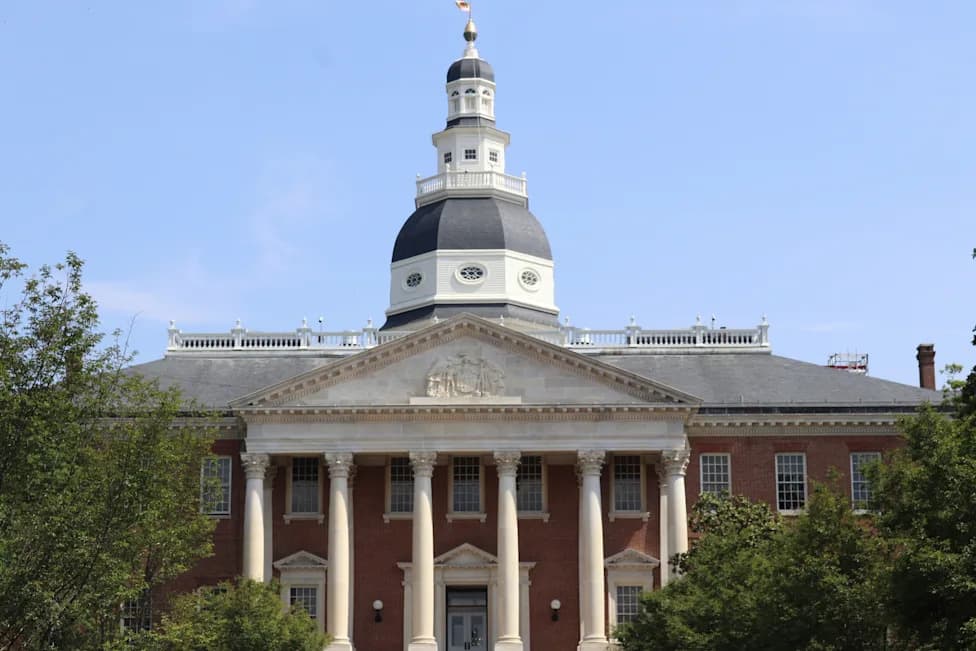
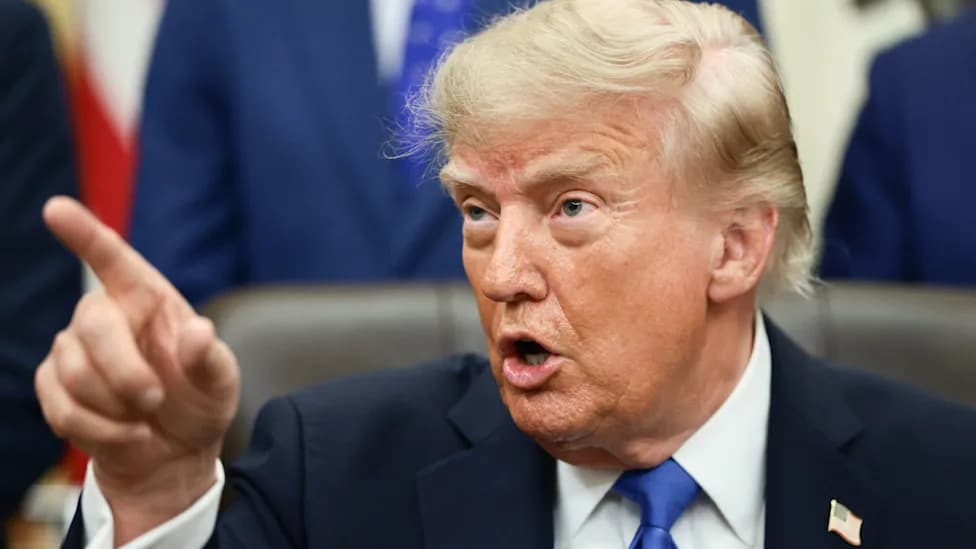
Judge Jack Hurley of Tazewell County Circuit Court blocked Virginia from implementing congressional maps approved by a voter referendum held one day earlier, declaring the votes "ineffective" and halting certification. Hurley found the referendum violated state constitutional requirements, including a 90-day public notice rule and a misleading ballot question. Attorney General Jay Jones said he will appeal immediately, while GOP groups hailed the decision; the disputed map would have shifted as many as four seats by making 10 of 11 districts Democratic-leaning.
Judge Blocks Virginia’s New Congressional Maps One Day After Referendum, Declaring Votes "Ineffective"
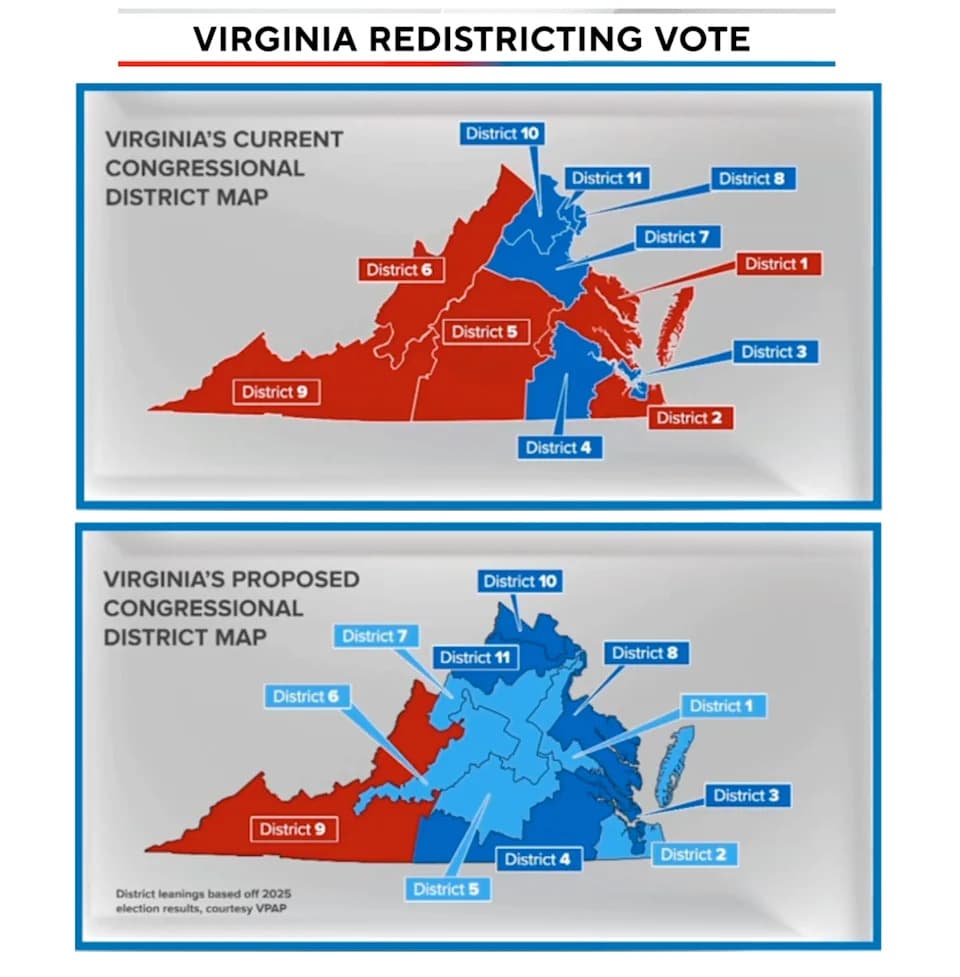
Maps show current Virginia congressional districts and the proposed redistricting. / Credit: CBS News
A state circuit court judge on Wednesday halted Virginia’s effort to implement new congressional maps approved by voters in a referendum just one day earlier, ruling the referendum votes "ineffective" and preventing certification of the results.
Details of the Ruling
Judge Jack Hurley of Tazewell County Circuit Court issued a brief order declaring the referendum invalid under multiple provisions of the Virginia Constitution. Hurley wrote that the measure skirted a required 90-day public notice period and described the ballot question presented to voters as "flagrantly misleading." The order bars state officials from certifying the vote or taking any steps to put the legislature-approved maps into effect.
Reactions
Virginia Attorney General Jay Jones, a Democrat, said he would appeal immediately. "Virginia voters have spoken, and an activist judge should not have veto power over the People's vote," Jones wrote on X, adding that the state will defend the election results in court.
The Republican National Committee, among several GOP groups that challenged the referendum, celebrated the ruling. RNC Chair Joe Gruters called it "a major victory for Virginians," saying Democrats tried to push an unconstitutional scheme to tilt maps in their favor.
What the Referendum Would Have Done
Voters approved the constitutional amendment by roughly a 3-point margin. The measure would have amended Virginia’s constitution to allow the General Assembly to redraw the state’s U.S. House map, effectively overriding a 2020 amendment that established a bipartisan redistricting commission. Under the proposed change, Virginia would revert to the prior redistricting system after the 2030 election cycle.
The Democratic-controlled General Assembly had approved a new map earlier this year. That map would have made 10 of Virginia’s 11 U.S. House districts lean Democratic by splintering the deep-blue Washington, D.C., suburbs in Northern Virginia across multiple districts. Virginia’s current delegation is split 6 Democrats to 5 Republicans.
Legal Background and Next Steps
Hurley had previously ruled in January that the constitutional amendment was illegal when passed by the General Assembly. The Virginia Supreme Court allowed this week’s referendum to proceed but declined to resolve the underlying legal questions about the amendment itself. With Hurley’s order now blocking certification, the state is likely headed for an expedited appeals process.
National Context
The referendum is part of a broader, nationwide fight over congressional redistricting ahead of this year’s midterms. In recent years, state-level map changes in Texas, California, Missouri and North Carolina have all drawn political controversy and legal challenges. So far, courts have largely left recent map changes in place; the U.S. Supreme Court declined to overturn maps in Texas and California.
What’s next: Attorney General Jones has pledged an immediate appeal. The injunction leaves the new maps in limbo pending further court action, and it is unclear whether certification or implementation will resume before the appeals are resolved.
Help us improve.