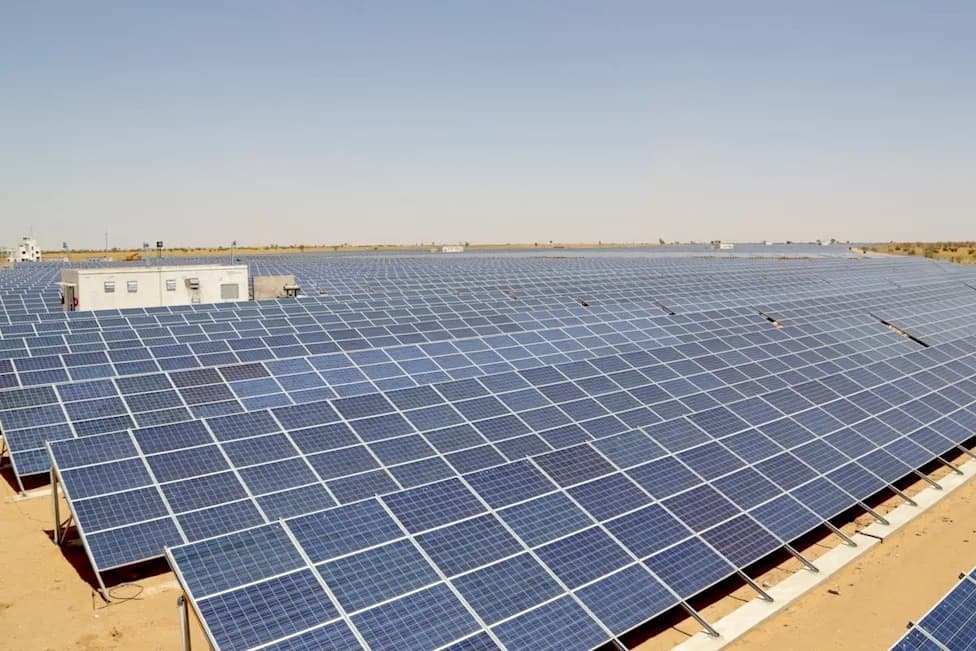
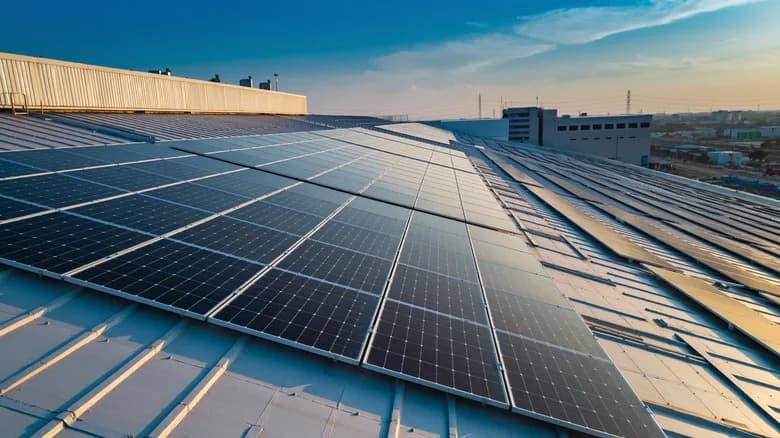
Global clean power output outpaced electricity demand last year, prompting a decline in fossil-fuel generation for the first time since the pandemic. Rapid solar growth—led by India and China—helped drive the change, with global solar capacity rising about 30% year-on-year. Analysts say conflicts in Iran and Ukraine highlighted the risks of fossil-fuel dependence and accelerated interest in renewables, while China’s exports of solar panels, batteries and EVs jumped 70% in March.
Solar Boom Drives First Post-Pandemic Drop in Fossil-Fuel Electricity Generation
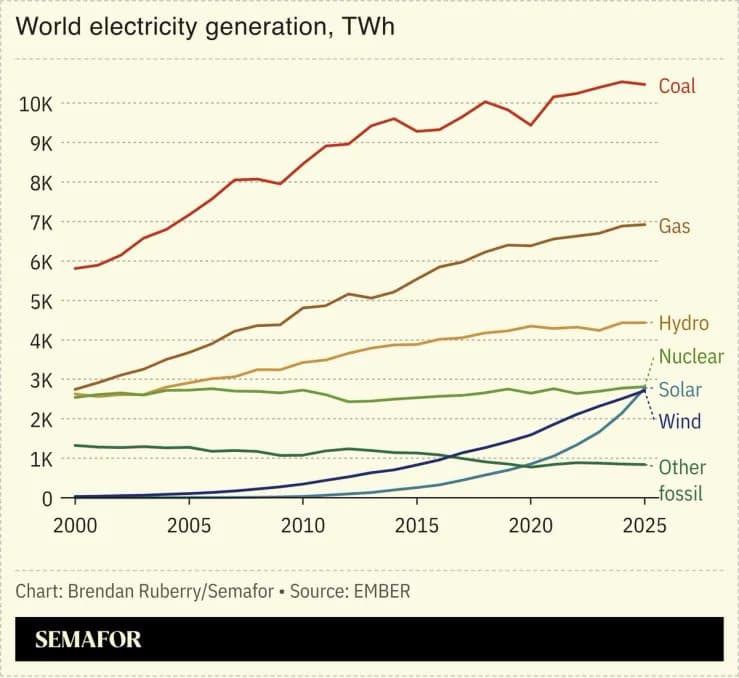
Chart showing wold electricity generation over time by source
Last year, global production of clean electricity exceeded total electricity demand, causing a decline in fossil-fuel generation—the first such fall since the COVID-19 pandemic.
The reduction was driven largely by rapid solar expansion in India and China, as global solar capacity grew by roughly 30% year-on-year. That surge in renewables helped displace coal and gas generation in several key markets.
Why It Matters
Energy shocks from conflicts in Iran and Ukraine have exposed how vulnerable the world remains when dependent on fossil fuels, accelerating interest in renewable technologies and energy security measures. Analysts at Ember argue the shift is becoming more than an aspiration.
Ember analysts: "The momentum toward abundant clean energy is no longer just an ambition; it is becoming a structural reality."
Momentum looks set to continue. In March, China recorded a record increase in exports of solar panels, batteries and electric vehicles, rising about 70% year-on-year—signalling stronger global supply chains for clean technologies.
Implications
Falling fossil-fuel generation for the first time since the pandemic underscores how quickly renewable deployment and market dynamics can shift the energy mix. Continued investment, manufacturing scale-up and supportive policies will determine whether this trend becomes permanent.
Help us improve.