Key Point: The Supreme Court vacated a Ninth Circuit ruling allowing Roy Scott’s family to sue after he died while restrained by Las Vegas police, citing last month’s Zorn v. Linton decision. The Court applied a narrowed qualified-immunity standard—focused on fine factual differences such as verbal warnings—and did so via a one-paragraph order without full briefing. Critics say this approach weakens accountability for excessive force; the Ninth Circuit will now reconsider the case under Zorn.
Supreme Court Expands Officer Immunity, Blocking Lawsuit Over Fatal Restraint
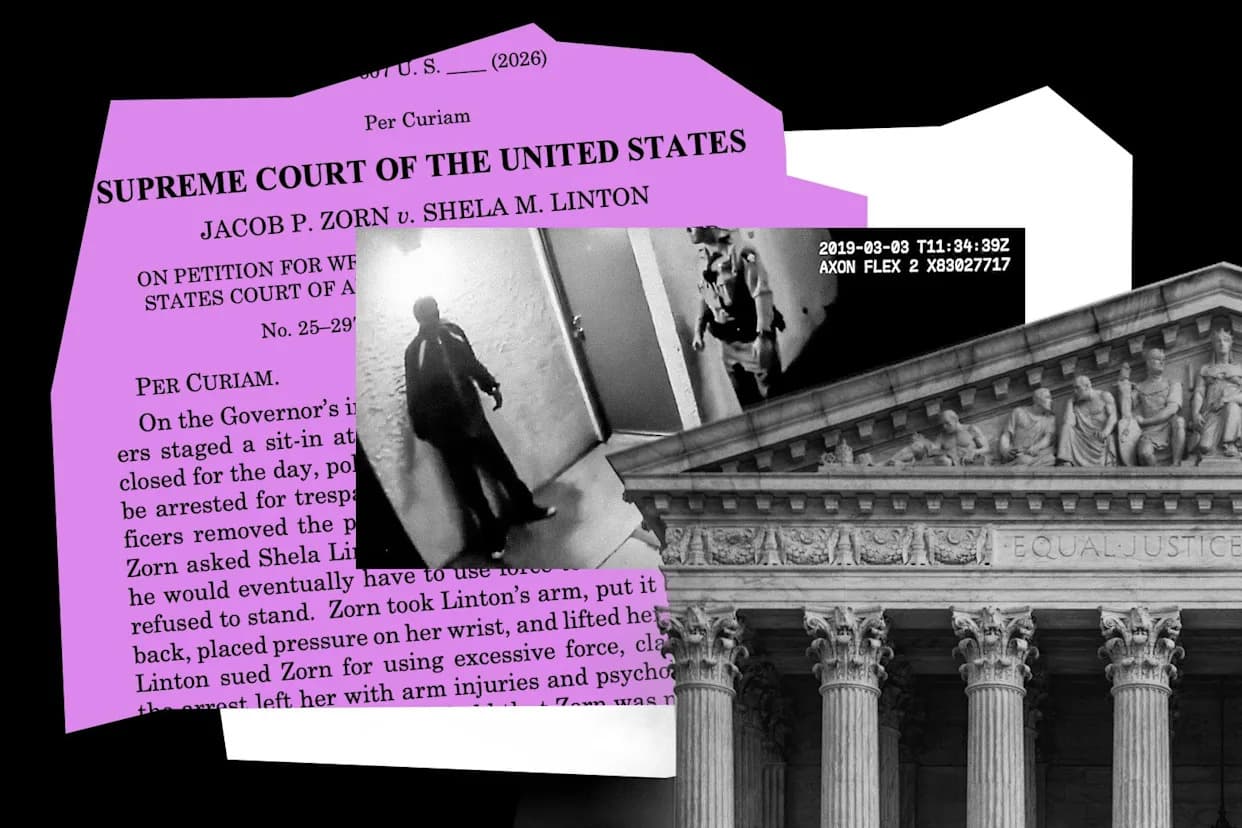
The Supreme Court on Monday issued a brief, unsigned order vacating a Ninth Circuit decision that would have allowed the family of Roy Scott—a 65-year-old Black man who died after being restrained by Las Vegas police—to proceed with a civil-rights lawsuit. The terse order cited last month’s Zorn v. Linton decision and applied a narrowing view of qualified immunity without a written opinion or full briefing.
What Happened to Roy Scott
Roy Scott called police seeking medical assistance. He told officers he lived with paranoid schizophrenia and was experiencing hallucinations. According to the complaint, two officers initially forced Scott’s arms down while he lay on his back, then turned him face down and put their body weight on his back and neck for several minutes. He became unresponsive and was later pronounced dead.
Legal Background: Section 1983 and Qualified Immunity
Scott’s daughter and estate sued the officers under 42 U.S.C. § 1983, which permits lawsuits against state or local officials who violate federal rights. The Ninth Circuit concluded a jury could reasonably find the officers used excessive force and allowed the case to proceed. The Supreme Court’s summary order vacated that judgment, citing Zorn v. Linton, another qualified-immunity case decided last month.
Qualified immunity requires that a violated constitutional right be "clearly established" by prior case law for an officer to be liable. Critics say the doctrine lets officers escape accountability unless a prior decision is factually identical.
Why Zorn Matters
In Zorn v. Linton, the Court granted qualified immunity to a Vermont officer who applied a rear wristlock to a peaceful protester. The majority emphasized fine factual distinctions—most notably whether the officer gave a verbal warning before using force—when deciding that existing precedent did not clearly establish unlawfulness. That approach narrowed the circumstances in which officers can be held liable and served as the only cited precedent in the Supreme Court’s order in Scott’s case.
Criticisms Of The Court’s Approach
Legal scholars and advocates argue the Court’s focus on microscopic factual differences—and on whether an officer issued a verbal warning—misapplies Fourth Amendment standards, which should assess whether force used under the circumstances was excessive. They also criticize the Court’s use of the shadow docket and summary disposition here: the justices acted without full briefing, oral argument, or a written opinion explaining the rationale, effectively overturning a considered appellate ruling with a cryptic one-paragraph order.
What Comes Next
The Ninth Circuit must reconsider Scott’s case in light of Zorn. Although the prior appellate judgment was vacated, Scott’s complaint alleges he sought help, was not suspected of a crime, and was not warned that force would be used—facts that could distinguish his case from Zorn. The Ninth Circuit can still rule that the alleged restraint amounted to excessive force and allow Scott’s family to proceed to trial.
Why It Matters: The decision signals a narrower path for Section 1983 claims and raises concerns that qualified immunity, interpreted in this way, may make it harder to hold officers accountable for lethal restraints—especially when courts treat verbal warnings and fine factual differences as dispositive.
Help us improve.