Trail cameras in Montes de Toledo, Spain, have captured the first clear video of Iberian lynxes dunking prey in water before eating it. A study in Ecology documents a female lynx repeatedly soaking a rabbit, bringing the known total to eight events by five females. The behavior appears confined to this small group and is unprecedented among carnivores; researchers speculate it may help cubs transition to solid food but the cause remains uncertain.
Trail Cameras Capture Iberian Lynx Dunking Prey — First Clear Video of Food‑Washing Behavior
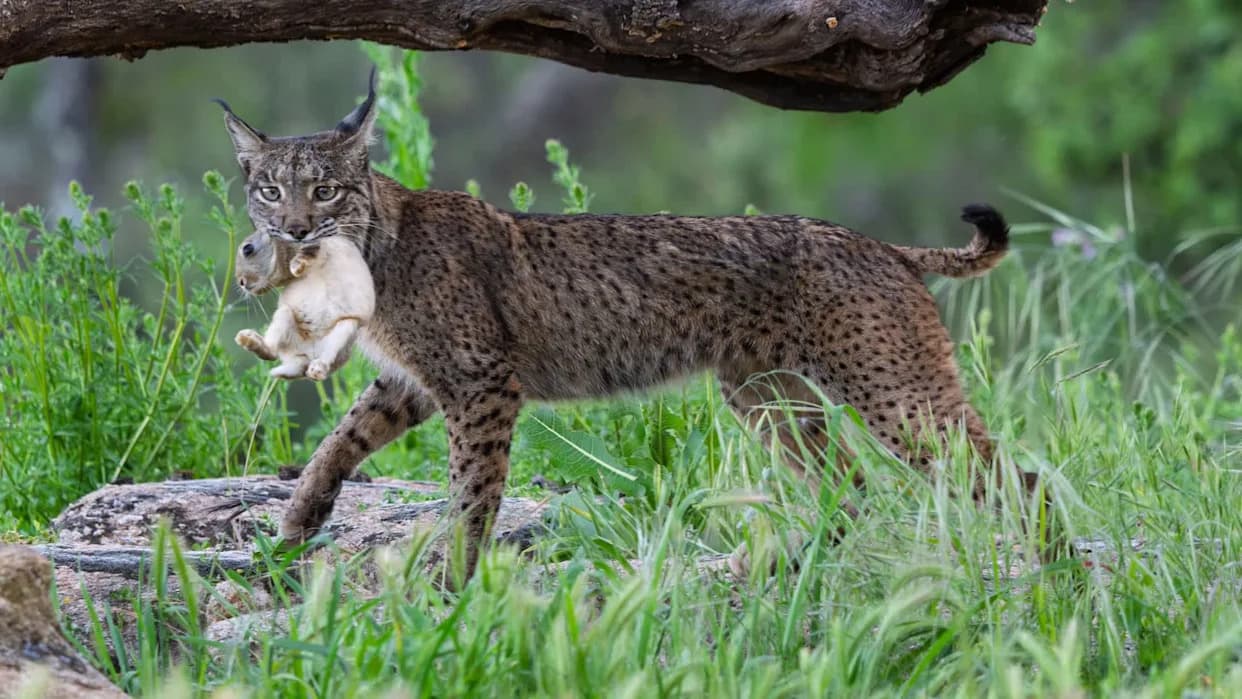
Photo Credit: iStock
Trail cameras in Spain have filmed an unexpected behavior in Iberian lynxes: several females have been observed dunking captured prey in water before eating it. A study published in the journal Ecology presents clear footage from Montes de Toledo showing a female lynx repeatedly soaking a rabbit in a water trough prior to feeding.
Reporting by IFLScience notes that researchers first documented this behavior in 2020 and observed a second incident about three years later. In total, scientists have now recorded eight separate pre‑soaking events performed by five different female lynxes. Until this video, evidence relied on eyewitness accounts and indirect camera clips that suggested dunking without capturing the act itself.
What Researchers Found
Although the behavior has so far been recorded only in this small population, it is notable because it appears to be a trait not previously verified in any other carnivore worldwide. Similar food‑wetting has been documented in raccoons, some primates and certain bird species, but those examples typically involve omnivores or fruit‑eaters and are often reported in captive animals.
Investigators found no clear connection between the dunking and ambient temperature or the local availability of drinking water at the documented sites. One leading hypothesis is that moistening meat could help cubs transition from milk to solid food, but the exact reason remains unknown. The researchers also suggest the behavior may be socially transmitted — the females that dunk prey could be related or have learned the habit from one another, since other local lynxes have never been observed pre‑soaking their catches.
Why This Matters
This confirmed footage expands our understanding of felid behavior and highlights how trail cameras provide a noninvasive window into wildlife life histories. Remote cameras continue to reveal surprising behaviors — from beavers tending kits to wolves raiding crab traps — that would otherwise be difficult to document in the wild.
Study: Ecology. Reporting: IFLScience. Location: Montes de Toledo, Spain.
Help us improve.