Die Zeit has launched a searchable database of Nazi Party (NSDAP) membership records, built with German and U.S. archives and enhanced by AI. The site has been accessed millions of times and has prompted many emotional discoveries as users confirm relatives’ memberships. Archivists say making original records widely available advances scholarship and helps counter Holocaust denial.
Die Zeit Launches Searchable Nazi-Party Database — Millions Have Checked Family Records

Crowd of soldiers listen to a speech by Adolf Hitler during a Nazi Party rally in Nuremberg in 1936. - Bettmann Archive/Getty Images
The German weekly Die Zeit has published an online, searchable database of Nazi (NSDAP) membership records, allowing people to check whether relatives were official party members. The tool, created with German and U.S. archival institutions and enhanced with artificial intelligence, has been accessed millions of times since its launch.
What the Database Contains
Die Zeit says the archive includes tens of millions of registration entries. According to the newspaper, roughly 10.2 million people joined the party between 1925 and 1945, and the organisation counted about nine million members at its peak near the end of World War II. Estimates in public commentary sometimes vary — historians occasionally cite lower peak figures — but the record collection is extensive and historically significant.
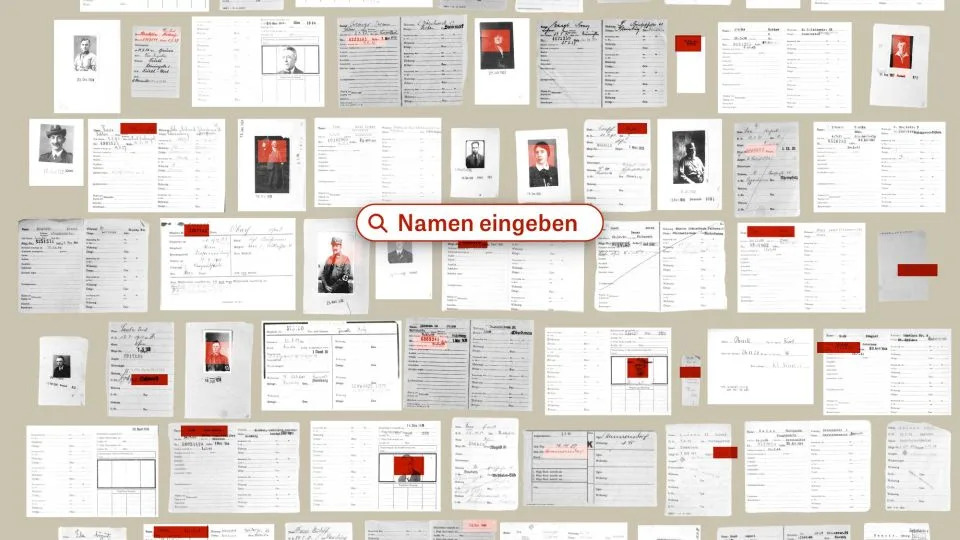
A screenshot from the homepage of Die Zeit's new search tool - Zeit
History Of The Records
In the final days of the war, Nazi officials attempted to destroy the party's membership cards. Those records were rescued, turned over to U.S. authorities, and stored at the Berlin Document Center. They were later transferred to the German Federal Archives, and copies are also held by the U.S. National Archives.
Why The Tool Was Created
Die Zeit described the project as an effort to 'end the silence born of misplaced shame' and to make original documentation more accessible. Christian Staas, head of Die Zeit's history department, said the paper secured access to the archival files and used AI to build a 'convenient search option' after heavy public demand.

Huge crowds at the Nazi Party Rally Grounds in Nuremberg. - Everett/Shutterstock
Public Reaction
The new site generated an overwhelming response. A Die Zeit spokeswoman told CNN the pages have been visited millions of times and shared widely on social platforms. Staas noted that about 75,000 people request this information annually from the German Federal Archives, and earlier efforts to publish the files briefly crashed the U.S. National Archives' site because demand was so heavy.
'My feelings are all over the place right now,' wrote one user identified as Katha1927, who had long suspected both grandfathers joined the party. 'I’m wondering which entry date I find worse: 1931 — so early, already so convinced? Or 1941 — even though they already knew so much?'
Another user, 'dudettes,' wrote: 'For over 40 years I wondered if my great-grandfather was a member. He was a railroad engineer during the Nazi era and always flew into a rage whenever the topic of the war came up. Question answered. Thank you, ZEIT. Even though it hurts terribly.'
One family researcher, identified as 'Aunt Horst,' said they had been tracing a Jewish branch of the family 'wiped out by the Shoah' and discovered an 'Aryan' husband of a Jewish great-aunt had joined the Nazi Party in 1933; the great-aunt was later murdered at Kulmhof (an extermination camp) in 1942.
Scholarly Perspective
Christine Schmidt, co-director of the Wiener Holocaust Library, called the searchable archive 'a boon for scholarship on the Nazi period.' She noted that people joined the party for many reasons — economic desperation, nationalism, charismatic leadership, or personal antisemitism — and said easier access to original documents is an important counter to Holocaust denial and distortion.
The database both fuels difficult personal reckonings and strengthens the evidentiary record for historians, educators, and the public.
Help us improve.