Donald Trump has frequently shared AI-generated images that cast him in exalted roles, most recently posting one he described as him acting as a doctor. The image drew criticism from some conservative Christians who said it resembled a depiction of Jesus, and Trump defended the post on social media. Observers note a pattern of AI imagery portraying him as rulers, heroes and religious figures — visuals that can energize his base and shape narratives. Late-night posts attacking the pope also included unverified casualty figures about Iran.
Why Donald Trump Keeps Posting AI-Generated Portraits — From ‘Doctor’ To Divine
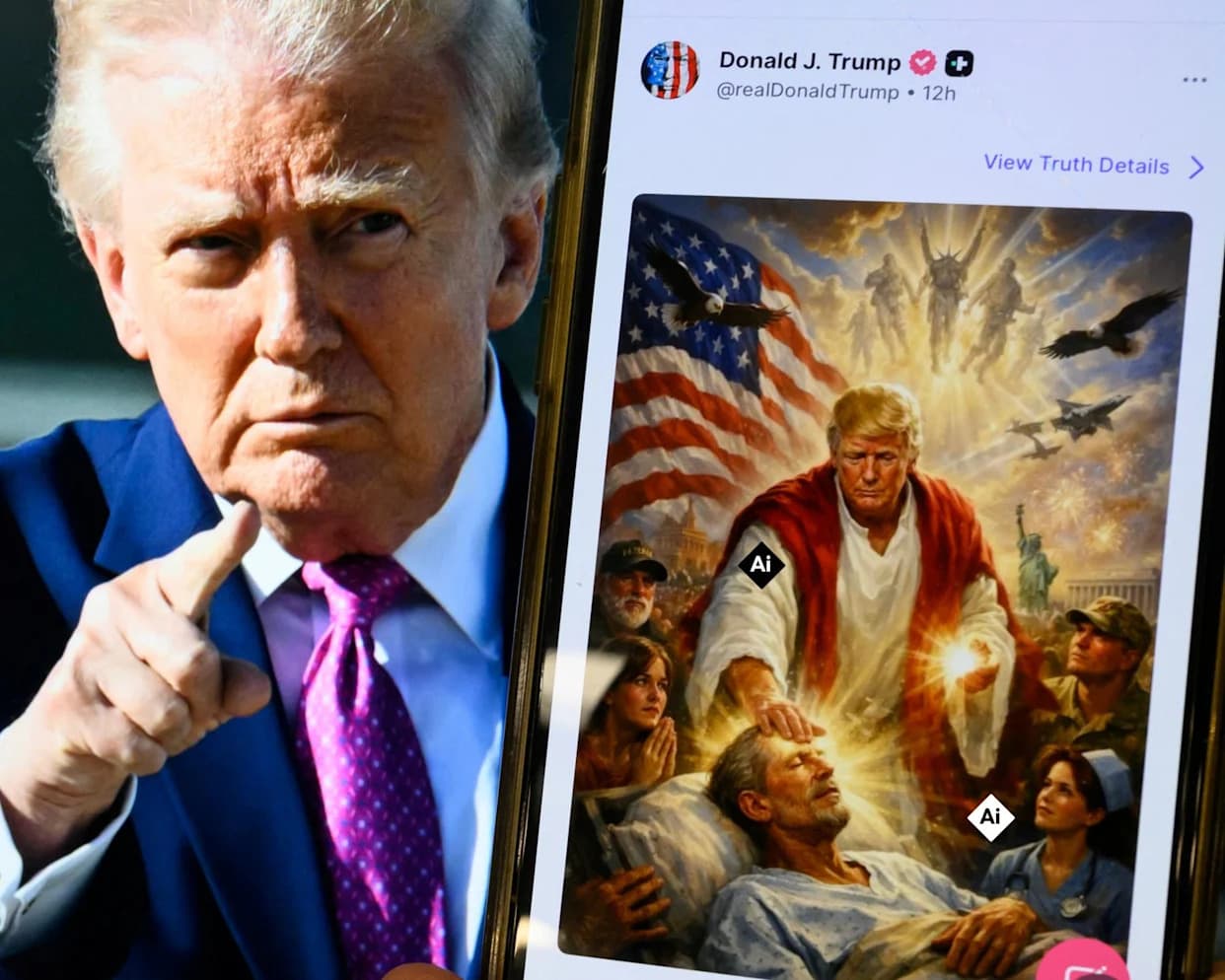
Donald Trump’s reposting of an AI-generated image of himself as Jesus Christ – or, as he claimed, a doctor – caused widespread backlash.Photograph: Mandel Ngan/AFP/Getty Images(Photograph: Mandel Ngan/AFP/Getty Images)
Donald Trump has repeatedly posted AI-generated images that cast him in grand, often religious or heroic roles — most recently sharing an image he described as showing him "as a doctor making people better." The post prompted criticism from some conservative Christians and others who said the image bordered on a depiction of Jesus.
Trump defended the image, telling followers, "It’s supposed to be me as a doctor making people better. And I do make people better. I make people a lot better." The picture showed a ritual-like healing scene: ethereal light over a patient’s head and translucent figures hovering above, a composition that some viewers found reverent and others found blasphemous.
“There’s no context where this is acceptable,” Sean Feucht, a Trump-aligned Christian activist, wrote on X, while another critic called the image “gross blasphemy.”
Media observers have noted this is not an isolated incident. Last May, during a period of mourning for Pope Francis, Trump shared an AI-generated image imagining himself as pope — dressed in a white cassock, wearing a mitre and a crucifix pendant. That post also drew criticism. The New York Times published a lengthy piece this week arguing that Trump "seems even less restrained and more incoherent" and often makes comments "rooted in fantasy rather than fact."
Recurring Themes in the AI Imagery
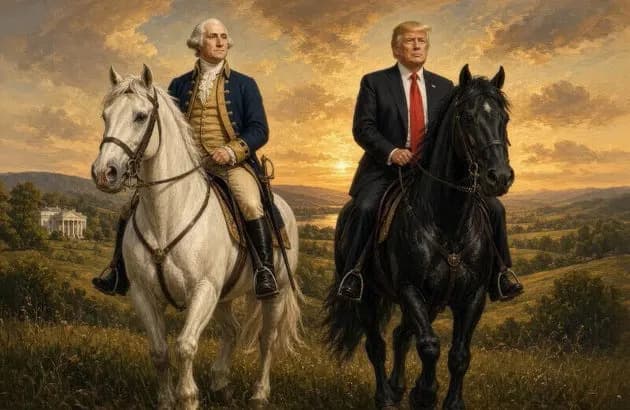
The images shared by Trump or his aides repeatedly visualize him in dramatic, idealized roles. Examples include:
- A king
- A skilled footballer
- A man roaring alongside a lion
- A maestro
- A wealthy tycoon (criticized as looking like a money launderer)
- Superman
- A 1930s private detective
- Colonel Kilgore from Apocalypse Now
- A Nobel Peace Prize winner
- An extremely muscular Sith lord
Digital-media watchdog Poynter observed that AI-created images "rally his base and distract the public from other topics," adding that AI "supercharges his messaging ability, providing hyperrealistic visuals of incidents that aren’t real." These visuals allow political messaging to be paired with striking imagery that can be widely shared on social platforms.
Alongside the images, Trump continued to engage in late-night commentary targeting the pope. In posts on Truth Social, he claimed that Iran had killed "at least 42,000 innocent, completely unarmed, protesters in the last two months," a figure he previously cited as 45,000. Those casualty numbers have not been independently verified and were presented without substantiating evidence.
Despite some critics and even conservative backlash, Trump reposted another image that appeared to show a Jesus-like figure embracing him and defended his choices on social media: "The Radical Left Lunatics might not like this, but I think it is quite nice!!!"
At base, the simplest explanation may be personal taste: Trump seems to enjoy seeing himself portrayed as larger than life — a superhero, a spiritual healer, or a ceremonial leader — roles that counteract the ordinary markers of age or frailty. Given his appetite for such imagery, more AI-generated portrayals are likely to follow.
Contextual note: This article reports on public posts and reactions and cites media commentary; where claimed casualty figures or other numerical assertions appear in social posts, they are identified here as unverified.
Help us improve.