Researchers at the University of Glasgow used Bayesian methods and LIGO-inspired data techniques to bolster the view that the Antikythera Mechanism tracked the lunar calendar. Their 2024 analysis estimates the original calendar ring held 354–355 holes on a circle of radius 77.1 mm (±0.33 mm), with adjacent holes about 0.028 mm apart—evidence of exceptional ancient precision. The findings, published in The Horological Journal, were partly motivated by replica measurements from YouTuber Chris Budiselic.
Ancient 'Computer' Decoded: Gravitational-Wave Techniques Show Antikythera Mechanism Tracked the Moon
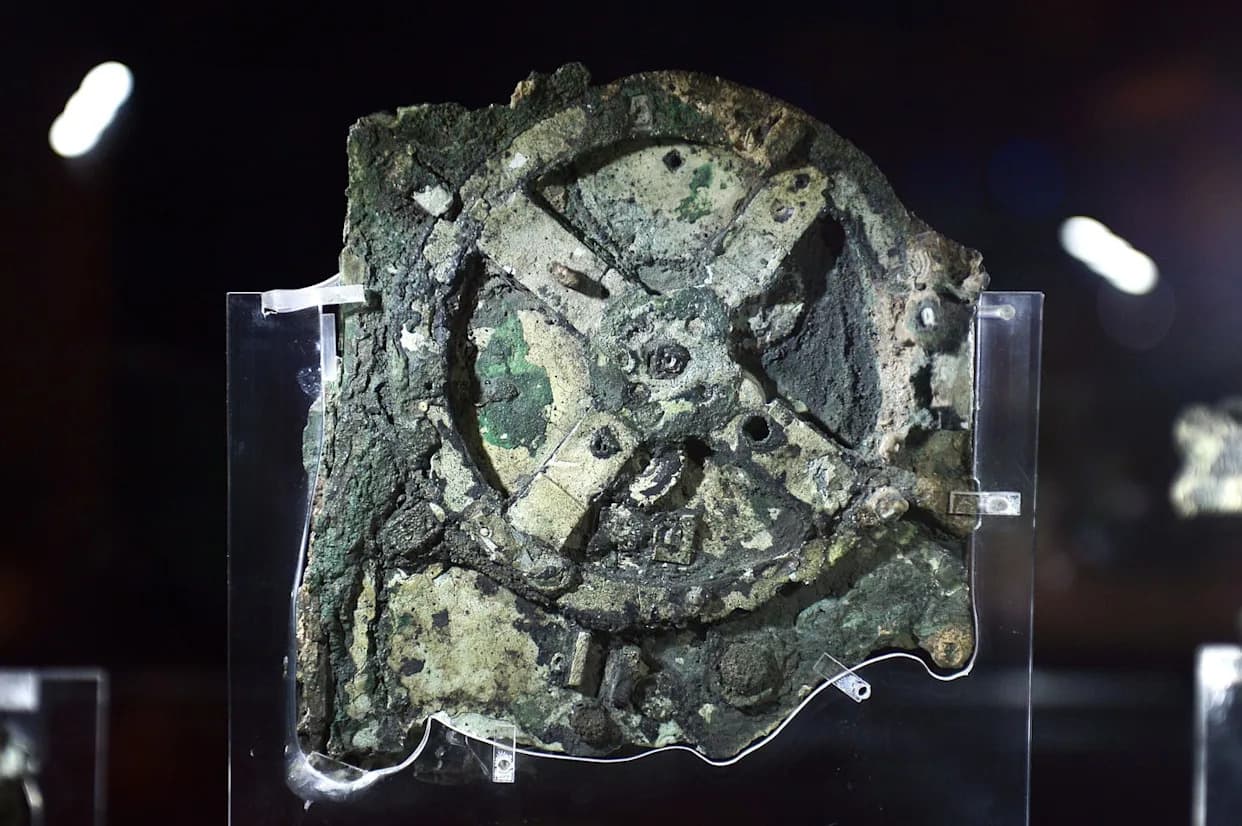
The Mystery of the Antikythera Mechanism Is SolvedLOUISA GOULIAMAKI - Getty Images
Built around the start of the 1st century BCE and recovered from a 1901 shipwreck off the Aegean island of Antikythera, the Antikythera Mechanism is the oldest known analog computer. For more than a century scholars have debated exactly what it computed. A 2024 study from the University of Glasgow applied modern statistical tools — including Bayesian methods and techniques adapted from gravitational-wave research — to show the device most likely tracked the lunar calendar.
Background: An Ancient Engineering Marvel
The corroded, gear-filled fragments of the Antikythera Mechanism reveal a device of astonishing mechanical sophistication for the Hellenistic world. Archaeologists generally date it to around the turn of the 1st century BCE and attribute its manufacture to skilled Greek craftspeople living under Roman rule. Over the years, researchers have proposed that the mechanism predicted astronomical positions, eclipses, or tracked cycles such as the Metonic cycle; attribution to famous figures such as Hipparchus or Archimedes has been suggested but remains speculative.
The 2024 Analysis: New Methods, Stronger Evidence
In 2024, Graham Woan and Joseph Bayley of the University of Glasgow published a paper in The Horological Journal that combined Bayesian statistical analysis with data-analysis techniques inspired by the Laser Interferometer Gravitational-Wave Observatory (LIGO). Their work was partly motivated by measurements made by Chris Budiselic of the Clickspring YouTube channel, who built a replica calendar ring and carefully recorded hole locations.
Using Budiselic’s replica data and their dual-method approach, the researchers estimated that the original calendar ring of the Antikythera Mechanism most plausibly contained 354–355 holes — a count consistent with a lunar year (about 12 lunar months). They estimated the ring’s radius at 77.1 mm (± 0.33 mm) and calculated that adjacent holes were spaced with an average separation of roughly 0.028 mm, implying extraordinary manufacturing precision.
Why This Matters
The study strengthens earlier suggestions that the mechanism tracked lunar cycles by applying rigorous statistical tests and cross-disciplinary techniques. The tiny tolerances implied by the hole spacing suggest the makers used highly accurate measurement techniques and exceptional craftsmanship to lay out the calendar ring—skills not commonly associated with everyday artifacts of that era.
Provenance and Legacy
While historians continue to debate the device’s exact designers and workshop, the Antikythera Mechanism now sits on display at the National Archaeological Museum in Athens, where it remains a powerful testament to the technical and scientific achievements of the ancient Mediterranean world.
Publication: Woan, G. & Bayley, J., The Horological Journal, 2024. Data-inspired by Chris Budiselic (Clickspring).
Help us improve.