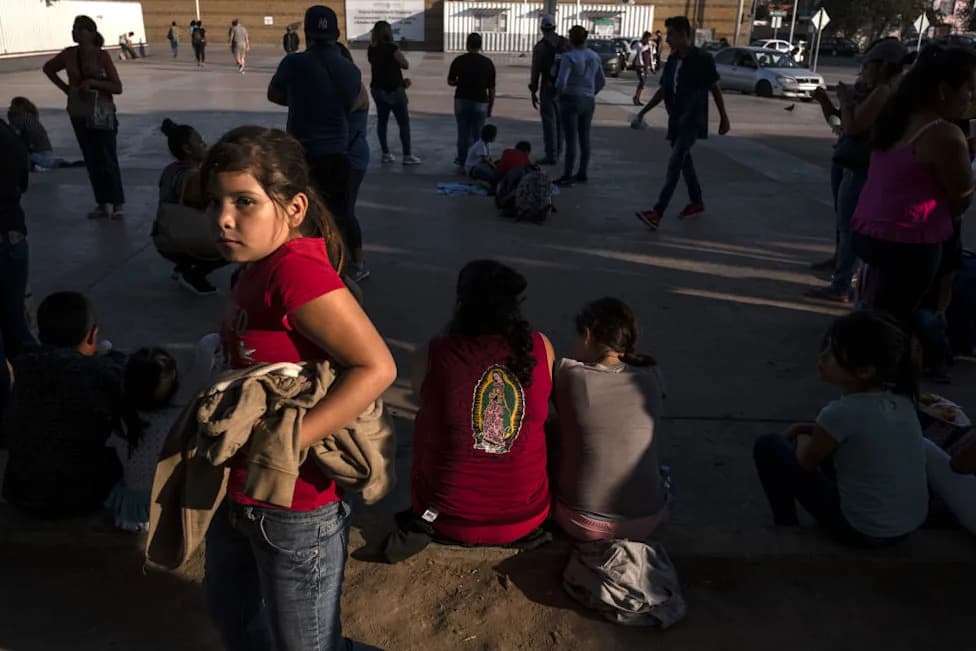
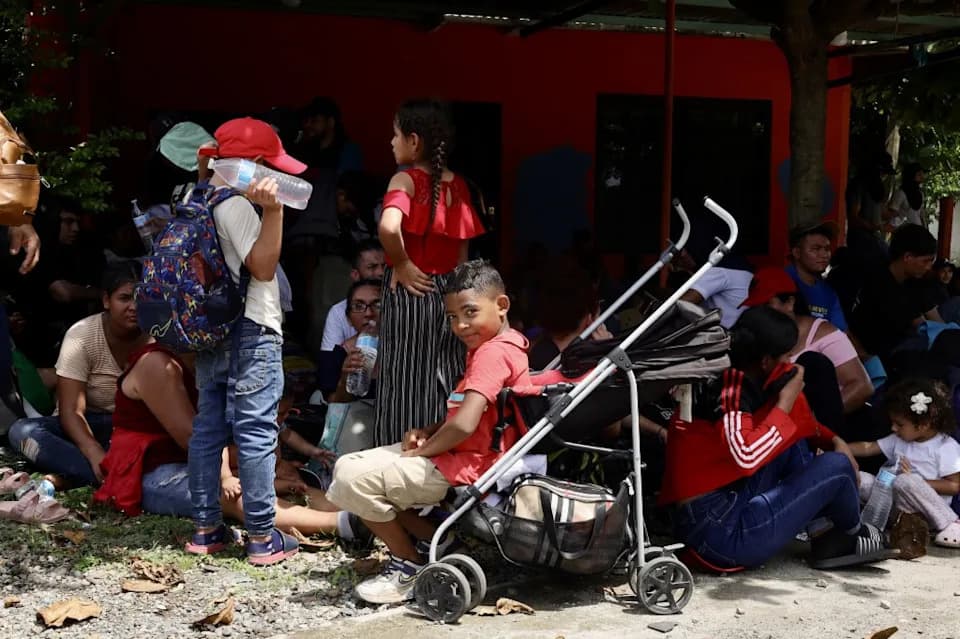
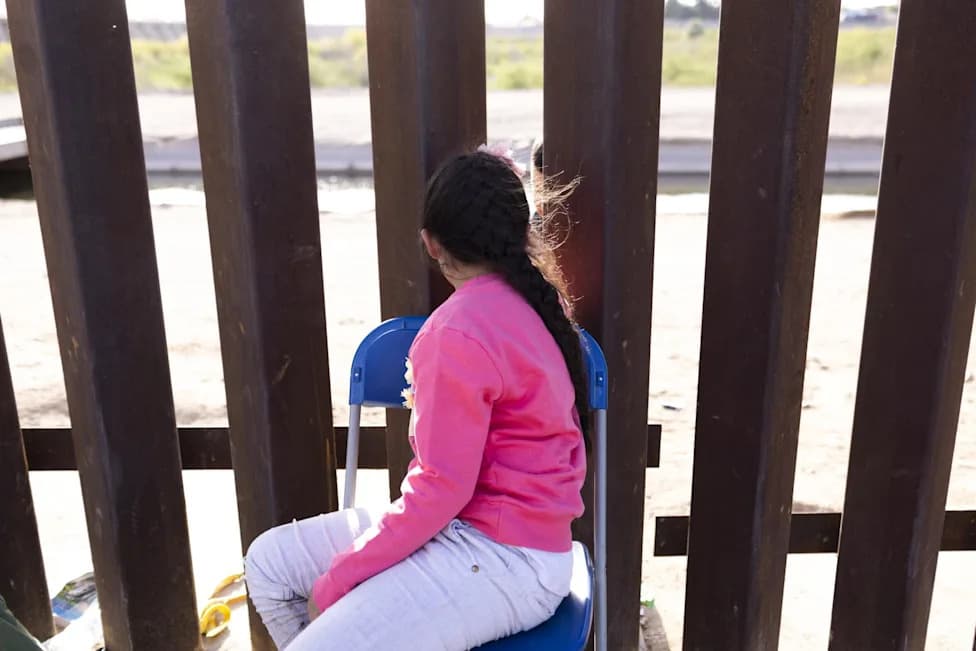
Asylum-seekers released during the 2021–2023 border surge face mounting enforcement pressure as the administration tightens immigration rules. A Stateline analysis finds the largest concentrations of recent arrivals in New York, Florida, Massachusetts, New Jersey and Utah; Venezuela is the single largest country of origin (363,000). The administration seeks to lengthen the work-authorization wait from six months to one year, and roughly 22% of newcomers have final removal orders, leaving many vulnerable to arrest and deportation.
Asylum-Seekers From 2021–2023 Border Surge Face Growing Pressure as Enforcement Tightens

A resident sits on a bench at Make the Road New York, a community center in Corona, Queens, in New York City. Lettering in Spanish reads, "We are here, we're not leaving." The area was one of the largest magnets for asylum-seekers from the border, mostly from Ecuador. (Photo by Tim Henderson/Stateline)
The migrants released into the United States during the border surge that began in 2021 and peaked in 2023 remain at the center of political debate — and now face heightened enforcement pressure. A Stateline analysis of court records and reporting finds many asylum-seekers have gone back to work in the same states that earlier transported them to other cities, even as new policies and sweeps put their futures at risk.
How Migrants Entered and Stayed
Many people who crossed the border turned themselves in to immigration officials and avoided immediate removal by asserting a credible fear of persecution or torture — a claim that gives them the right to seek asylum but often requires years to resolve. Others entered under scheduled appointments via a government app or through temporary parole programs, then pursued legal status while living and working in U.S. communities.
Rising Enforcement and Work-Authorization Changes
Under an intensified enforcement push by the current administration, asylum-seekers report growing threats of arrest and detention — in some cases even when they appear for scheduled hearings. Currently, applicants with pending asylum claims are eligible to apply for work authorization after six months; the administration is seeking to extend that waiting period to one year.
Where They Are Living and Who They Are
Stateline’s review shows the largest concentrations of recent asylum-seekers are in New York, Florida, Massachusetts, New Jersey and Utah — each of those states has a population at least 1% higher than in 2020 because of new arrivals. Other states in the top ten include Texas, Connecticut, California, Illinois and Colorado. The analysis counts only migrants who are not in detention.
Nationwide, the largest country of origin among recent asylum-seekers is Venezuela (363,000 as of February), followed by Mexico (251,000), Guatemala (241,000), Honduras (240,000) and Colombia (235,000). State-level patterns vary: Ecuadorians dominate in five states, Nicaraguans in four, and Brazilians and Cubans each predominate in three states.
Local Impacts and Reactions
The arrival surge triggered a strong political backlash after Republican governors, including Florida’s Ron DeSantis and Texas’s Greg Abbott, began bussing and flying migrants to Democratic-led cities. That relocation strategy strained local services and budgets. New York City, for example, reported spending $8.13 billion on shelter and services for more than 223,000 asylum-seekers and other migrants who arrived between spring 2022 and fall 2024.
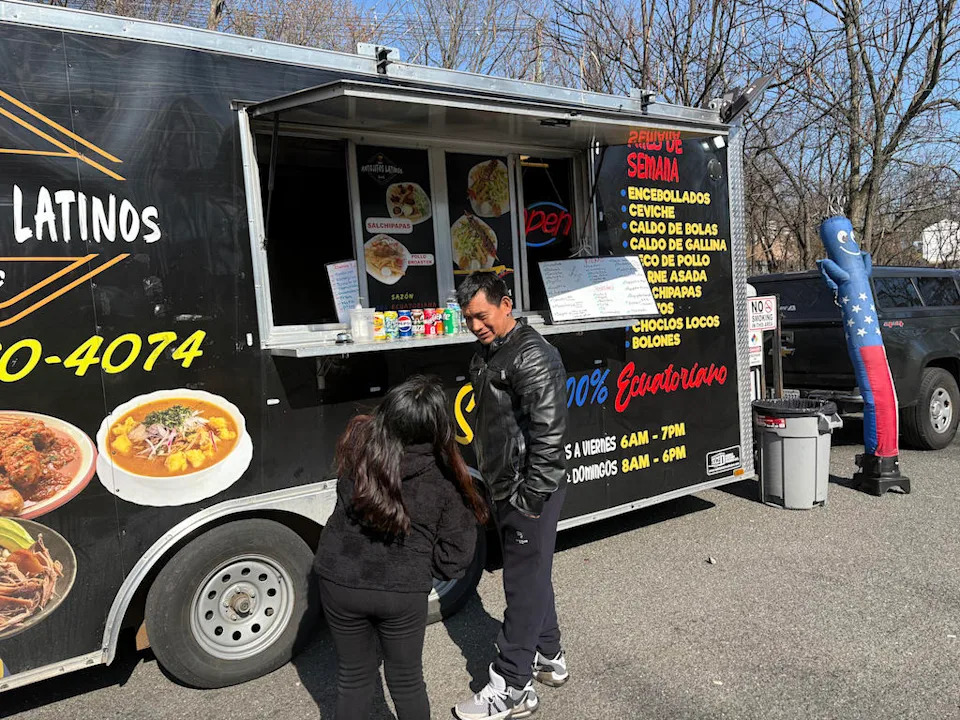
Customers wait for their orders at an Ecuadorian food truck in Spring Valley, N.Y., a suburb of New York City. The area was one of the largest magnets for asylum-seekers from the border, mostly from Ecuador. (Photo by Tim Henderson/Stateline)
Some established immigrant communities have expressed resentment — especially over public assistance such as temporary housing, food cards and free meals provided to new arrivals — while local businesses and employers say migrants have also filled critical labor shortages from restaurant kitchens in New York suburbs to dairy farms in Idaho.
Fear, Legal Uncertainty and Detentions
Many of the recent arrivals live precariously. About 22% of newcomers nationwide — whether detained or not — have final orders of removal, leaving them vulnerable to arrest and deportation on short notice. Pending asylum claims do not confer legal status, a point the Department of Homeland Security emphasized in a statement to Stateline: “A pending asylum case does NOT confer any type of legal status in the United States. If a person enters our country illegally, they are subject to detention or deportation.”
“Unfortunately, having an asylum case is not a legal status,” said Héctor Arguinzones, an organizer with a Venezuelan immigrant group. “We tell people to keep up with their court cases and keep paperwork with them so at least they have something to show.”
Advocates and attorneys say sweeps and arrests have happened during routine activities such as traveling to work or leaving a courthouse. Boston attorney Robin Nice reported that six clients with pending asylum claims were detained in a January sweep dubbed Operation Catch of the Day; most were on their way to or from work.
What This Means
The situation underscores competing pressures: local governments absorbing large new populations, employers depending on migrant labor, and a federal enforcement agenda that increases legal and personal risk for asylum-seekers. For many, daily survival means working long hours, keeping documentation close, and attending every court appointment while waiting — sometimes for years — for their cases to be decided.
Practical advice from advocacy groups: Keep immigration paperwork accessible, attend court dates, maintain contact with legal counsel or local immigrant-rights organizations, and document any interactions with law enforcement.
Stateline reporter Tim Henderson contributed reporting to the original piece.
Help us improve.