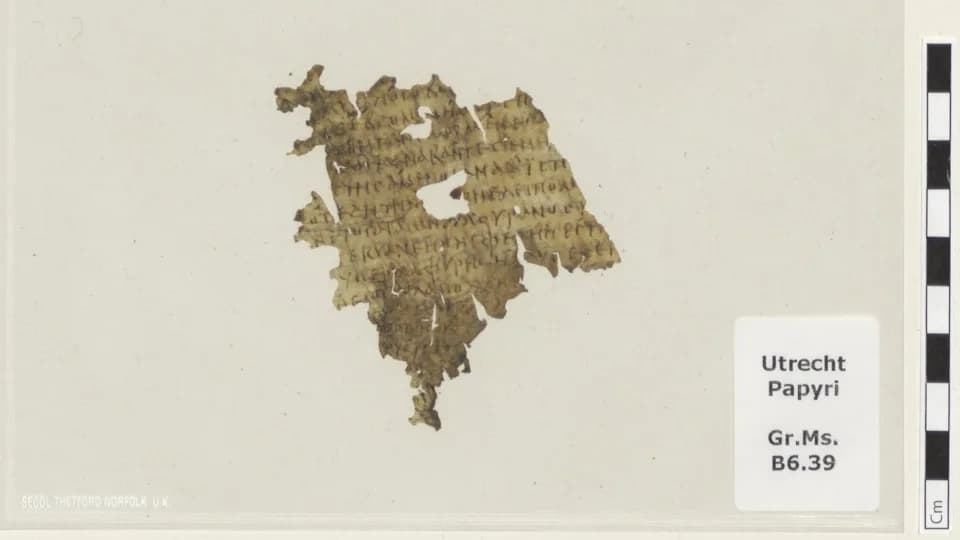
The archives of the French Institute of Oriental Archaeology in Cairo yielded a roughly 2,000-year-old papyrus fragment (P.Fouad inv. 218) containing 30 previously unpublished verses attributed to Empedocles. Identified by Nathan Carlig and published in L'Empédocle du Caire, the fragment likely belongs to the Physica and treats particle effluvia and sensory perception, especially vision. Early analysis suggests links to passages in Plutarch, affinities with a Platonic dialogue, and parallels with Theophrastus, offering new primary evidence for Empedocles’ four-element theory and his forces of Love and Strife.
30 'Lost' Verses by Empedocles Found in Cairo Archives — A New Window into Pre‑Socratic Thought
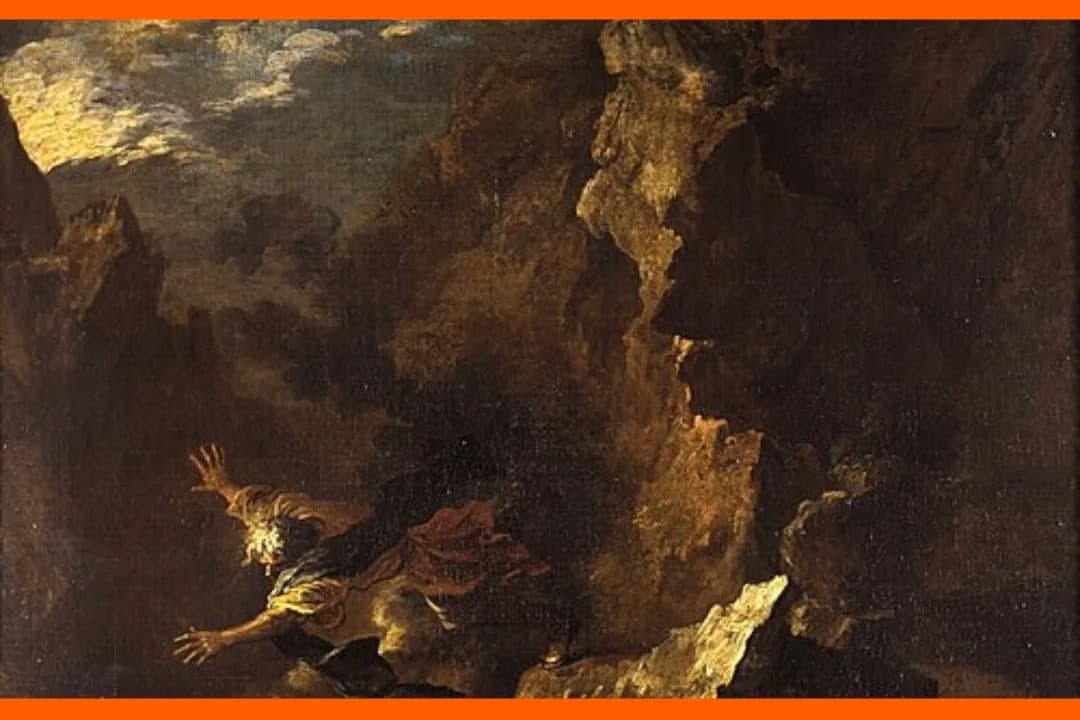
Philosopher Empedocles throws himself into a volcano
Scholars have uncovered 30 previously unpublished verses attributed to the pre-Socratic philosopher Empedocles in the archives of the French Institute of Oriental Archaeology (IFAO) in Cairo. The fragment, catalogued as P.Fouad inv. 218, is roughly two millennia old and was identified by papyrologist Nathan Carlig of the University of Liège. Early editors present the material in the new volume L'Empédocle du Caire, edited and translated with commentary by Carlig, Alain Martin, and Olivier Primavesi.
What the fragment contains. According to the University of Liège and the edition’s editors, the newly identified lines appear to belong to Empedocles' great poem often called the Physica. The fragment discusses theories of particle effluvia and sensory perception, with particular emphasis on vision—topics that connect his natural-philosophical system to later discussions in classical literature.
Historical and intellectual context. Empedocles (fifth century BCE) is known for proposing that all matter consists of four roots—fire, air, water, and earth—and for explaining change as mixtures and separations of these elements under the opposing forces he called Love and Strife. He wrote in hexameter verse, blending poetic form with philosophical argument; until now, most of his surviving lines were transmitted only through quotations in later authors.

The four elements.Photo Credit: Canva
"The force that unites the elements to become all things is Love... Strife, on the other hand, is the force responsible for the dissolution of the one back into its many."
Why this matters. The new fragment provides fresh primary material for assessing Empedocles’ doctrines and how his ideas circulated in antiquity. Early analysis points to textual connections with passages in Plutarch, affinities with a Platonic dialogue, and parallels with Theophrastus—suggesting the fragment could help clarify how later writers quoted, adapted, or misunderstood Empedocles.
Reception and publication. The discovery was discussed in a paper edited by scientific editor Stephanie Baum for the University of Liège and reported in the new edition L'Empédocle du Caire. While the complete critical apparatus and full translations may not yet be widely available, the fragment’s publication promises to renew scholarly debate about sensation, perception, and early materialist natural philosophy.
Broader significance. Editors of the study emphasize the find’s rarity and value with a modern analogy: discovering original pages from a canonical author long known only through excerpts would be a comparably momentous event. For historians of philosophy, classical philologists, and anyone interested in the intellectual origins of Western thought, these 30 lines are an important and exciting addition to the textual record.
Help us improve.