Researchers at the University of Vienna and ETH Zurich report that human-driven melting of glaciers and polar ice sheets is redistributing Earth's mass and slowing its rotation, lengthening days by about 1.33 milliseconds per century. Using chemical records from fossil foraminifera and a physics-informed diffusion deep-learning model, the team reconstructed sea-level-driven changes in day length over nearly 4 million years. They find the modern rate is unprecedented since the Late Pliocene (~3.6 million years ago) and warn that, under pessimistic scenarios, effects could reach ~2.62 ms/century by the late 21st century — a change with measurable impacts on communications and space navigation.
Human-Driven Ice Loss Is Lengthening Earth's Days — New Study Finds
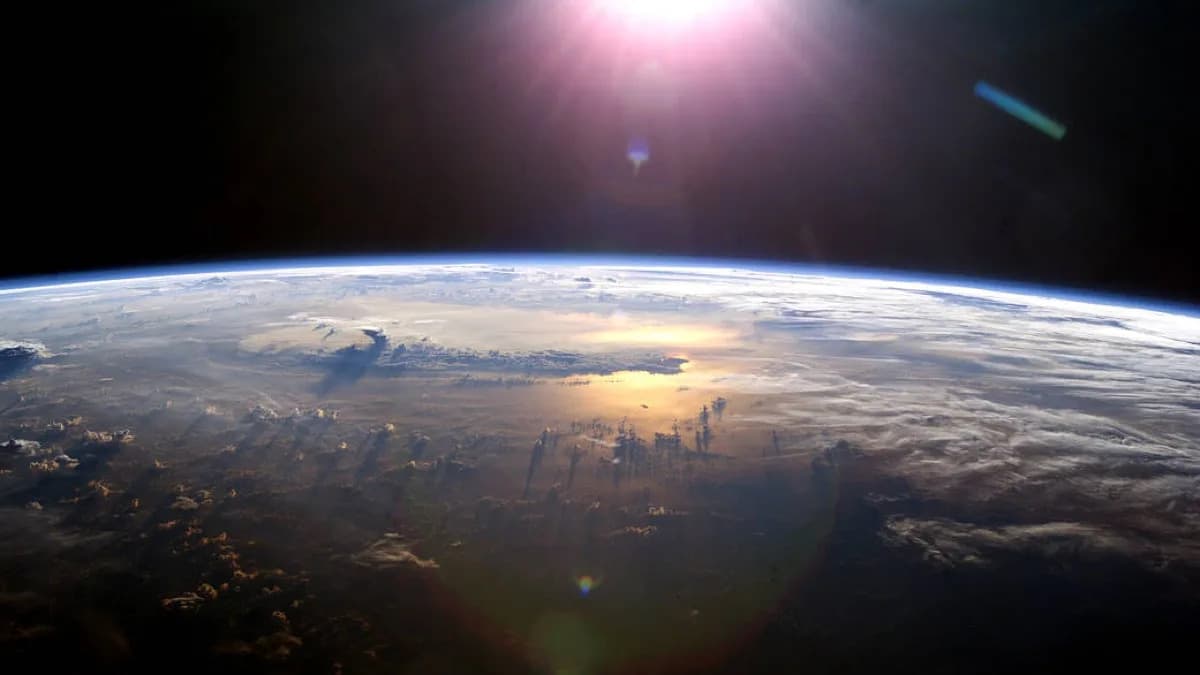
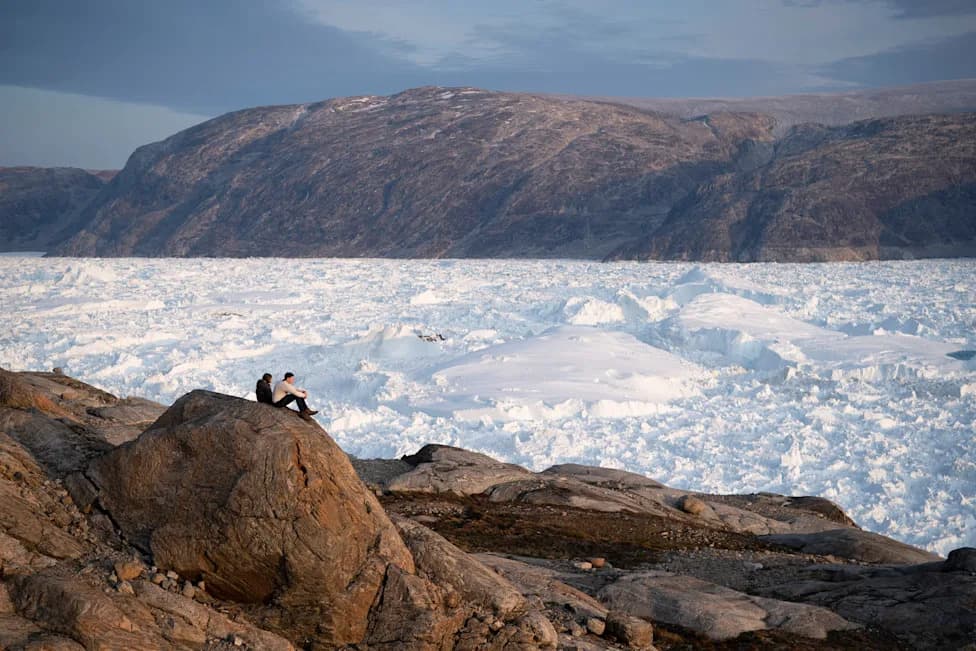
(NASA)
New research from geoscientists at the University of Vienna and ETH Zurich shows that melting glaciers and polar ice sheets are redistributing Earth's mass, slowing the planet's rotation and making days incrementally longer.
Rate observed: The authors estimate a current lengthening of about 1.33 milliseconds per century. Under more pessimistic scenarios this could accelerate to roughly 2.62 milliseconds per century by the late 21st century — a magnitude that could rival or exceed the Moon's effect on Earth's day length.
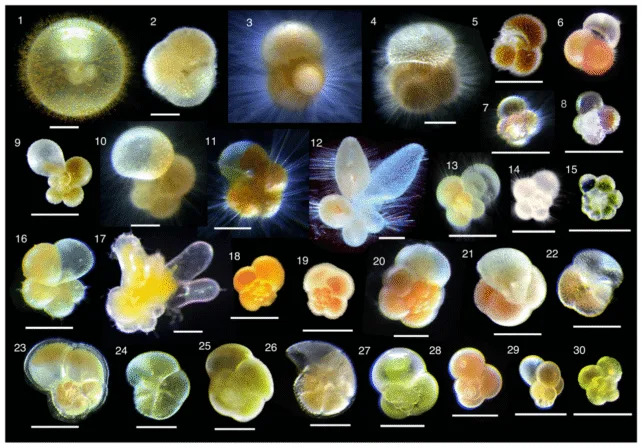
A selection of planktonic foraminifera, which live close to the ocean's surface. (Takagi et al., 2019, Wikimedia Commons, CC BY SA 4.0)
How the team reached this conclusion
The researchers combined chemical analyses of fossilized foraminifera (single-celled marine organisms that build mineral shells) with geophysical modeling and a novel physics-informed diffusion deep-learning algorithm. Foraminifera shell chemistry preserves a long record of sea-level and climate fluctuations, enabling reconstruction of mass redistribution and its impact on Earth's rotation across nearly 4 million years.
"From the chemical composition of the foraminifera fossils, we can infer sea-level fluctuations and then mathematically derive the corresponding changes in day length," says Mostafa Kiani Shahvandi, climate scientist and geophysicist at the University of Vienna.
To handle the large uncertainties typical of paleoclimate records, the team developed a probabilistic, physics-informed diffusion model that embeds physical constraints on sea-level change while remaining robust to noisy and incomplete data.

Subscribe to ScienceAlert's free fact-checked newsletter
Why melting ice slows Earth's rotation
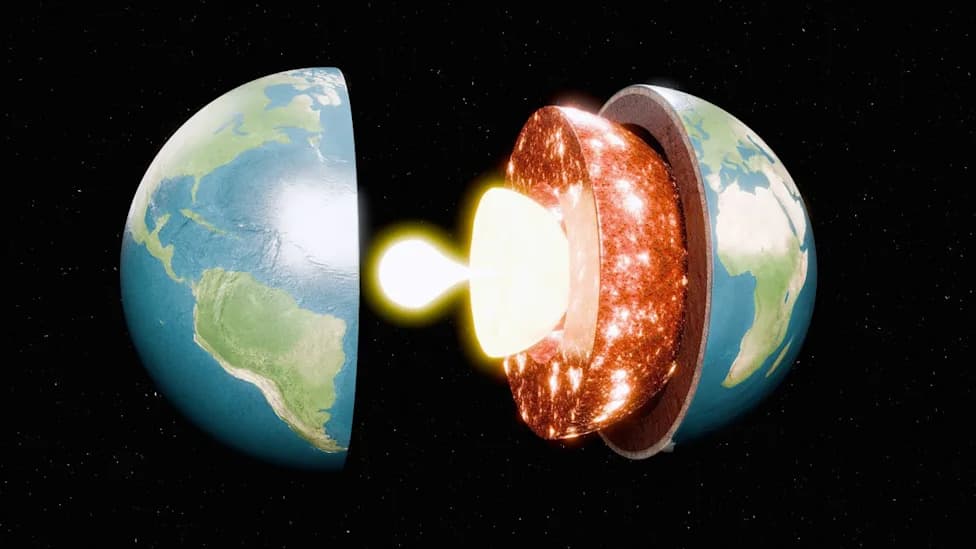
When ice melts and mass shifts from high latitudes toward the equator, Earth's oblateness (its equatorial bulge) increases slightly. That redistribution of mass is analogous to a figure skater extending their arms to slow their spin — the same physics applies to the planet.
The study finds the modern rate of day-lengthening is unprecedented since at least the Late Pliocene (about 3.6 million years ago), with only a few brief episodes in Earth history approaching similar rates. "This rapid increase in day length implies that the rate of modern climate change has been unprecedented at least since the late Pliocene," says Bendikt Soja, Professor of Space Geodesy at ETH Zurich and co-author of the study.
Practical implications: Although a millisecond-scale change may sound negligible compared with 86,400 seconds in a day, such shifts matter for precise timekeeping systems and technologies that depend on exact Earth orientation parameters, including satellite navigation, communications networks and deep-space tracking.
The full study appears in the Journal of Geophysical Research: Solid Earth.
Help us improve.