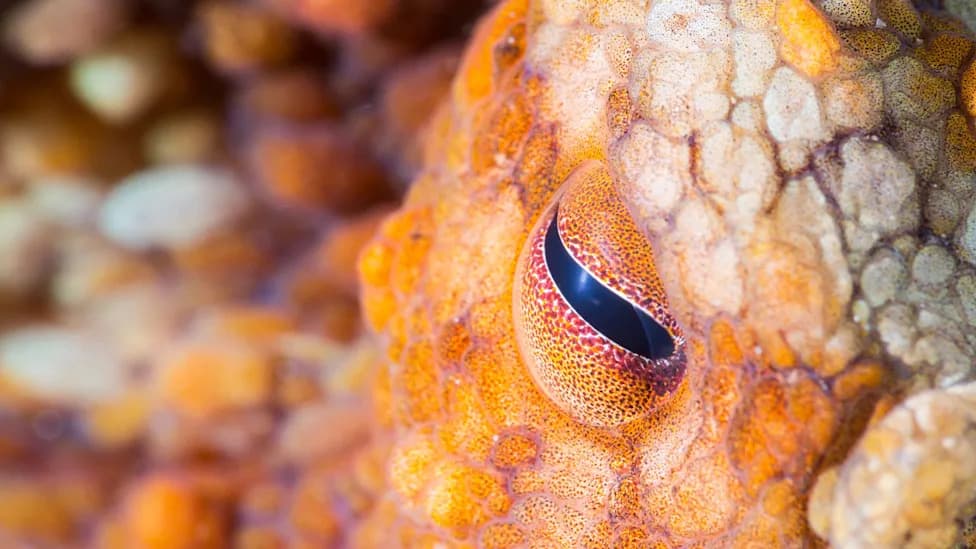
Pupil outlines vary across species because shape affects depth of field, field of view, and distance cues. Vertical slits sharpen vertical contours and assist stereopsis in ambush predators; horizontal bars give grazing prey a panoramic view and sharpen horizontal features. Larger predators often have round pupils, and unusual marine pupil shapes (like the cuttlefish's W) remain active research questions.
Why Animals Have Different Pupil Shapes: How Eye Design Matches Survival Needs
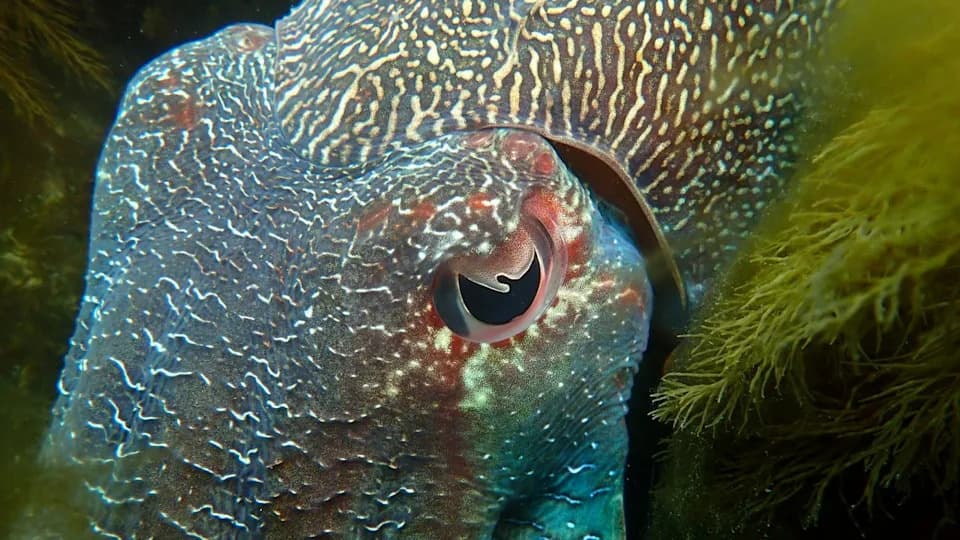
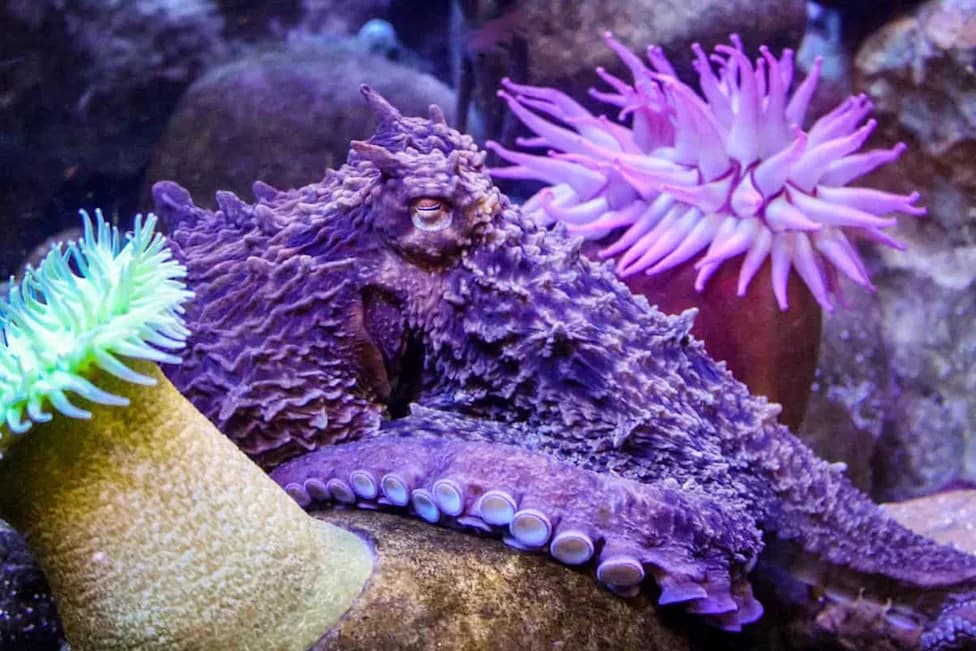
The cuttlefish has a W-shaped pupil. | Credit: Katherine OBrien via Getty Images
Pupils are more than simple holes that dilate in the dark and constrict in bright light. Across the animal kingdom, pupil outlines vary widely — vertical slits in cats and many snakes, broad horizontal bars in goats and horses, and even W-shaped pupils in cuttlefish — and those shapes reveal important clues about how different species use vision to survive.
Pupil Shape Matters in Real Eyes
In idealized optics a pupil's shape would be irrelevant because a perfect lens focuses all incoming light to a single point. But biological eyes are imperfect: light passing through an aperture is subject to diffraction and defocus, and different pupil geometries distribute sharpness and blur unevenly. As Jenny Read, a visual neuroscientist at Newcastle University, puts it, "in an ideal world the pupil's sort of irrelevant because all the light should be coming to an exact point anyway," but in nature the details matter.

Life's Little Mysteries logo with a question mark in a magnifying glass
Depth of Field and Orientation: The Key Insight
Depth of field — how much of a scene appears acceptably sharp — is controlled by aperture size in cameras and by pupil size and shape in eyes. Marty Banks (University of California, Berkeley) and colleagues published a 2015 study in Science Advances that systematically explained how pupil orientation supports different visual tasks tied to an animal's ecological niche.
Ambush Predators: Vertical Slits
Ambush predators such as domestic cats and many snakes have forward-facing eyes and rely on stereopsis (binocular disparity) to judge distance. Binocular cues are most informative along vertical contours, so narrowing the pupil horizontally (creating a vertical slit) increases depth of field for vertical features while still allowing vertical light throughput. This combination sharpens the vertical edges that matter most for precise distance judgments and still lets the eye use blur cues for depth estimation.
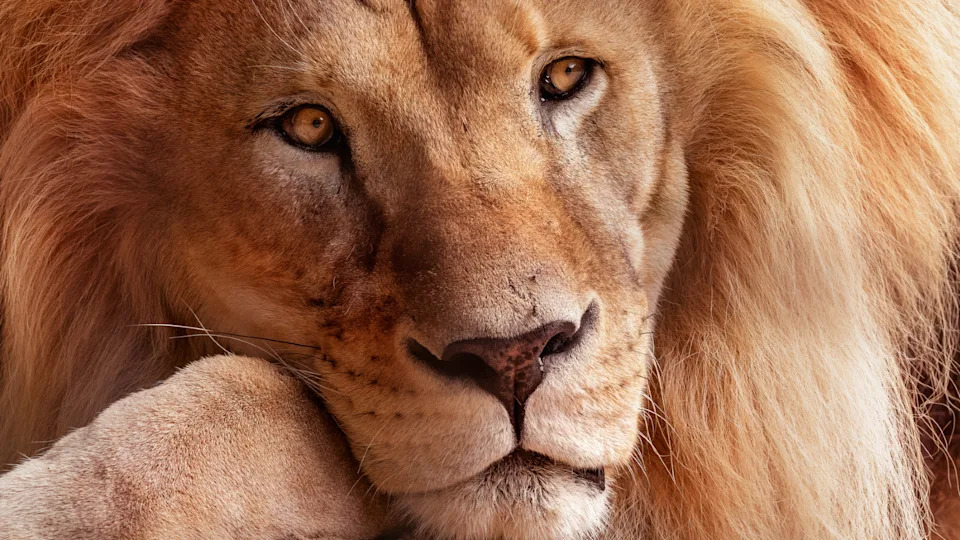
Lions have round pupils, unlike small predators, like domestic house cats and snakes, that hunt close to the ground. | Credit: Sebastien GABORIT via Getty Images
Grazing Prey: Horizontal Bars
Grazing prey animals — goats, sheep, horses — usually have eyes on the sides of their heads and wide horizontal pupils. That bar-shaped aperture favors a panoramic field of view along the ground (helpful for detecting approaching predators) and sharpens horizontal contours. A neat behavioral adaptation compensates for head posture: as these animals lower their heads to graze, their eyes rotate in the sockets to keep the pupil aligned with the horizon, preserving panoramic vision.
Size, Angle, and Round Pupils
Not all predators have slitted pupils. Larger predators that view the ground at steeper angles (for example, lions and tigers) tend to have round pupils. At those viewing angles, blur-based distance cues are less useful, so the evolutionary advantage of a slit is reduced.
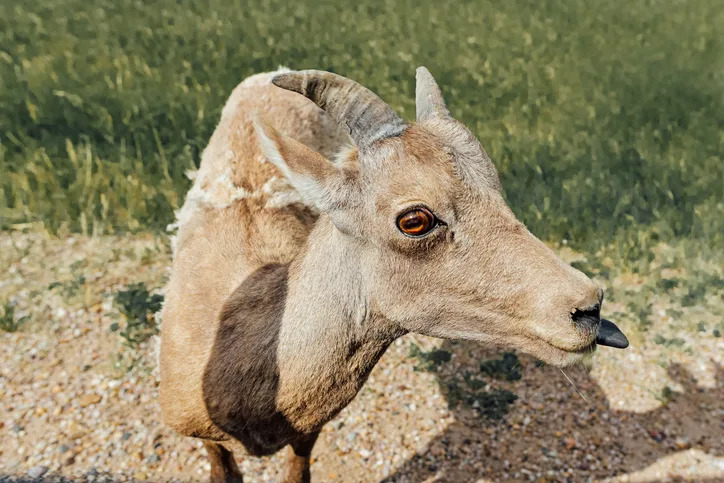
Prey animals, like goats, have pupils shaped like a horizontal rectangle. | Credit: Stefania Pelfini la Waziya via Getty Images
Marine Mysteries: W-Shaped and Other Odd Pupils
Some aquatic animals have even stranger pupil shapes. Cuttlefish, for example, possess W-shaped pupils. Scientists have proposed several hypotheses — reduced visibility to observers, selective blocking of overhead light to reduce scattering and improve contrast, or effects on spatial or color processing — but no consensus exists. Early ideas tried to link unusual pupil shapes to paradoxes like cuttlefish color patterning despite limited photopigments, but aquatic pupil functions remain an active area of research.
Conclusion
Pupil shape is an elegant example of form following function in evolution: the outline of the aperture helps balance sharpness, field of view, and depth cues in ways that support an animal's lifestyle. Marty Banks' 2015 work clarified many patterns among terrestrial species, while many aquatic pupil shapes — and possibly other visual specializations — still invite further study.
Sources: Jenny Read (Newcastle University); Marty Banks et al., Science Advances, 2015; interviews and synthesis of contemporary vision science.
Help us improve.