The Trump administration's plans for the U.S. 250th anniversary are drawing criticism for prominent Christian-centered programming, including a May 17 "Rededicate 250" revival on the National Mall. A New York Times report names right-wing evangelical figures such as Eric Metaxas and Sean Feucht among organizers. Critics, including Rep. Jared Huffman, say the events risk eroding separation of church and state and promoting a narrowed narrative about the nation's founding.
Trump Plans 'Rededicate 250' Christian Revival On National Mall, Sparking Church-State Concerns
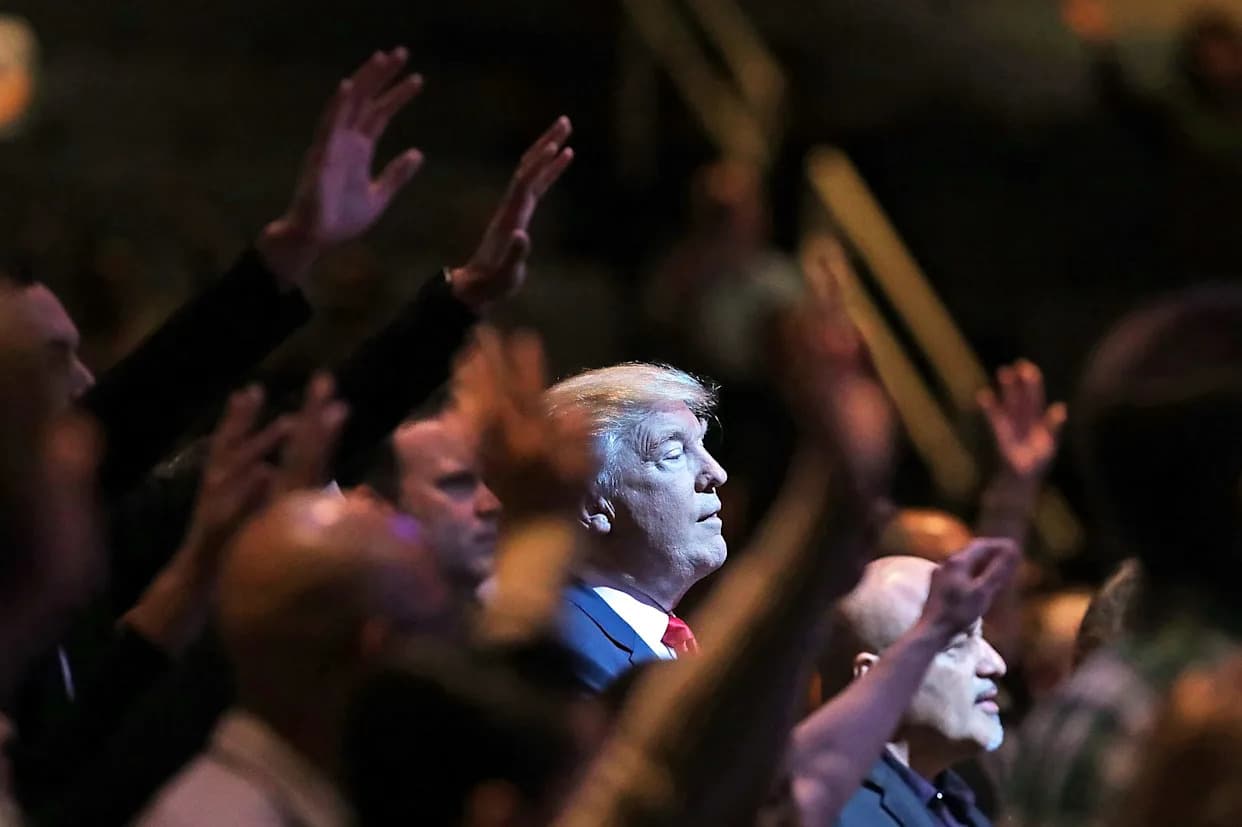
Donald Trump attends a worship service on Oct. 30, 2016, in Las Vegas.(Chip Somodevilla / Getty Images)
The Trump administration's preparations for the United States' 250th anniversary have drawn sharp criticism for centering explicitly Christian programming and involving prominent Christian nationalist figures. A New York Times report says a group of right-wing evangelical organizers met last month to design faith-focused events in the lead-up to the semiquincentennial, including a May 17 event billed as "Rededicate 250." The White House has described the gathering as a "large-scale revival" on the National Mall.
The effort has highlighted the involvement of figures such as Eric Metaxas — a conservative media personality who has promoted election-related conspiracy theories — and Sean Feucht, a self-described Christian nationalist who has presented himself as an informal adviser to Trump officials. Feucht has claimed he provided a "divine perspective" during a tour of California wildfire damage alongside HUD Secretary Scott Turner and performed at a HUD-hosted worship session on the National Mall last September. A HUD spokesperson previously told MS NOW that Feucht did not claim an official government role, though he may have participated in an unofficial capacity.
Early descriptions of the slate suggest programming intended to emphasize the view that the nation's laws and customs are rooted in Christianity — or at least in a conservative interpretation of Christian teaching. Critics warn that such a focus risks blurring the constitutionally mandated separation of church and state and presents a narrowed narrative about the country's founding.
Rep. Jared Huffman criticized the planning in a recent news release, calling it "Christian nationalism on the taxpayer dime" and accusing the administration of using anniversary events to "further erode church-state separation" and promote a false narrative that the United States was founded as a Christian nation.
The New York Times report and responses from lawmakers and advocacy groups have intensified scrutiny of how the federal government is shaping public celebrations tied to the once-in-a-lifetime milestone. Supporters of faith-centered events say religious programming reflects the beliefs of many Americans and can be part of national commemoration; opponents say government-sponsored religious events cross constitutional boundaries and privilege a single faith perspective in a religiously diverse nation.
As planning continues, questions remain about the roles of private organizers and government officials, the use of public space and funding, and how the 250th anniversary will represent the full breadth of American history and civic life.
Help us improve.