Prime Minister Benjamin Netanyahu has secured U.S. participation in sustained strikes on Iran, producing heavy casualties across the region and lifting oil prices. The campaign has given him strategic validation, political cover for ongoing corruption trials, and weakened anti-reform protests—while reducing immediate pressure over actions in the occupied territories. Polling shows a modest rise in public confidence, but serious legal, diplomatic, and humanitarian risks remain.
How the Iran War Has Solved Five Political Problems for Netanyahu
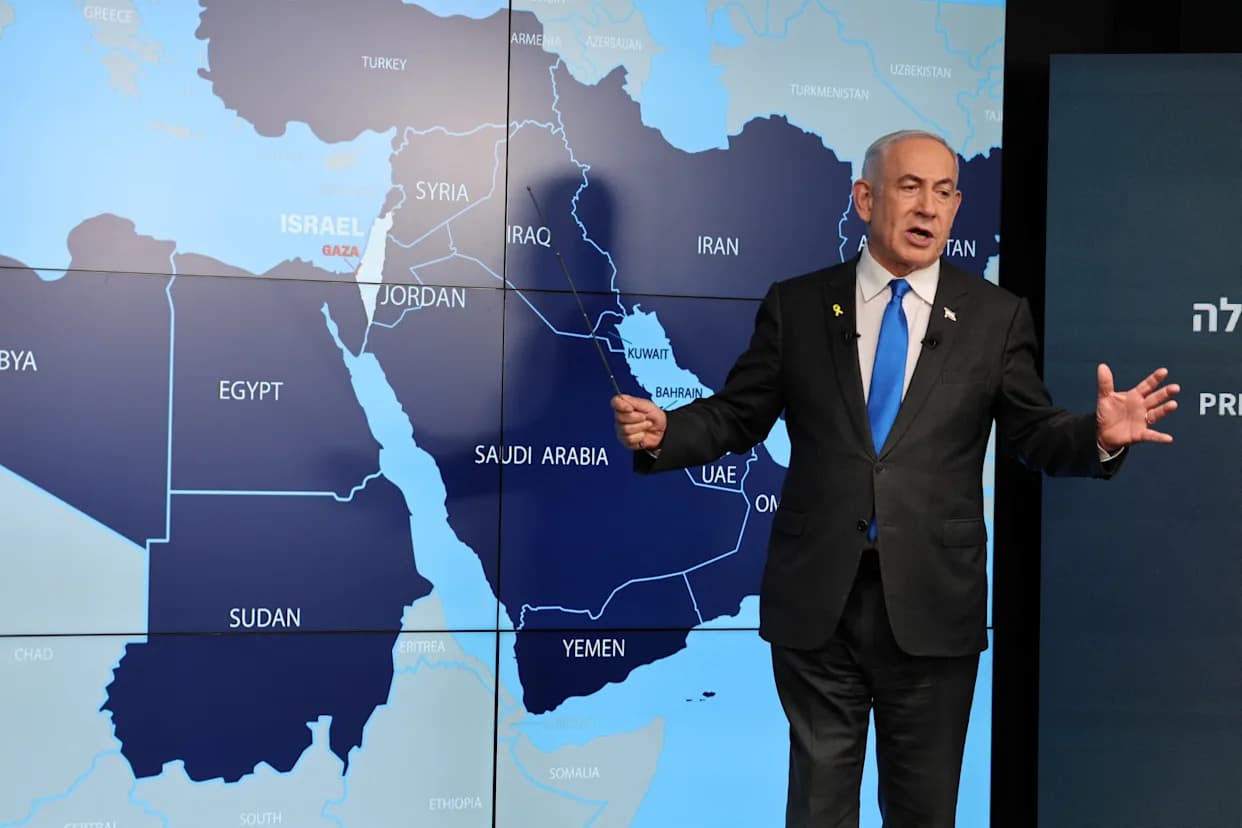
Israeli Prime Minister Benjamin Netanyahu has long framed Iran as Israel's existential threat [File: Abir Sultan/Reuters]
Prime Minister Benjamin Netanyahu has achieved a strategic and political win by persuading the United States to join sustained strikes on Iran. The campaign has already produced heavy regional fallout—more than 1,400 dead in Iran, roughly 1,000 killed in Lebanon from Israeli strikes, and dozens more across neighbouring countries—while pushing global oil prices higher and deepening diplomatic tensions with Western allies.
Below are five ways the conflict has helped Netanyahu address chronic political challenges at home and abroad, along with the remaining risks and humanitarian concerns the crisis has intensified.
1. Strategic Validation on Iran
What changed: For years Netanyahu warned that Iran posed an existential threat to Israel and pressed for decisive international action. By bringing Washington into a sustained campaign against Tehran, he has secured a level of U.S. backing that previously proved elusive.
Impact: Even if Iran’s government survives, its capabilities and regional influence have been degraded in the near term. Combined with heavy blows to Hezbollah in Lebanon and setbacks for the Assad regime in Syria, Netanyahu can argue Israel’s strategic position in the region has been strengthened.
2. Political Cover for Legal Troubles
What changed: Netanyahu faces trial on three corruption charges dating to 2019 and risks a possible 10-year sentence if convicted. The war has provided political space to postpone or diminish public focus on those proceedings.
Impact: Netanyahu publicly appealed to President Isaac Herzog for a pardon and has described the trial as an "absurd circus," arguing he must be unencumbered to manage the war. The Justice Ministry has replied that a pardon while the trial is ongoing would be inappropriate.
3. Weakening of the Anti-Reform Protest Movement
What changed: Large domestic protests against Netanyahu’s judicial reform program had mobilized tens of thousands in 2023. The outbreak of multiple conflicts since October 7, and now the Iran campaign, has diminished that street-level pressure.
Impact: The government has used the window to advance controversial legislation aimed at curbing judicial oversight—proposals that would split the attorney general’s powers, reduce media independence, and create a politically appointed panel to examine pre-October 7 security failures. Opposition figures say the coalition is exploiting the crisis to push through its agenda.
4. Reduced International Scrutiny Over Occupied Territories
What changed: Attention focused on Iran has lessened immediate international pressure on Israel’s conduct in the occupied territories. Violence in the West Bank has risen since the Iran campaign began; 11 Palestinians have been killed there during the period referenced, and more than 1,000 have been killed since October 7, 2023.
Impact: EU and UK calls for Israel to curb West Bank violence and ease restrictions on Gaza have had limited effect. Humanitarian agencies—including the UN and UNRWA—have warned of worsening conditions in Gaza and urged Israel to allow greater aid access, but enforcement remains limited while the region is preoccupied with the broader conflict.
5. A Boost to Domestic Standing and Electoral Prospects
What changed: Polls showed Netanyahu in a tight race with political rivals before the latest escalation. Recent surveys indicate a modest rise in public confidence in his ability to manage the conflict (from about 60% to 62% in the cited polling).
Impact: With public perception of strong wartime leadership improving and credit given to Netanyahu for securing U.S. involvement, some ministers and analysts are openly discussing the possibility of calling early elections to capitalize on wartime popularity.
Remaining Risks and Concerns
Despite these advantages, Netanyahu faces significant ongoing challenges: legal exposure and potential criminal conviction, deepening diplomatic strains with Western partners, mounting humanitarian concerns in Gaza and the West Bank, the danger of a prolonged regional war, and domestic criticism that the government is using conflict to advance partisan reforms.
Bottom line: The Iran campaign has delivered several tangible political and strategic gains for Netanyahu, but it has also amplified humanitarian suffering and diplomatic risk. Those costs could eventually undercut the short-term advantages if the conflict widens or becomes protracted.
Help us improve.