The Macao legislature unanimously passed a bill permitting judges to hold closed‑door trials when both the court and the city’s national security committee conclude public proceedings would endanger national security. The law also broadens the committee’s membership and formalizes its role in implementing Beijing’s security policies locally. Critics say the move risks reducing judicial transparency and constraining political expression, especially after the recent detention of former lawmaker Au Kam San. The law takes effect one day after publication in the official gazette.
Macao Approves Bill Allowing Closed‑Door Trials, Expanding National Security Committee Powers
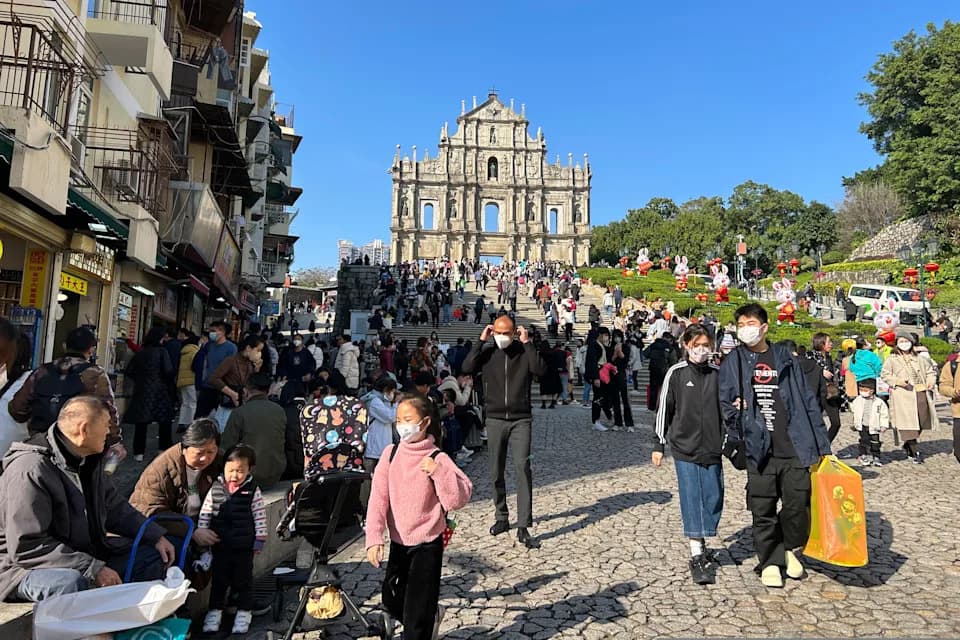
FILE - Travelers from mainland China gather near the Ruins of St. Paul's, a tourist destination in Macao, Jan. 18, 2022. (AP Photo/Kanis Leung, File)(ASSOCIATED PRESS)
Lawmakers in Macao unanimously approved a bill on Thursday that permits courts to hold closed‑door trials when both judges and the city's national security committee determine that public proceedings would jeopardize national security.
What the Law Changes
Under the new rules, judges may move criminal or other proceedings behind closed doors if the court and the city’s national security committee both conclude that a public hearing would harm national security. The bill also expands the committee’s composition to include additional senior city officials—such as the heads of cultural affairs, education and youth development—broadening its representation and formal role in applying Beijing’s security policies locally.
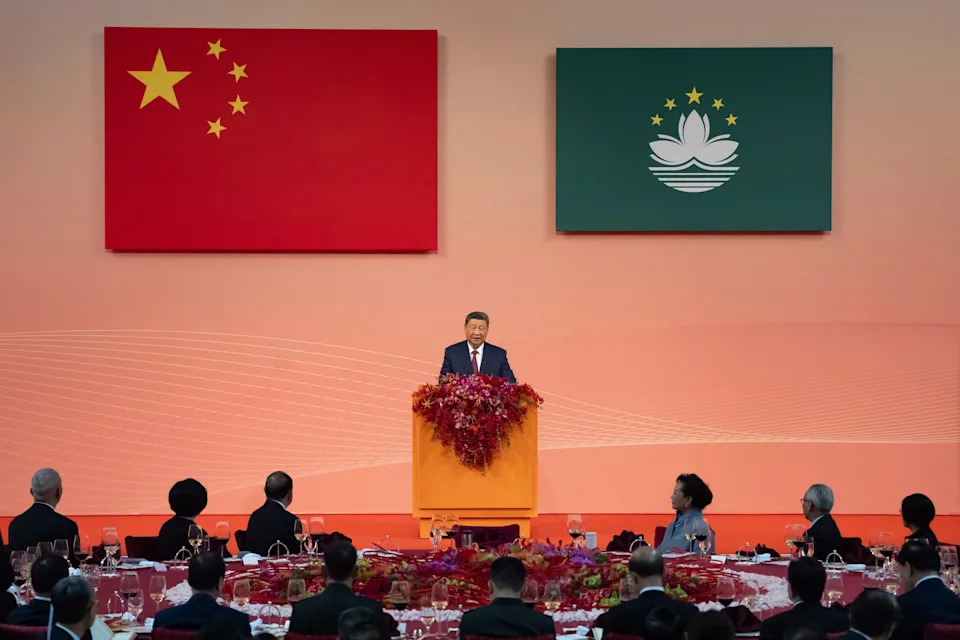
FILE - China President Xi Jinping delivers his speech during a welcoming dinner, ahead of celebrations for the 25th anniversary of Macao's handover from Portugal to China, in Macao, Dec. 19, 2024. (AP Photo/Anthony Kwan, Pool, File)(ASSOCIATED PRESS)
Official Rationale
The Macao government described the bill as “of great significance for effectively safeguarding national sovereignty, security and development interests,” and said the law will take effect one day after it is published in the official gazette.
Concerns and Context
Critics warn the measure could further curtail political expression and judicial transparency. Observers pointed to last year’s detention of former pro‑democracy lawmaker Au Kam San on suspicion of colluding with outside forces under Macao’s national security law as a sign of growing enforcement. That case was the first publicly known detention linked to Macao’s national security framework since its original enactment in 2009 and its revision in 2023.
Macao, a former Portuguese colony returned to Chinese rule in 1999, has transformed from a monopoly‑driven gambling enclave into one of the world’s largest gaming hubs. Its pro‑democracy movement has historically been smaller than Hong Kong’s, and Macao has seen fewer large‑scale protests. Still, political controls in the city have tightened in recent years—especially after the major anti‑government protests in Hong Kong in 2019.
What To Watch
Key developments to monitor include how often courts invoke closed proceedings, whether the expanded committee exercises greater influence over prosecutions or case confidentiality, and how civil society and legal professionals respond to changes in judicial transparency.
Help us improve.