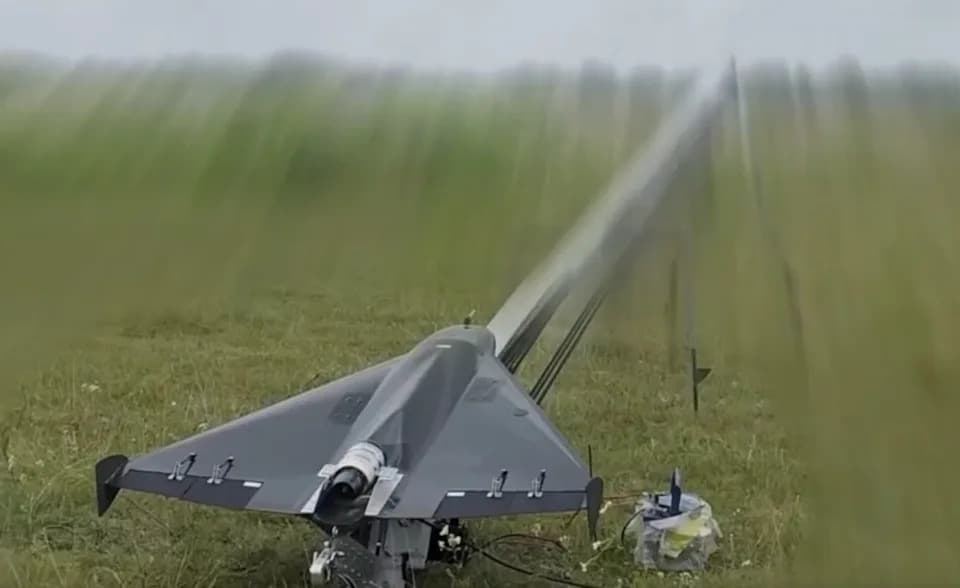
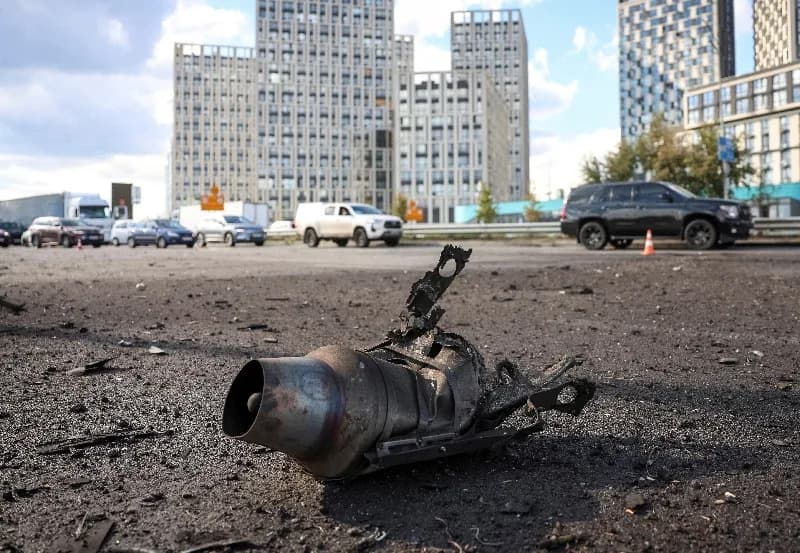
Cheap Shahed drones are forcing the use of expensive air-defence systems across Ukraine and the Middle East, raising sustainability concerns after strikes tied to Operation Epic Fury killed six U.S. service members and damaged Gulf infrastructure. Ukrainian miltech groups such as Wild Hornets are promoting low-cost interceptor drones — the "Sting" — reportedly producible for about $1,400 with an effectiveness of roughly 90%. While the Pentagon and Gulf partners have expressed interest in Ukrainian interceptors, experts stress that capacity, trained crews and integration with sensors and software are as important as unit cost.
Cheap Shahed Drones Strain U.S. Air Defenses — Ukraine’s Low-Cost Interceptors Gain Attention
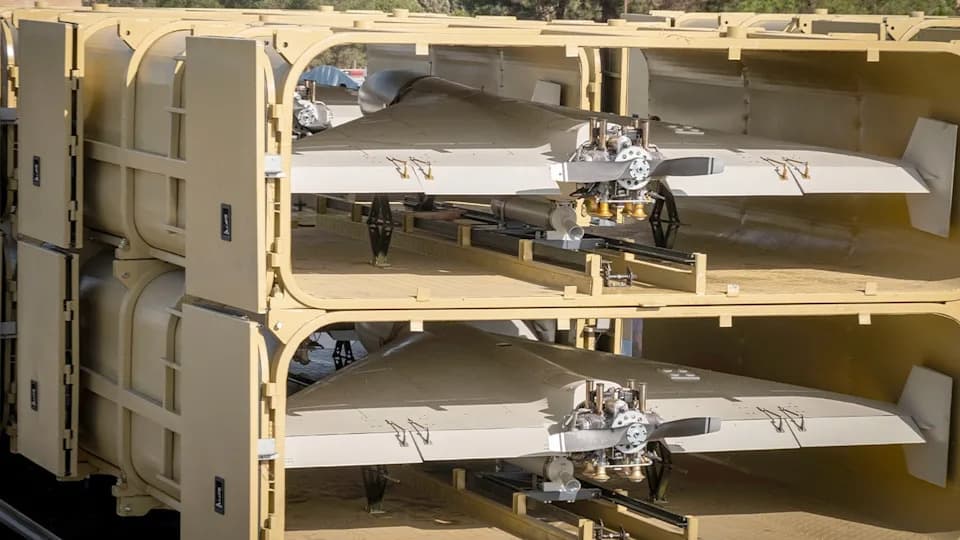
Iranian-made unmanned aerial vehicles (UAV), the Shahed-136, are carried by a truck during a military parade in south Tehran on Sept. 21, 2024.(Getty Images)
Iranian-designed Shahed drones have proliferated across conflict zones from Ukraine to the Middle East, and their low unit cost is forcing defenders to deploy some of the world’s most expensive air-defence systems. That dynamic has raised urgent questions about whether current approaches can sustainably counter massed, low-cost aerial threats.
The problem intensified after Operation Epic Fury, when Tehran-backed drones — widely estimated to cost between $20,000 and $50,000 each — targeted U.S. forces and allied states in the Gulf. U.S. and partner militaries have responded with a combination of Patriot surface-to-air missiles, Terminal High Altitude Area Defense (THAAD) batteries, ship-based interceptors and other assets.
Although many incoming drones have been shot down, the campaign has imposed a human and material toll: six U.S. service members were killed in Kuwait, and civilian infrastructure, including airports and hotels in the United Arab Emirates and Bahrain, sustained damage. The mounting cost and casualties have intensified concern about how to defend against swarms without rapidly depleting multimillion-dollar interceptor inventories.
Ukraine’s Low-Cost Alternative
Since Russia’s 2022 invasion, Ukraine has rapidly adapted drone tactics and emerged as a leader in battlefield drone technology. Ukrainian miltech groups such as the Wild Hornets nonprofit promote interceptor drones as a dramatically cheaper complement to traditional air-defence systems.
Wild Hornets’ so-called "Sting" interceptor is claimed to be producible for roughly $1,400 per unit — a fraction of the approximate $4 million cost of a single Patriot missile. Wild Hornets says the Sting has downed thousands of Shahed-type drones and has reached about a 90% effectiveness rate, up from roughly 70% last autumn as crews, radar teams and ground-control software improved.
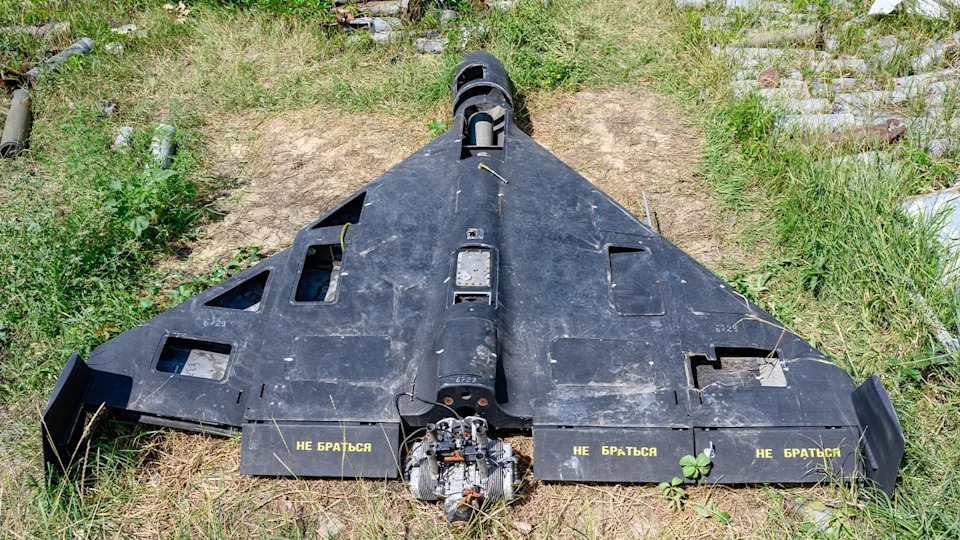
The remains of a Russian-made, Iran-designed Shahed-136 drone, known in Russia as a Geran-2, are displayed with other recovered drones, glide bombs, missiles and rockets in Kharkiv on July 30, 2025.
"Ukraine had to fight smart and didn't have rocket-propelled grenades and anti-tank missiles, so they turned to these kinds of drones to sort of equalize the battlefield," Alex Roslin, a Wild Hornets spokesman, told reporters.
International Interest—and Limits
The Financial Times has reported that the Pentagon and at least one Gulf government are in talks to acquire Ukrainian-made interceptors amid Iran’s retaliatory attacks. Ukrainian President Volodymyr Zelenskyy announced that Kyiv is sending teams of experts and military personnel to several Gulf states to help defend against Tehran’s drone operations. Former U.S. President Donald Trump said he would be open to assistance from any country when asked about Zelenskyy’s offer.
But hardware alone is not a silver bullet. "We know that in Middle Eastern countries, in the U.S., and in European states, there is a certain number of interceptor drones. But without our pilots, without our military personnel, without specialized software, none of this works," Roslin added.
"Capacity is even more important than cheap," Tom Karako, director of the Missile Defense Project at the Center for Strategic and International Studies, told Fox News Digital, underlining that volume, sustainment and integration are critical when facing swarms.
Karako pointed to fielded, lower-cost counter-drone options such as the Coyote interceptor and the U.S. Army’s Low, Slow, Small Unmanned Aircraft Integrated Defeat System (LIDS) as examples of systems that can address many drone threats without relying exclusively on high-end systems like Patriot.
What Comes Next
As Iran’s drone campaign expands, the debate has shifted from simply comparing unit price tags to deciding whether traditional, high-cost air-defence architectures can absorb a new era of large-scale, inexpensive aerial threats. The emerging consensus among analysts is that an effective response will require a layered approach: cheaper interceptors for mass threats, selective use of high-end systems for high-value targets, and investments in training, sensors and command-and-control software to sustain operations.
Bottom line: Low-cost interceptor drones are attracting international interest as a cost-effective counter to Shahed swarms, but capacity, operational integration and trained personnel remain decisive factors in determining whether they can relieve pressure on traditional air-defence systems.
Help us improve.