A new study finds that rising sea levels are subtly lengthening Earth’s day by about 1.33 milliseconds per century. By shifting mass away from the poles, melting ice increases the planet’s moment of inertia and slows rotation. Researchers reconstructed sea levels from fossil chemistry spanning 3.6 million years and used probabilistic deep learning to link ice cycles to day length, finding today’s rate is an outlier. Although the changes are measured in milliseconds, they can affect high-precision systems like space navigation.
Climate Change Is Lengthening Earth’s Day — Sea-Level Rise Is Slowing the Planet’s Spin

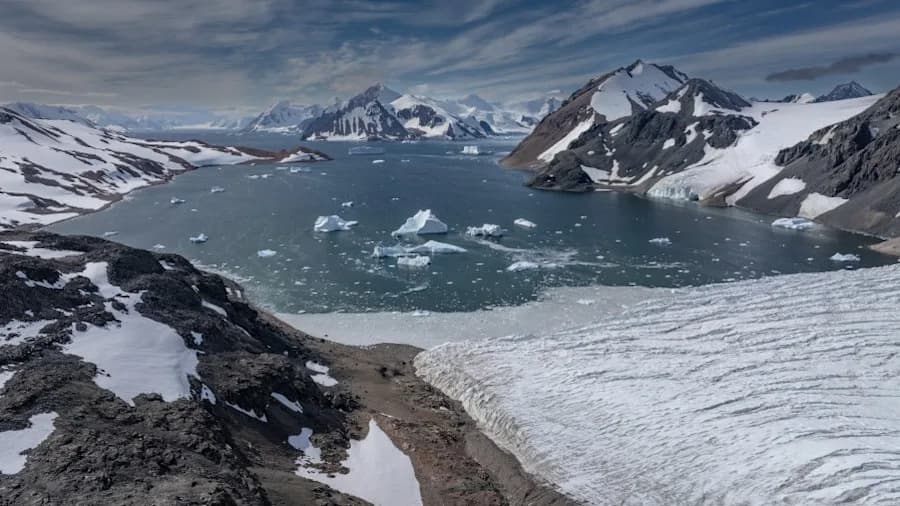
Rising sea levels are subtly slowing Earth’s rotation and making the average day fractionally longer. A new study finds the current rate of increase—about 1.33 milliseconds per century for a single average day—is unprecedented in at least the past 3.6 million years.
How Rising Seas Slow Earth's Rotation
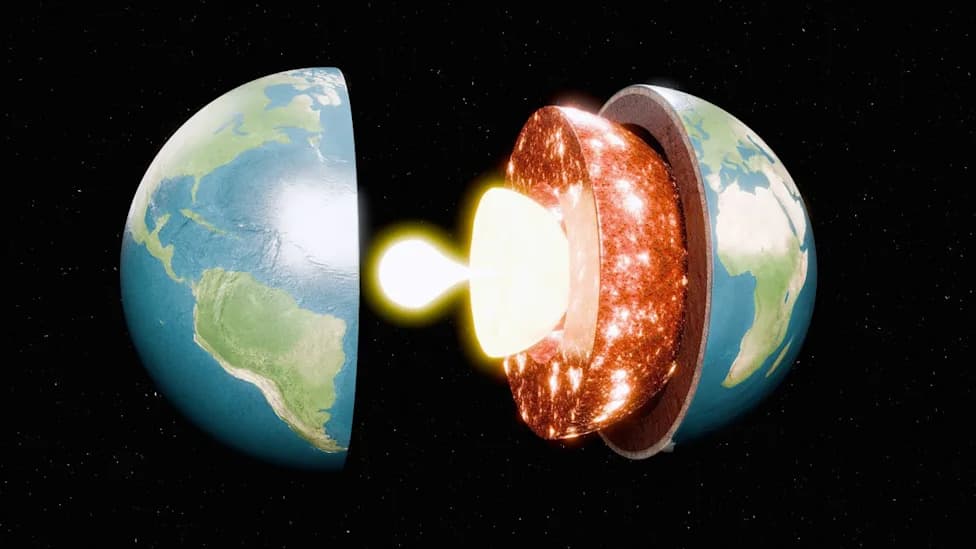
The true length of a day fluctuates because of several influences: the moon’s gravity, geophysical processes in Earth’s interior and at the surface, and atmospheric dynamics. Climate-driven sea-level rise shifts large masses of water away from polar regions toward lower latitudes, increasing the planet’s moment of inertia and causing rotation to slow—much like a figure skater who slows down when they extend their arms.
“Even though the shifts are measured in milliseconds, they can create challenges in fields that demand extreme timing precision, such as space navigation, which depends on accurate knowledge of Earth's rotation,” said Benedikt Soja, the study’s senior author and a geophysicist at ETH Zurich.
What the Researchers Did
Published in the Journal of Geophysical Research: Solid Earth, the study was led by Mostafa Kiani Shahvandi (University of Vienna) and Benedikt Soja (ETH Zurich). The team reconstructed past sea levels over the last 3.6 million years by analyzing the chemical composition of marine fossils. They then converted those sea-level reconstructions into expected changes in day length and used a probabilistic deep-learning algorithm to better model the physical processes that drive sea-level change and its effect on Earth's rotation.
Key Findings
The record shows that day length has historically tracked glacial and interglacial cycles of ice growth and melt. However, the modern trend stands out: the current rate of day-lengthening is an outlier, with only one similar interval about 2 million years ago. The authors highlight that the period from 2000 to 2020 saw especially rapid mass redistribution and sea-level rise.
Although a change of milliseconds may seem negligible, it matters for precision systems—like satellite tracking and space navigation—that rely on exact timing and knowledge of Earth’s rotation. The study also suggests that, by the end of this century, ongoing climate-driven redistribution of mass could have a larger cumulative effect on day length than lunar-tidal influences.
Why this matters: The result links long-term climate change to a measurable, planetary-scale mechanical effect. Continued monitoring and improved modelling are important for scientists and engineers who need precise Earth-rotation data.
Reference: Kiani Shahvandi et al., Journal of Geophysical Research: Solid Earth.
Help us improve.