The first experiment of its kind placed 24 mice aboard the ISS for ~4 weeks at microgravity, 0.33g, 0.67g and 1g. Mice at 0.67g retained muscle fiber composition and normal grip strength, while mice below that level (0.33g) showed reduced strength despite similar muscle size. The findings suggest Mars gravity (~0.38g) may not be enough to prevent muscle decline and highlight the need for countermeasures and further human-focused research.
Orbiting Mice Reveal 0.67g Gravity Threshold That Preserves Muscle Health — Implications for Mars
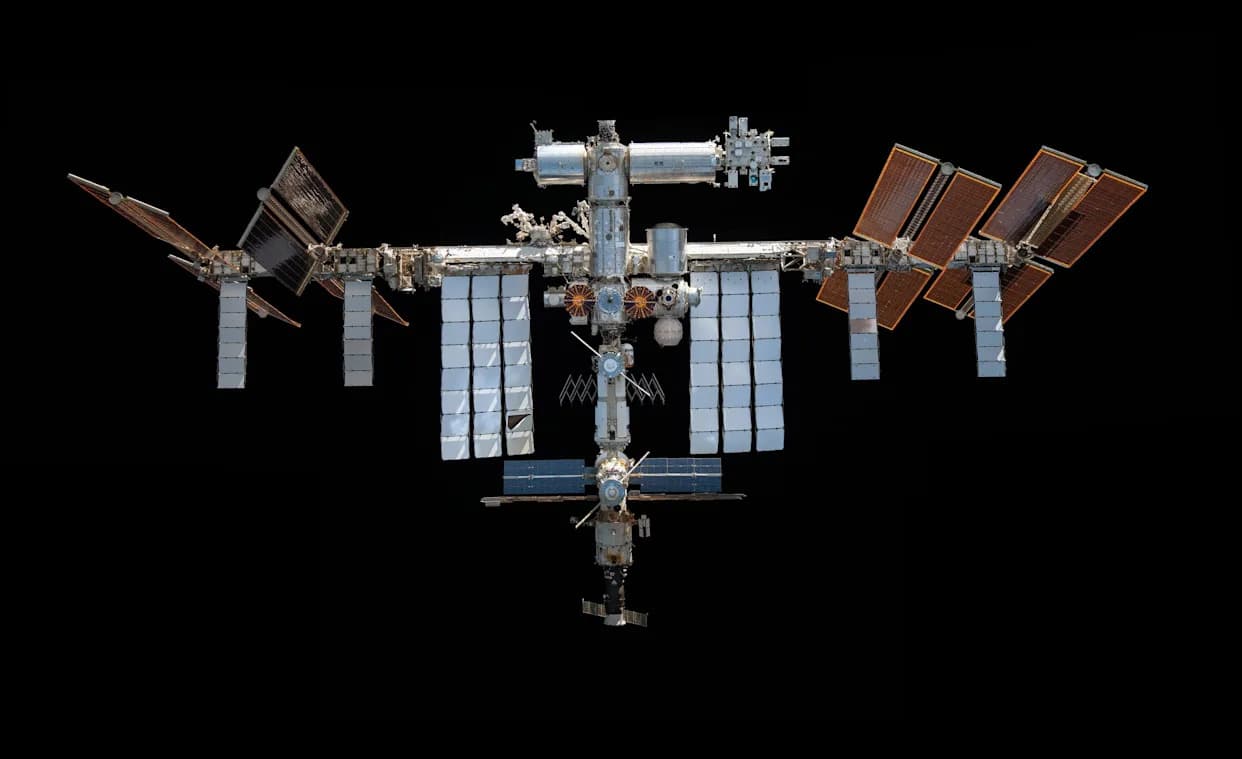
The International Space Station, as seen from the SpaceX Crew Dragon Endeavour spacecraft on November 8, 2021.(NASA)
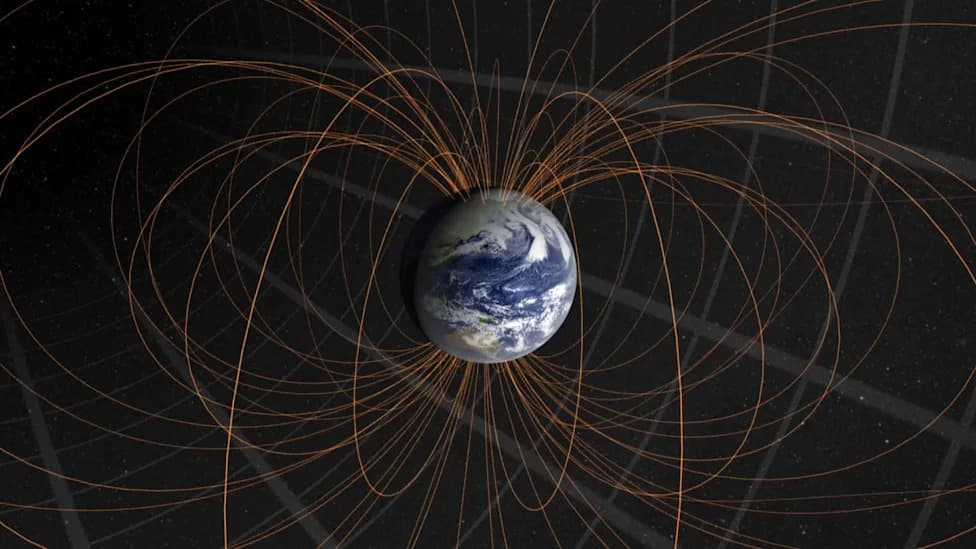
Humans did not evolve to live in space, and reduced gravity can harm multiple body systems: organs shift, gut microbiomes change, bones weaken and muscles atrophy. A first-of-its-kind experiment using mice aboard the International Space Station (ISS) pinpoints a partial-gravity threshold that appears to protect muscle structure and function.
What the Experiment Did
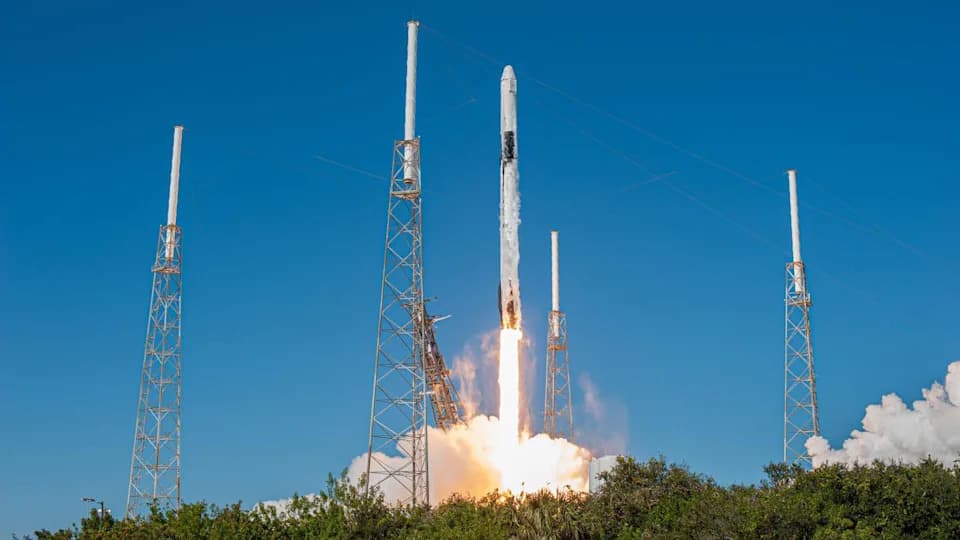
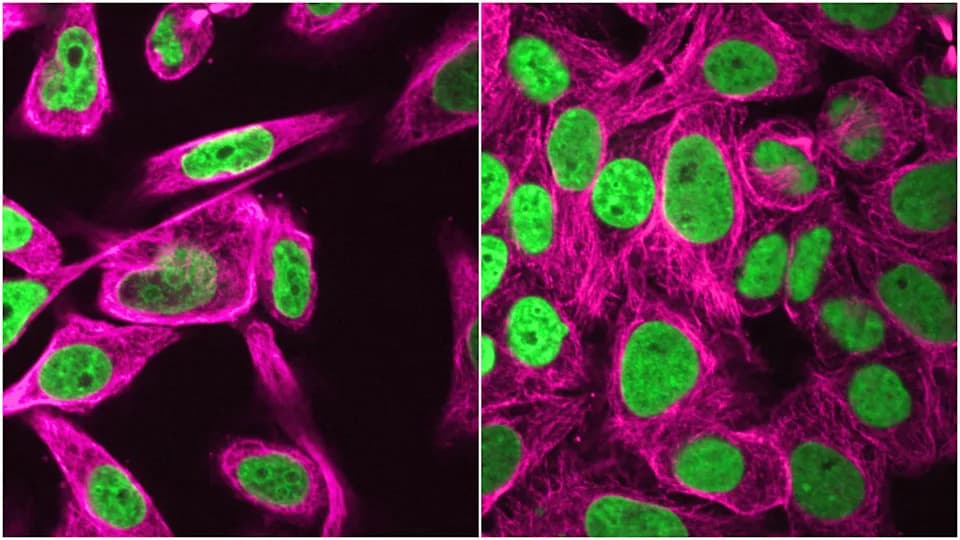
In 2023, an international team sponsored by NASA and the Japan Aerospace Exploration Agency (JAXA) launched 24 mice to the ISS on a SpaceX Falcon 9. The animals were housed for roughly four weeks at one of four gravity levels: microgravity, 0.33g, 0.67g, and 1g. When the mice returned to Earth, researchers examined the soleus muscle — a leg muscle known to be particularly sensitive to gravitational loading — for changes in size, fiber composition and functional strength.
Main Findings
At 0.67g, mice preserved muscle fiber composition and displayed grip strength comparable to mice kept at full Earth gravity (1g), which the authors describe as “full protection of muscle function.” By contrast, mice at 0.33g had muscle sizes similar to 1g controls but showed reduced grip strength, indicating a decline in functional performance despite similar muscle mass.
“These results are encouraging for long-duration missions to Mars and beyond,” says Mary Bouxsein, a co-author and professor of orthopedic surgery at Harvard Medical School, noting that muscle function was maintained without a full 1g environment.
Se-Jin Lee, a geneticist who studies spaceflight effects but was not involved in the study, adds that the work clearly demonstrates how different gravity levels alter muscle structure and function and raises the key question of whether the observed 0.67g threshold in mice will translate to humans.
Limitations and Caveats
Important caveats apply. Mice and humans differ in locomotion (quadrupedal vs. bipedal), daily activity patterns and muscle composition. The mission duration was around four weeks, so longer exposures could produce different results. Sample sizes per gravity group were modest, and the study focused on a single muscle (the soleus). Together, these factors mean additional research is needed to confirm how these findings apply to people and to other tissues.
Implications for Mars and Human Spaceflight
Mars’ gravity is about 0.38g, which is below the 0.67g threshold observed in this study. That suggests Mars gravity alone may not be sufficient to preserve muscle function during extended stays. Practical responses could include stronger exercise regimens, mechanical loading devices, partial gravity habitats that simulate higher g-levels, or targeted rehabilitation for astronauts returning to Earth.
Overall, the study provides a valuable data point for designing habitats, countermeasures and mission plans for exploration of low-gravity worlds, while underscoring the need for longer-term and human-focused studies.
Study Details
Published in Science Advances, the experiment was conducted by an international team sponsored by NASA and JAXA and flown on a SpaceX Falcon 9. Results highlight a possible gravity threshold for muscle protection but call for follow-up work to test translation to humans, longer durations, and additional countermeasures.
Help us improve.