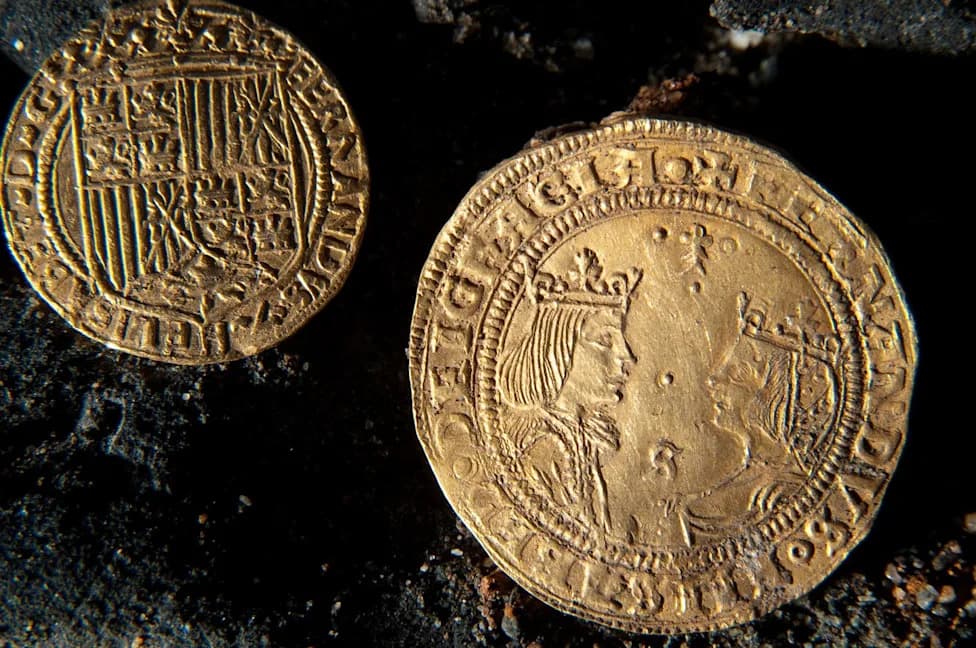
Bournemouth University archaeologists found timbers on Studland Beach on Jan. 28 that may be part of the 17th-century Dutch merchant ship The Fame. The exposed hull section is about 6 m by 2 m and includes at least fifteen frames and five outer planks secured with wooden treenails. Volunteers, including a local school group, helped log and recover the fragments, which are now at the university's preservation facility pending dendrochronology tests. Historic England says remains predating 1700 are very rare and that the Swash Channel wreck is protected under the Protection of Wrecks Act 1973.
Missing 17th-Century Dutch Ship Hull, Likely The Fame, Washes Ashore After Winter Storm
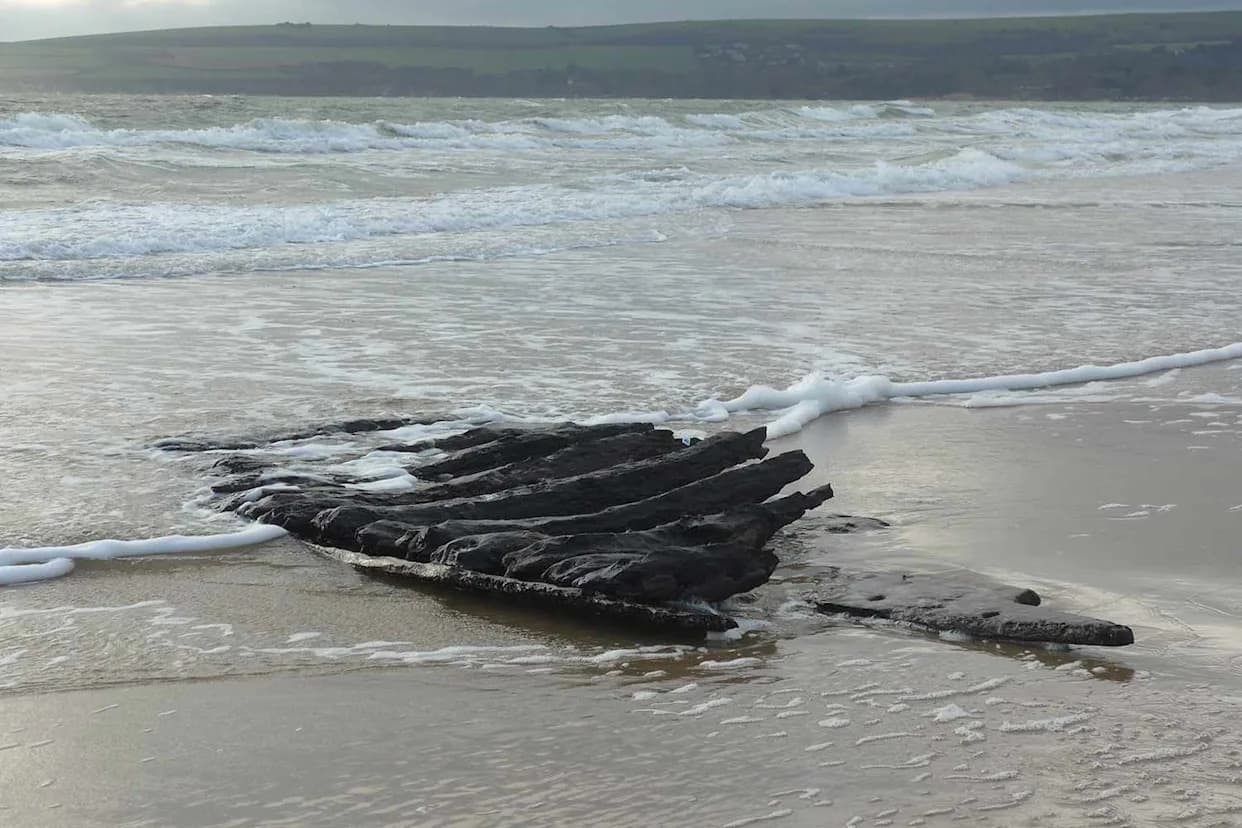
Researchers believe they found the missing hull of a 1631 shipwreckCredit: Pam White/National Trust
Timbers believed to be part of a 17th-century Dutch merchant ship have washed up on Studland Beach in Dorset after a winter storm, and maritime archaeologists say the discovery may help complete the long-missing wreck known as The Fame.
What Was Found
Bournemouth University experts identified an exposed section of hull on Jan. 28 that measures roughly 6 m long by 2 m wide. The fragment consists of at least fifteen frames secured by wooden treenails to five outer hull planks — construction details that match the earlier Swash Channel wreck remains first recorded in the 1990s.
During our excavation of the Swash Channel wreck in 2013, there were pieces of the ship missing and we do believe a section of the hull has now been revealed at Studland.
— Tom Cousins, Maritime Archaeologist, Bournemouth University
Community Effort and Conservation
The National Trust and Bournemouth University coordinated a careful recovery in mid-February, assisted by volunteers including a local school group. To minimise damage, participants used children's beach spades to log, tag and dismantle the timbers before the remains were moved to Bournemouth University's Maritime Archaeology preservation facility.
I’m always astounded by the history we find at Studland but this has been a real treasure. The wooden treenails are still in place after four hundred years — what a testament to the craftsmanship of the time.
— Tracey Churcher, General Manager, National Trust in Purbeck
Next Steps and Historical Significance
Conservators are now conducting tests, including dendrochronology (tree-ring analysis), to identify the timber source and determine whether the new fragments match samples taken from the Swash Channel wreck. The original vessel ran aground and broke its back on a notorious sandbank entering the Swash Channel in 1631; The Fame was likely involved in transporting salt from the Caribbean to Europe.
Historic England notes that the Swash Channel wreck is one of only 57 sites around England designated under the Protection of Wrecks Act 1973. Firmly dated ship remains predating 1700 are exceptionally rare, making any potential match historically significant — though specialists caution that a definitive link has not yet been confirmed.
The recovered timbers remain in secure conservation facilities while testing continues. If confirmed as part of The Fame, the find would add an important chapter to Britain’s maritime archaeology and provide fresh material for research into 17th-century shipbuilding and trade.
Help us improve.